
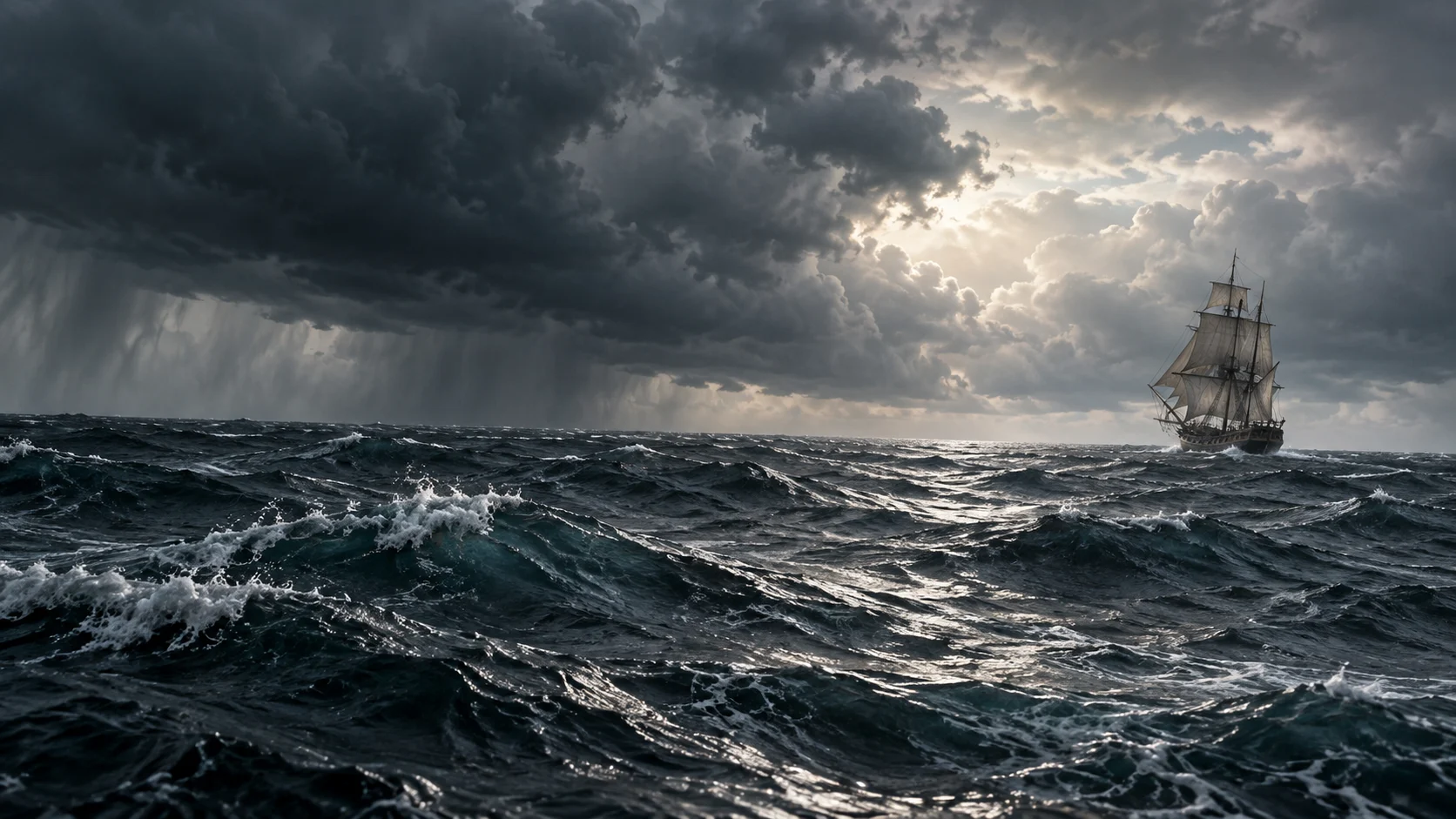
 AI-generated interpretation · not an archival image
What changed—and why.
A good account follows the approach, the decisions, the material constraints and the consequences. Dramatic dialogue is not a substitute for understanding the sequence of an event.
Guides in this topic.
20 guidesNo matching guide. Try another word or clear the search.
Kidd’s trials in 1701: separate charges, contested evidence
The printed proceedings are more complex than either a simple pirate conviction story or a complete vindication.
The Gunsway capture: a Mughal voyage caught in Every’s cruise
The 1696 proceedings describe a pursuit, a seizure and a division of money—and argue that the consequences reached far beyond the ship.
Every’s companions in court: an acquittal was not the last proceeding
The 1696 print separates charges and outcomes that a single “pirate trial” label can conceal.
Guayaquil, 1709: approach, attack and an unfinished ransom
The river operation continued through negotiations, occupation and hostages carried away.
The Manila prize of 1709: a sail appeared as the cruise was ending
Short provisions pushed the company toward departure before an unexpected sighting changed the venture.
Nassau in 1718: landing was the beginning of government
Rogers’s dispatch joins an escaping pirate to a fort, a council, sick newcomers and a continuing need for support.
The Aves wreck of 1678: a fleet lost before its intended battle
Reefs, draft and misunderstood warnings broke up a French expedition bound for Curaçao.
Campeche in 1685: an occupation that outlasted the first attack
The campaign of Grammont and de Graff connects a Caribbean rendezvous to a devastated coastal town.
Cartagena in 1697: one capture, two rounds of plunder
A French expedition’s victory fractured over the division of its proceeds, with devastating consequences for the city.
Jamaica in 1655: a conquest after another target resisted
The English expedition’s failed assault on Hispaniola preceded the seizure of a lasting Caribbean base.
Portobelo, 1668: a port taken from the landward side
Morgan’s raid turned a commercial gateway into a place of captivity and ransom.
Maracaibo, 1669: the way out became the problem
Morgan’s company entered a lake system to raid its towns, then found an armed opponent near the exit.
The Panama expedition, 1670–1671
An Atlantic company crossed the isthmus to attack a Pacific city—and left several competing accounts of what it had done.
Crossing Darién in 1680
The route to the Pacific depended on alliances, supplies, canoes and decisions made along the way.
The Bay of Panama encounter, 1680
A force arriving in canoes met armed vessels—and the surviving accounts disagree about how many men fought.
Veracruz, 1683: surprise, captivity and a fleet outside
The raiders held a commercial city while a Spanish fleet remained close enough to shape their decision to leave.
Who burned Panama in 1671?
The destruction is not in doubt. The attribution changes with the source.
Arica, 1681: taking streets was not taking the town
A fortified port turned the company’s expectation of riches into a retreat.
The capture of Rosario: cargo, captives and coastal knowledge
A July 1681 prize supplied more than the money the company divided.
The 1681 return across Darién: leaving the ship did not end the danger
Dampier’s party traded the long ocean return for small craft, rain-swollen rivers and a difficult land journey.