
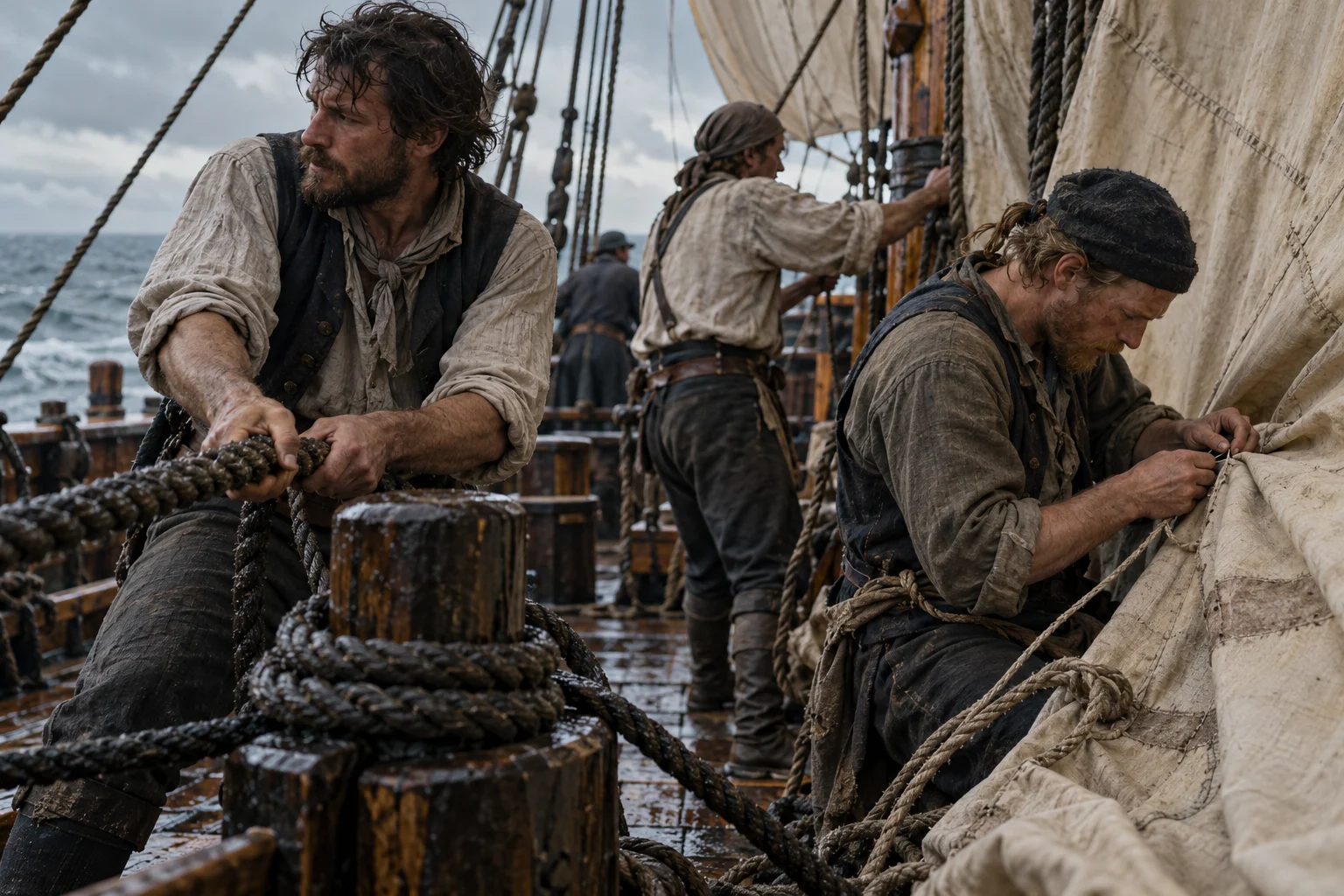
 AI-generated interpretation · not an archival image
Keeping a company afloat.
A vessel was a workplace and a place of confinement as well as a means of travel. The distribution of work and risk helps explain who held power and what people needed to survive.
Guides in this topic.
22 guidesNo matching guide. Try another word or clear the search.
What did pirates eat and drink?
Follow provisions from a captured cask to a bone on the seabed.
The boatswain: making a ship’s labor work
Cordage, canvas, boats and people met in one demanding job.
The carpenter: a wooden ship was never finished
Leaks, broken spars and damaged boats made repair a continuing occupation.
The cooper: why a cask was part of survival
A ship could carry water and still lose it through a failing container.
Canvas, needles and the work of keeping sail
A sail was a working surface that required material, tools and people—not a permanent white shape in the sky.
The gunner: weapons were also an inventory
A battery of cannon depended on stores, maintenance and people who knew what remained aboard.
The surgeon: care, skill and a chest of supplies
The need for treatment could shape a voyage, a capture and a company’s demands ashore.
Forced aboard: when useful work was not consent
A signature, a skilled job and presence during a fight could become contested evidence.
Women aboard: the rule and the exception were both real questions
Bonny and Read’s presence should not become a universal claim about pirate equality.
The watch: a ship could not take the night off
Steering, sail work and pumping continued while part of the company rested.
The steward and the cook: getting provisions to a mess
Food aboard was an inventory, an allocation and a prepared meal—three different things.
Injury compensation: whose risk came out of the common stock?
The reported schedules expose both mutual provision and the violence outside the company.
Discipline and dissent: a code did not end the argument
Rules, officers and a company’s reaction could point in different directions.
Careening: the work that made a ship vulnerable
Getting at the submerged hull meant temporarily giving up part of a vessel’s freedom.
Captives and hostages: the people inside a negotiation
A captured person could be a worker, a source of information, leverage or someone waiting to be released.
Clothing and possessions: the ordinary value of a prize
Cloth, shoes and personal goods belonged beside money in the history of capture.
Music aboard: signal, work and coercion
A tune could mark an occasion, entertain a company—or be demanded from an exhausted captive.
Piracy and slavery: the limits of freedom aboard
Internal voting and shared plunder did not place a company outside the Atlantic systems of coercion.
The shore camp: sick men, sails, casks and a forge
Rogers’s Juan Fernández stop shows recovery and repair happening together.
Indentured servants in the buccaneer world
Promised opportunity could become harsh contracted labor, while maritime companies offered one possible way out.
Turtling: the skilled work behind a ship’s fresh provisions
Seafood entered a voyage through local knowledge, small craft and decisions about where to stop.
Miskito seamen: expertise a buccaneer company could not replace
Dampier’s account reveals skilled maritime partners, while also exposing the limits of his own perspective.