
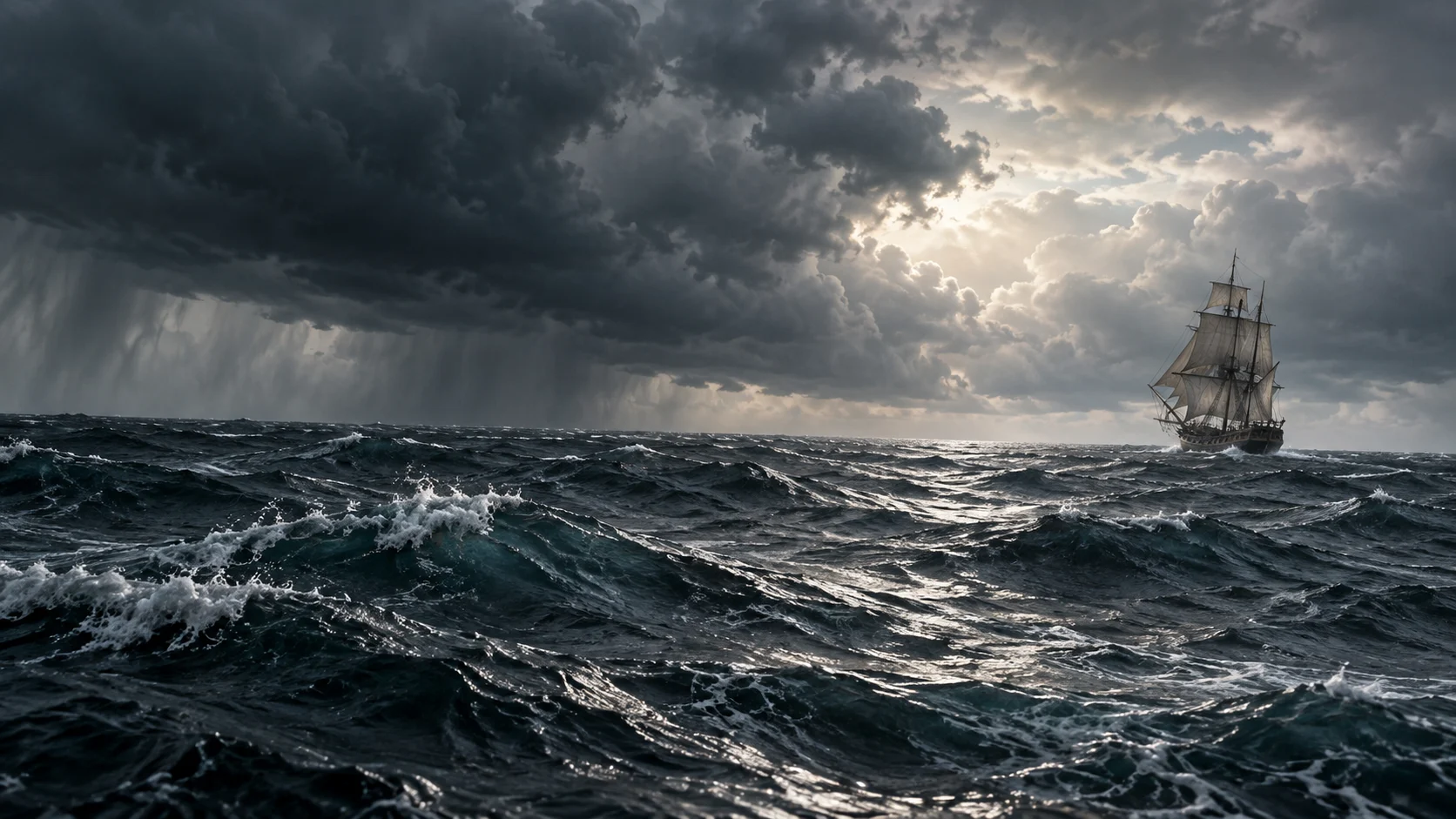
The target was still ahead
The expedition was preparing to attack Dutch Curaçao. Royal naval ships joined forces with buccaneers gathered from French Hispaniola. They had different kinds of vessels and experience, but their immediate purpose required moving together. [1]
The disaster happened on the approach, before the planned assault. It belongs to the history of navigation and fleet coordination as much as to the history of raiding.
An advance vessel was not proof of deep water
Haring describes scouting vessels going ahead while pilots disagreed about the fleet’s position. Some of the advance craft drew less water than the larger ships and passed over reefs without striking. [1]
A small craft’s safe passage could therefore give a dangerous impression. What mattered was the depth needed by each hull, not merely whether anything had crossed that patch of sea.
A warning had to be understood
In the account, shots and fires intended to warn ships were misunderstood by following vessels. Some continued into danger, while a boat carrying warning helped others turn away. Rescue then depended on small boats working in difficult seas. [1]
The sequence illustrates a problem beyond one unlucky pilot: information had to travel between ships at night, and the meaning of a signal could be contested at the moment it mattered most.
Wreckage became a resource
Grammont remained to recover what could be saved and repair surviving privateering vessels. Ships lost together did not leave one uniform outcome for everyone. Some crews could sail away, some needed supplies, and some were dead or separated from their equipment. [1]
The recovery work connects the fleet disaster to the shore labor found throughout maritime history: handling stores, making repairs and deciding which material was worth carrying onward.
The failure redirected violence
Haring follows the surviving buccaneers into new ventures, including Grammont’s expedition against Maracaibo. The collapse of the original plan did not turn every armed company into peaceful travelers. [1]
Read Grammont, depth sounding and ship’s boats. The wreck connects strategic ambition to the limits of hulls, information and rescue.
Questions, answered.
Was the Aves disaster a sea battle?
The losses described here resulted from striking reefs during an expedition, before its intended attack.
Could a small vessel passing safely establish that the whole fleet was safe?
No. Vessels with different drafts could encounter very different risks over the same reef.
Sources & reading notes
Source checks distinguish an artifact, a reported account and a modern interpretation. They do not constitute independent historian review.
- The Buccaneers in the West Indies in the XVII Century (1910)Clarence Henry Haring; Project Gutenberg transcription · Early twentieth-century historical study; public domain in the USA
Chapter VI, pp.220–222, notes 395–400. Fleet totals, signals and losses are reported through Haring’s cited accounts, not a modern underwater survey. The passage places the wreck four days after a 7 May departure; no unqualified modern-calendar conversion is imposed. An older secondary study drawing on colonial records and earlier narratives. Its imperial framing, racial generalizations and claims about national character are not adopted as fact. Not a substitute for current scholarship.
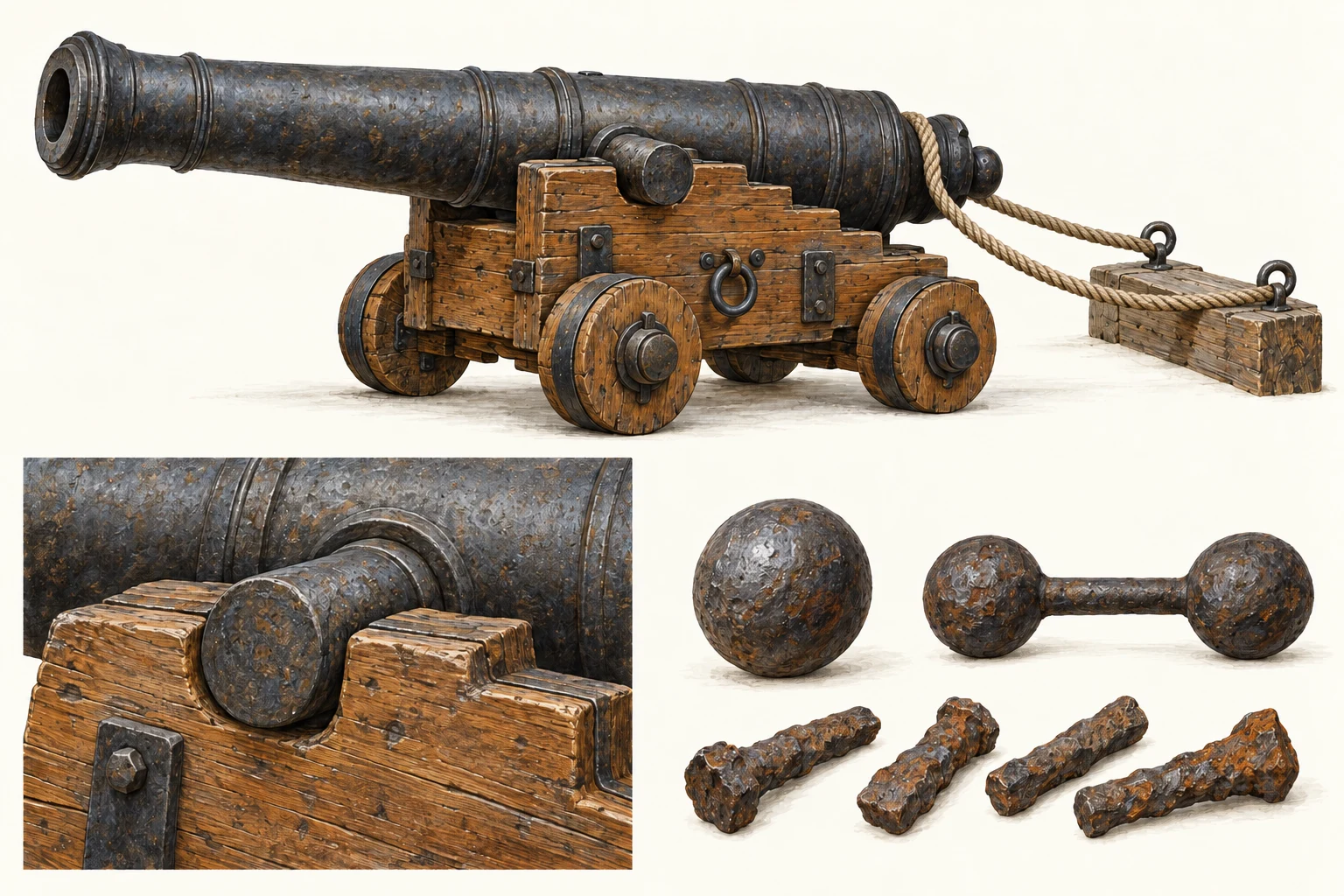 See the details.Cannon, shot and the meaning of a pounder.Explore the illustrated guide