
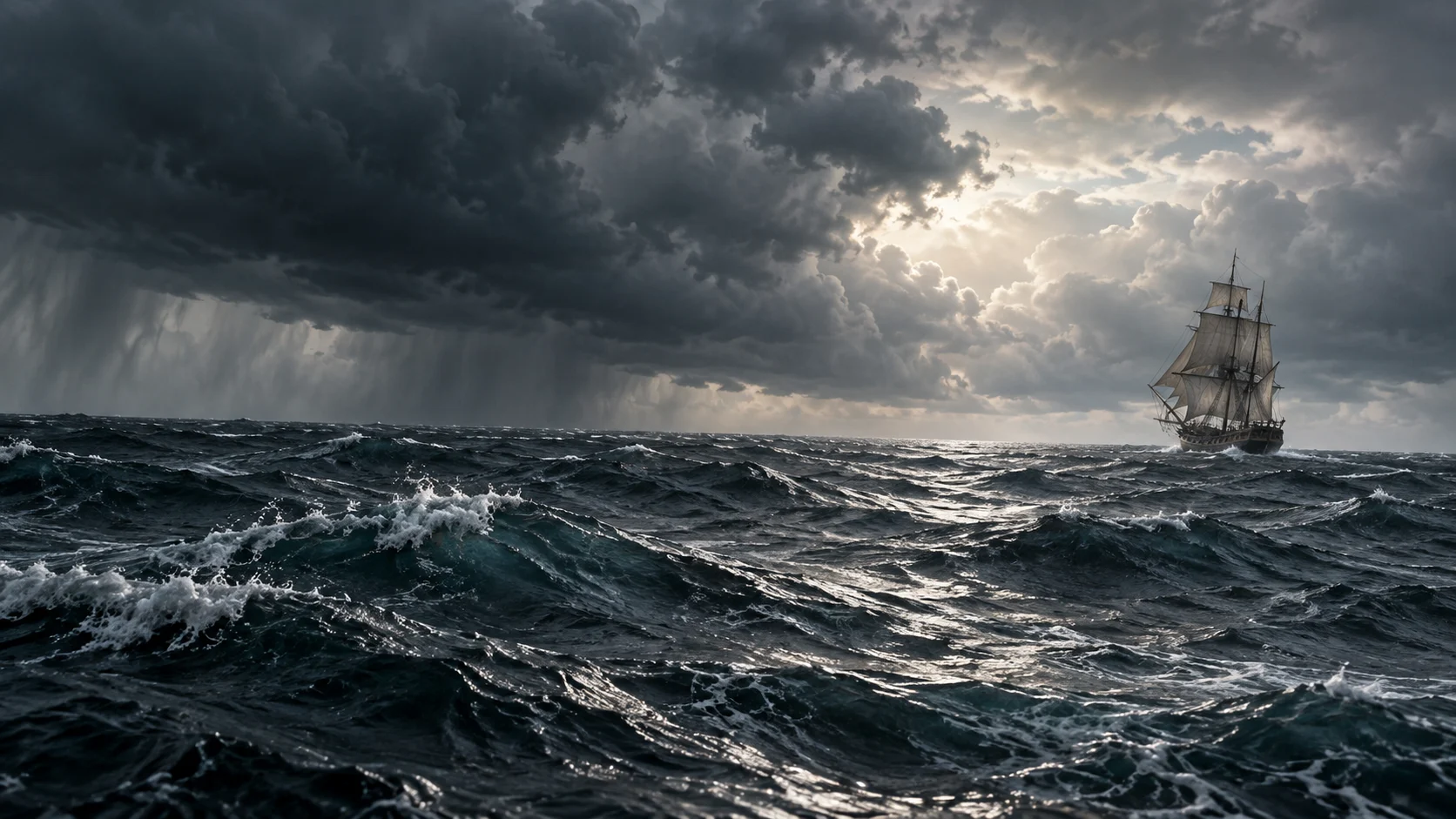
The remaining bread set a limit
Rogers and other officers calculated the bread left aboard their vessels against the anticipated passage to Guam. The December 20 agreement called for refitting and departure rather than extending the wait. They could not guarantee replenishment at the next destination. [1]
A desired prize did not remove the arithmetic of feeding the company. Remaining longer could endanger all the property already taken.
Identification took boats and time
The next sighting was first mistaken by some for their own consort. Boats examined and followed the stranger while light winds delayed the larger ships. Night signals kept the pursuit connected. [1]
The moment between seeing a sail and knowing what it represented was part of the operation, not an empty transition before the fight.
The vessels did not arrive together
Rogers says Duke began the principal exchange while Dutchess was delayed to leeward. After the stranger struck its colors, officers and captain were brought over. The narrative names the captured Manila vessel and reports a second ship had sailed with it. [1]
The account is the commander’s version of an encounter whose distribution of credit later became contentious.
The success injured the commander
Rogers reported a shot through his cheek, damage to his jaw and teeth, and difficulty speaking and swallowing. Surgeons also went aboard the prize to attend wounded people there. Physical damage accompanied the valuable capture. [1]
The image of a profitable prize should therefore include the people who had to live through the encounter and its recovery.
The prize changed the next decision
A committee sent Dutchess and Marquiss after the other Manila ship while Rogers remained with the capture. He records opposing that arrangement but being outvoted. Repairs, cargo transfer and arrangements for prisoners continued in harbor. [1]
Read the partner vessels, the council and the supply problem. The venture’s choices changed because it obtained what it had been waiting for.
Questions, answered.
Could the company wait indefinitely for the galleon?
No. The journal gives explicit calculations and concern about dwindling bread.
Did the capture end all decisions about the cruise?
No. The company still had to manage a prize, injured people, prisoners and a possible second target.
Sources & reading notes
Source checks distinguish an artifact, a reported account and a modern interpretation. They do not constitute independent historian review.
- A Cruising Voyage Round the World (1712; 1928 reprint)Woodes Rogers; 1928 edition with introduction and notes by G. E. Manwaring; Project Gutenberg · Participant voyage narrative in a later public-domain edition
19–25 December 1709, bread calculations, 20 December committee, sighting and engagement, wound and subsequent pursuit decision. The source’s ship-name spelling and reported losses are retained as its account, not modern measured specifications. Distinguish Rogers’s journal from Manwaring’s 1928 introduction and notes. Rogers writes as a commander accounting for his decisions and profits. Reported medical explanations and national or racial judgments are not adopted as modern science or neutral fact.
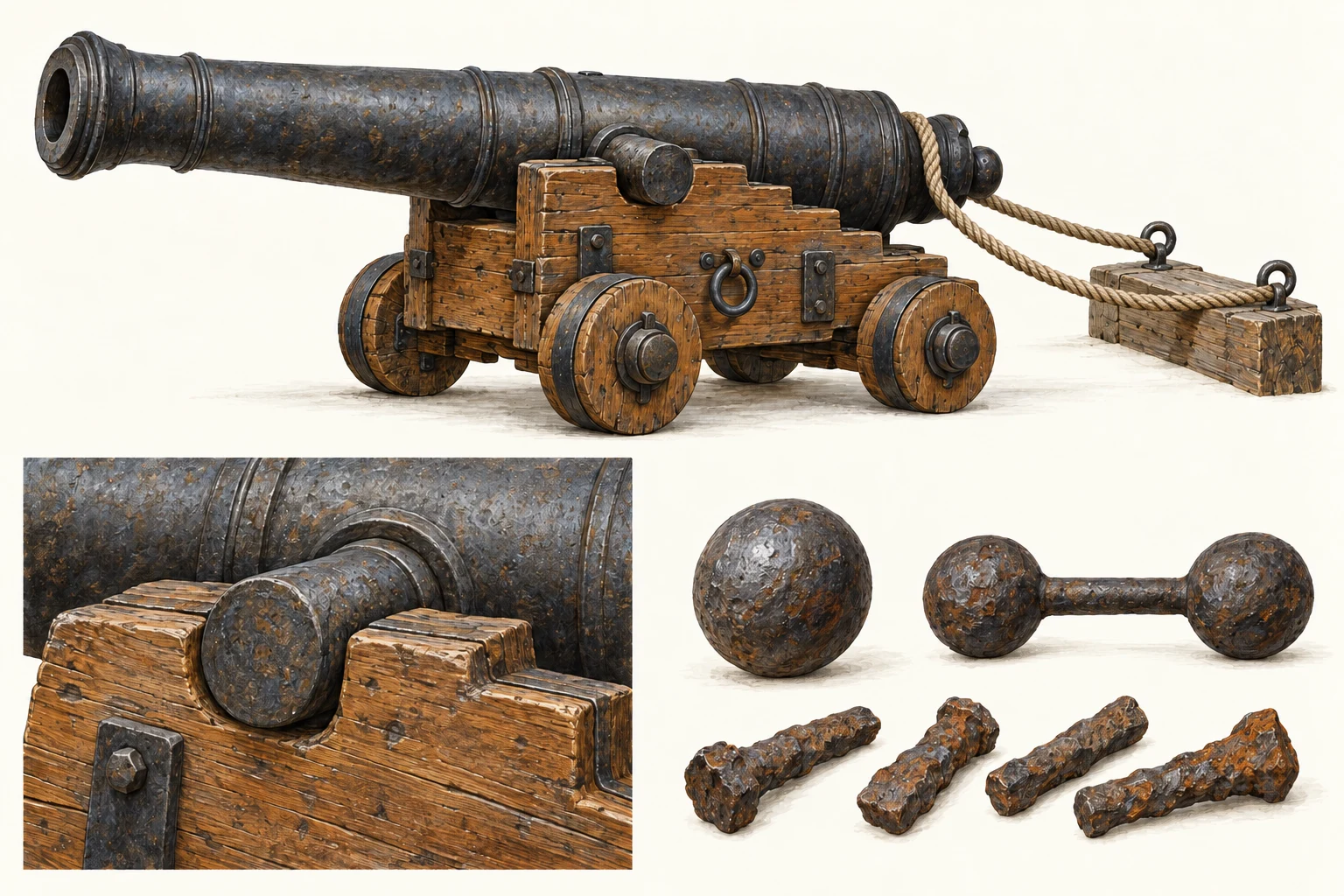 See the details.Cannon, shot and the meaning of a pounder.Explore the illustrated guide