
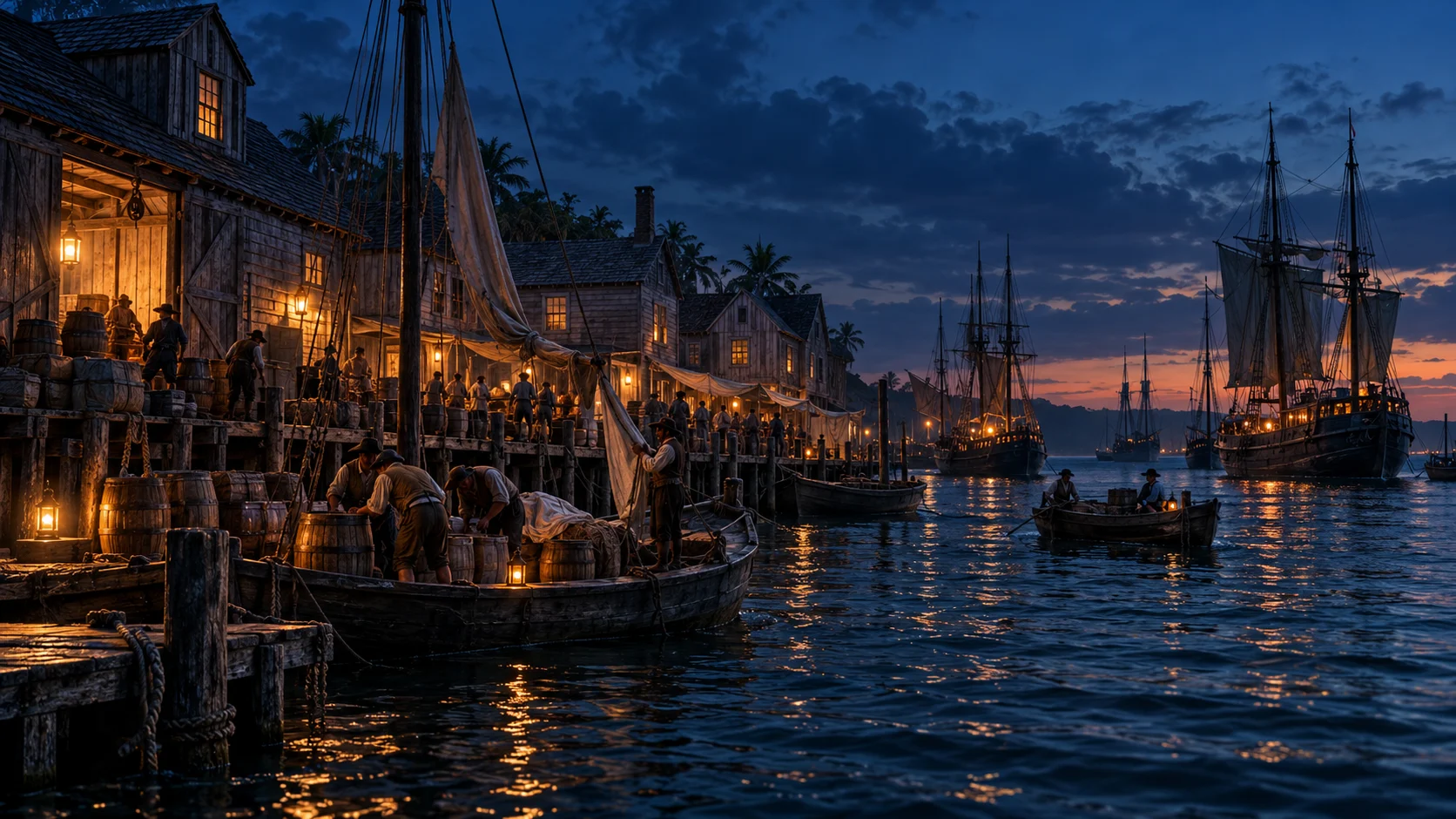
Jamaica was not the expedition’s first attempted conquest
Ships left England under Penn while Venables commanded the land forces. More men joined in the eastern Caribbean before the expedition attacked Hispaniola. The advance against Santo Domingo failed amid difficult marching, inadequate water and effective resistance. [1]
The subsequent move to Jamaica was therefore a response to an earlier failure. Treating the whole expedition as a seamless plan to create Port Royal imposes later results on the original sequence.
The landing did not settle control of the island
The fleet entered the Jamaican harbor in May, and English forces occupied Santiago de la Vega. Spanish inhabitants and troops nevertheless withdrew into the interior and continued resistance rather than simply disappearing after negotiations. [1]
A port and town could be seized while control beyond them remained contested. The island was already inhabited and worked; it was not an empty base waiting for a new flag.
An army also needed a supply system
Haring describes serious sickness and insufficient provisions after the occupation. Appeals for assistance accompanied the military effort. The commanders’ departures and subsequent questioning in England added another layer of controversy. [1]
Winning access to an anchorage did not guarantee the health or endurance of the people holding it. The logistical problems continued after the moment usually selected for a conquest painting.
The new base changed maritime relationships
English control of Jamaica placed officials, ships and merchants within the Caribbean routes used by Spanish commerce. In subsequent years, governors used or attempted to regulate armed maritime companies while building a colonial economy. [1]
That development involved contested authority, coerced labor and changing alliances. It should not be reduced to an inevitable march from conquest to pirate prosperity.
Follow the consequences into the later chapter
Port Royal became a place to recruit, trade, adjudicate prizes and dispute their distribution. Myngs’s operations and Morgan’s campaigns belong to that later history; they are not participants in a single 1655 expedition.
Continue with Port Royal, Myngs and Spanish recognition in the 1670 settlement. Occupation, government and international recognition were different stages.
Questions, answered.
Was Jamaica the first island attacked by this expedition?
No. The unsuccessful attempt against Hispaniola came first.
Did an English landing mean all resistance ended immediately?
No. Resistance and the work of maintaining the occupation continued.
Sources & reading notes
Source checks distinguish an artifact, a reported account and a modern interpretation. They do not constitute independent historian review.
- The Buccaneers in the West Indies in the XVII Century (1910)Clarence Henry Haring; Project Gutenberg transcription · Early twentieth-century historical study; public domain in the USA
Chapter III, pp.85–90 and the ensuing account of occupation and resistance. Dates follow the English chronology presented by Haring; his degrading characterizations of troops and nationalities are not adopted. This is a military-transition guide, not a complete social history of Jamaica. An older secondary study drawing on colonial records and earlier narratives. Its imperial framing, racial generalizations and claims about national character are not adopted as fact. Not a substitute for current scholarship.
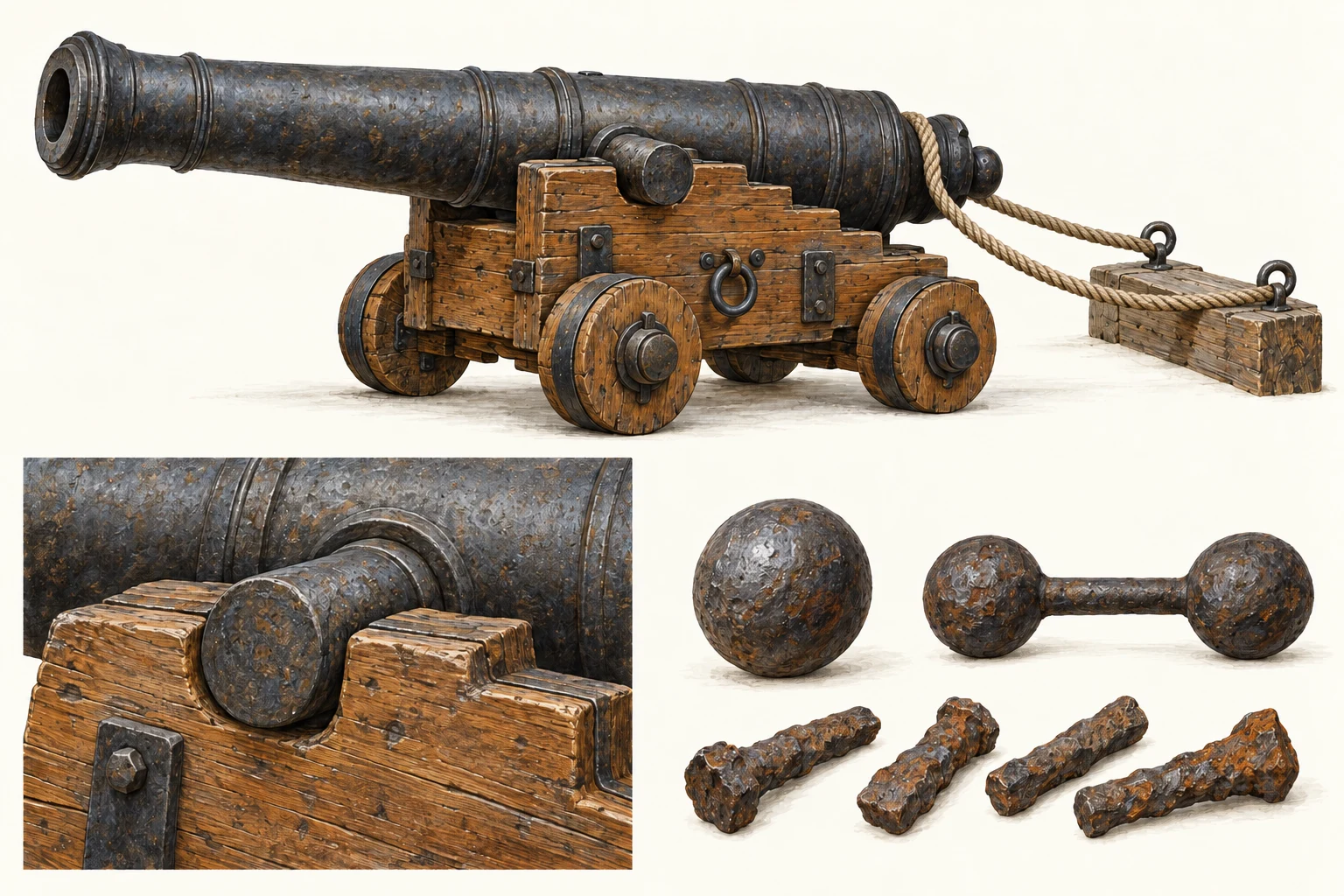 See the details.Cannon, shot and the meaning of a pounder.Explore the illustrated guide