
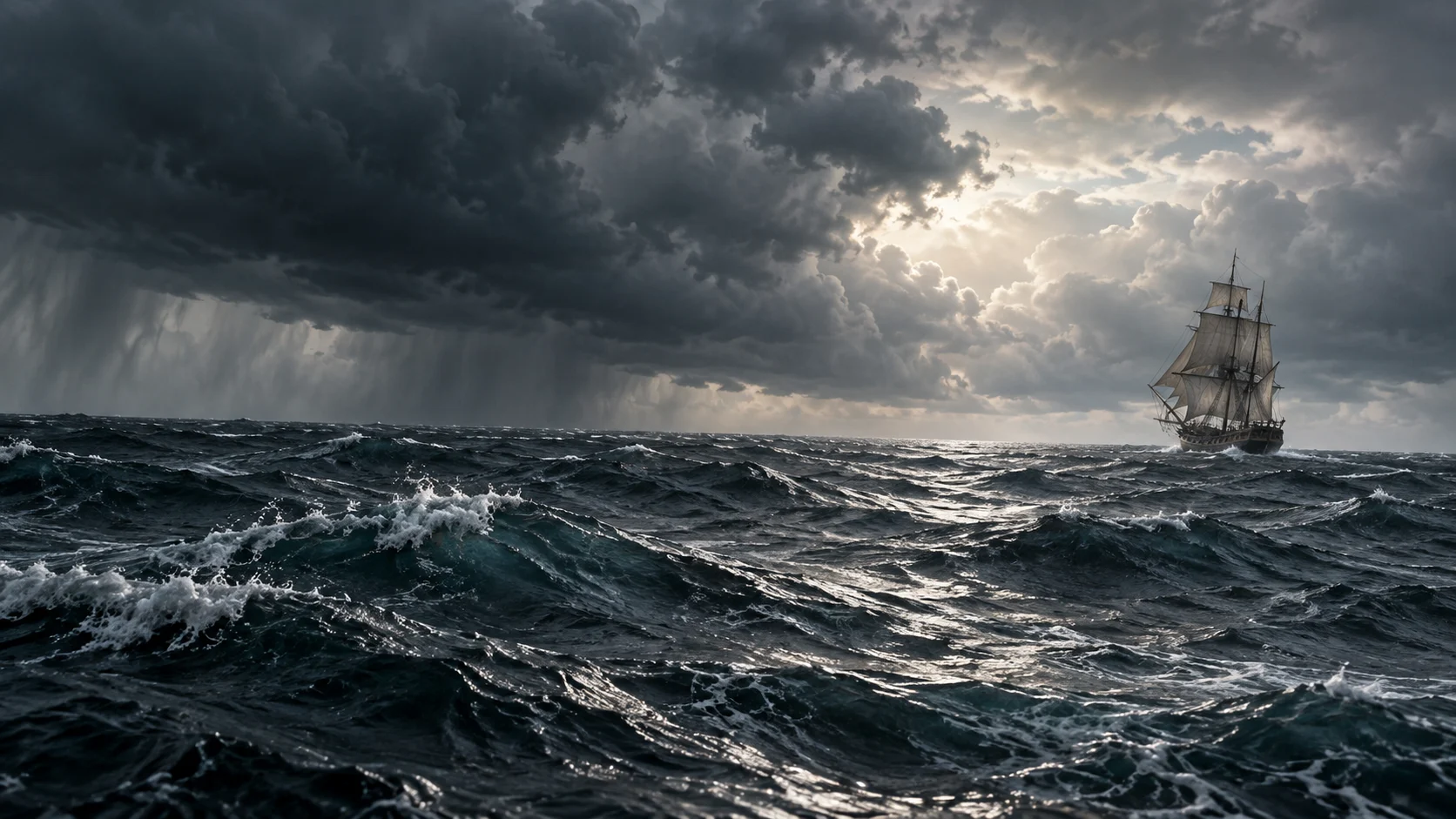
A sail appeared to be a stronger opponent
Ringrose says the company first mistook the approaching vessel’s size for that of a substantial warship. Closer inspection identified a heavily laden merchant vessel. An exchange of fire ended with surrender after the Spanish captain was killed, according to the account. [1]
The uncertainty is part of the event. A distant hull did not announce its cargo, armament and intentions with the clarity of a modern vessel label.
The prize stayed while its contents moved
The company remained at anchor while taking plate, coined money, wine, brandy and other goods. It also stripped useful rigging from a smaller captured bark and sank that craft. The operation rearranged the equipment of the whole company, rather than merely adding a new ship to a permanent fleet. [1]
Transport capacity, stores and the number of men available to work each vessel affected what was worth keeping.
Release and detention served the captors
Ringrose reports that most prisoners were sent away in the prize after the company left only its foremast standing. The narrative gives practical reasons: avoiding encumbrance and conserving provisions. It also says Francisco, described as a Biscayan claiming exceptional pilot knowledge, was retained. [1]
The contrast makes information a visible part of captivity. A person could be considered valuable because of what he knew, while others were released when the company no longer wanted the cost of feeding them.
The captured information had another future
The Royal Museums Greenwich catalogue identifies a Spanish coastal derrotero captured from Rosario off the coast of modern Ecuador. It connects that material to Ringrose and Sharp and to subsequent copying of coastal charts. [2]
The catalogue is a different layer of evidence from Ringrose’s description of taking cargo. Together they show why the history of a prize can continue through documents as well as through the movement of its hull.
The rewards were divided in stages
Ringrose records separate distributions of plate, linen, money and remaining items after the capture. These were accounting events over several days, not one universally recognizable chest opened at the end of a voyage. [1]
Follow how a share model works, the use of coastal books and the different purposes of captivity. A capture could supply wealth, equipment, labor and information at the same time.
Questions, answered.
Was the captured coastal book a buried-treasure map?
No. The catalogue describes navigational coastal information used in later chart work.
Did the company keep every captured vessel?
No. This episode includes releasing the prize and sinking another craft after removing useful equipment.
Sources & reading notes
Source checks distinguish an artifact, a reported account and a modern interpretation. They do not constitute independent historian review.
- Bucaniers of America, the second volume (1685)Open the keyboarded source transcriptionBasil Ringrose; printed for William Crooke; EEBO–TCP transcription · Participant voyage narrative, published 1685; CC0 keyboarded transcription
Chapter XXI, the capture on 29 July, the prisoners, removal of stores and rigging, release of the prize, retention of Francisco and subsequent dividends. The published journal is a mediated participant account. Its nationalist praise, judgments about peoples and claims about motives are not adopted as neutral fact. The XML marks damaged and missing text; page images are not the CC0 transcription.
- Archipielago de las Perlas, from Ringrose’s South Sea WaggonerRoyal Museums Greenwich, National Maritime Museum · Museum manuscript catalogue; item P/32(43)
RMG P/32(43), catalogue account of the Spanish derrotero captured aboard Rosario and its relationship to the copied chart. The record describes this manuscript and the captured Spanish source behind it. It does not make every later drawing a direct eyewitness survey or license reuse of the catalogue photographs.
 See the details.Cannon, shot and the meaning of a pounder.Explore the illustrated guide