
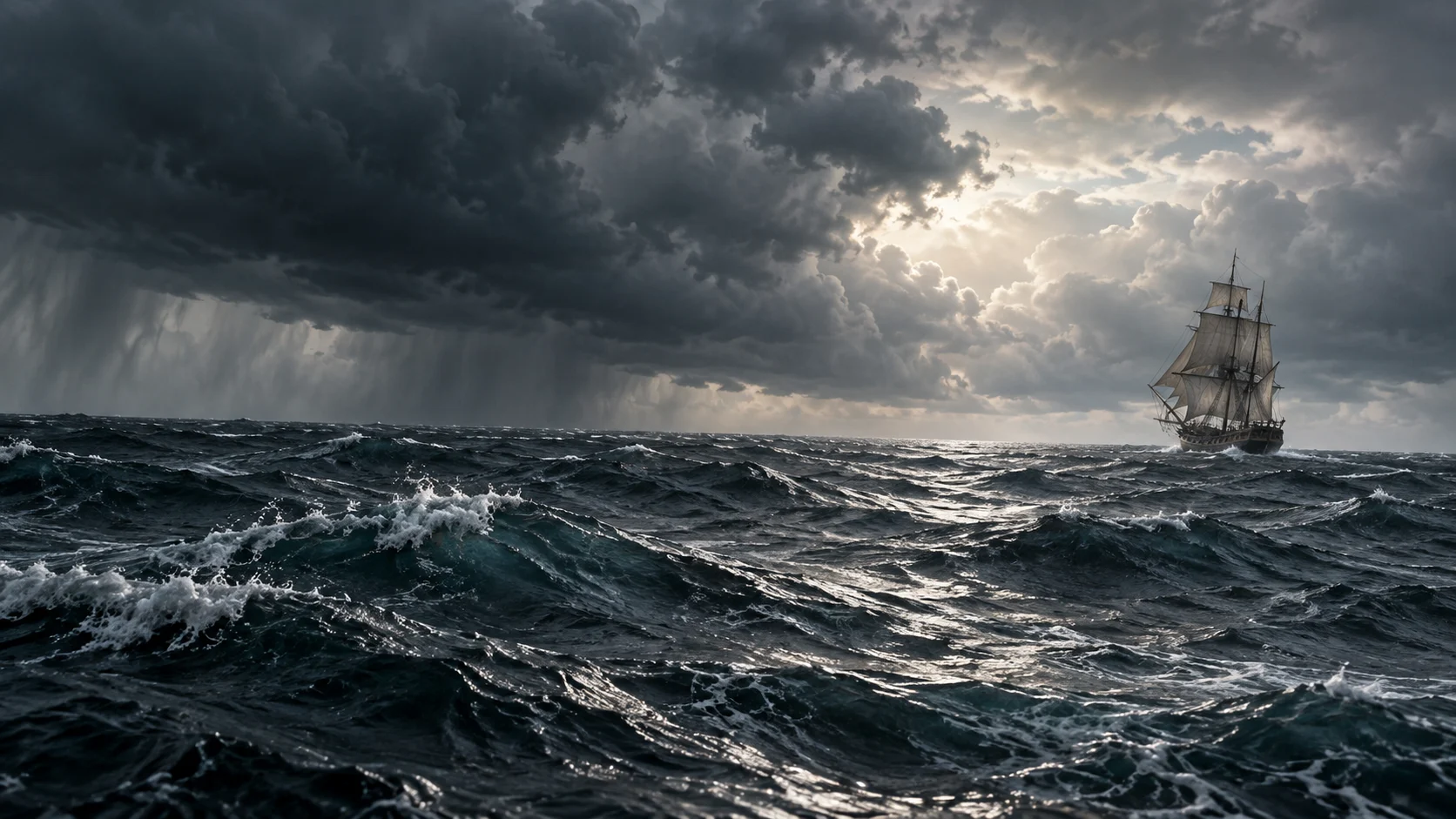
A gateway worth threatening
Portobelo connected maritime trade to the route across the isthmus. In Haring’s account, its commercial importance and reputation for strong defenses made Morgan’s choice striking. Taking a port promised more than goods aboard a single ship: it offered buildings, stored wealth and people who could be compelled to pay. [1]
The coast also shaped the approach. A defended harbor did not make every route into the settlement equally secure. The attackers’ movement between boats, shore and fortifications belongs at the center of the event.
The attack moved through several spaces
Exquemelin’s English narrative follows the company from its vessels toward the town’s defenses, then into the settlement. It describes garrisons resisting, prisoners being confined and successive positions falling. This was a sequence of encounters, rather than one decisive broadside from the sea. [2]
A useful reconstruction therefore distinguishes the entrance, the landing, the defended positions and the streets. Compressing them into one triumphant image hides how the company’s options changed as each space was reached.
The civilians were inside the operation
The narrative describes inhabitants trying to hide valuables and people being threatened or tortured to reveal property. It also alleges the use of captive religious people during an assault. These are grave claims in a mediated early account; their dramatic detail should be attributed, not repeated as an unquestioned spectacle. [2]
The central fact of the telling is coercion. The population was not a passive background to a contest between famous captains. Its vulnerability helped turn capture into material gain.
Ransom extended the occupation
Morgan demanded payment and threatened destruction before withdrawal. The account describes messages to the authorities beyond the captured town and an attempted response from Panama. Control of Portobelo thus created pressure outside it. [2]
The time spent obtaining a ransom was part of the campaign, not an interval after the real event. The company still needed provisions, security and a way to carry away what it had taken.
Jamaica inherited the consequences
Haring places the raid within Governor Modyford’s policy and the argument over privateering commissions. The return of a successful company could strengthen its standing locally while making relations with Spain worse. A profit at Port Royal could be an outrage in another government’s account. [1]
Authorization and reception therefore belong beside the military sequence. The raid did not take place outside diplomacy simply because its participants expected personal shares.
Follow the next campaign without merging them
The Maracaibo expedition followed in 1669, and Panama was attacked in 1671. They involved the same celebrated leader but different approaches, defenses and outcomes. Reading them separately prevents one dramatic episode from becoming a generic story repeated under three place names.
Continue with the lake campaign, the crossing to Panama and Morgan’s changing position within the colonial system.
Questions, answered.
Was this the same raid as the sack of Panama?
No. Portobelo was attacked in 1668; the Panama expedition reached its target in 1671. They are separate campaigns.
Did taking the forts end the operation immediately?
No. The narrative includes occupation, coercion, ransom demands and preparation for withdrawal.
Sources & reading notes
Source checks distinguish an artifact, a reported account and a modern interpretation. They do not constitute independent historian review.
- The Buccaneers in the West Indies in the XVII Century (1910)Clarence Henry Haring; Project Gutenberg transcription · Early twentieth-century historical study; public domain in the USA
The Morgan chapter, printed pages 143–155, for the 1668 setting, the expedition and its political consequences. Haring frequently depends on earlier accounts, so agreement is not automatically independent corroboration. An older secondary study drawing on colonial records and earlier narratives. Its imperial framing, racial generalizations and claims about national character are not adopted as fact. Not a substitute for current scholarship.
- Bucaniers of America (1684 English edition)Open the keyboarded source transcriptionAlexandre Olivier Exquemelin; printed for William Crooke; EEBO/TCP transcription · Early English translation through a Spanish version; TCP transcription released under CC0
Part II, Chapter VI, the attack on Puerto Velo, prisoners, ransom and departure. The most dramatic scenes are the narrative’s claims, not independently corroborated details. This 1684 English edition is not the 1678 Dutch original. Translation, selection, authorial position and transcription gaps remain part of the evidence. Attribution to a participant does not make every anecdote independently verified.
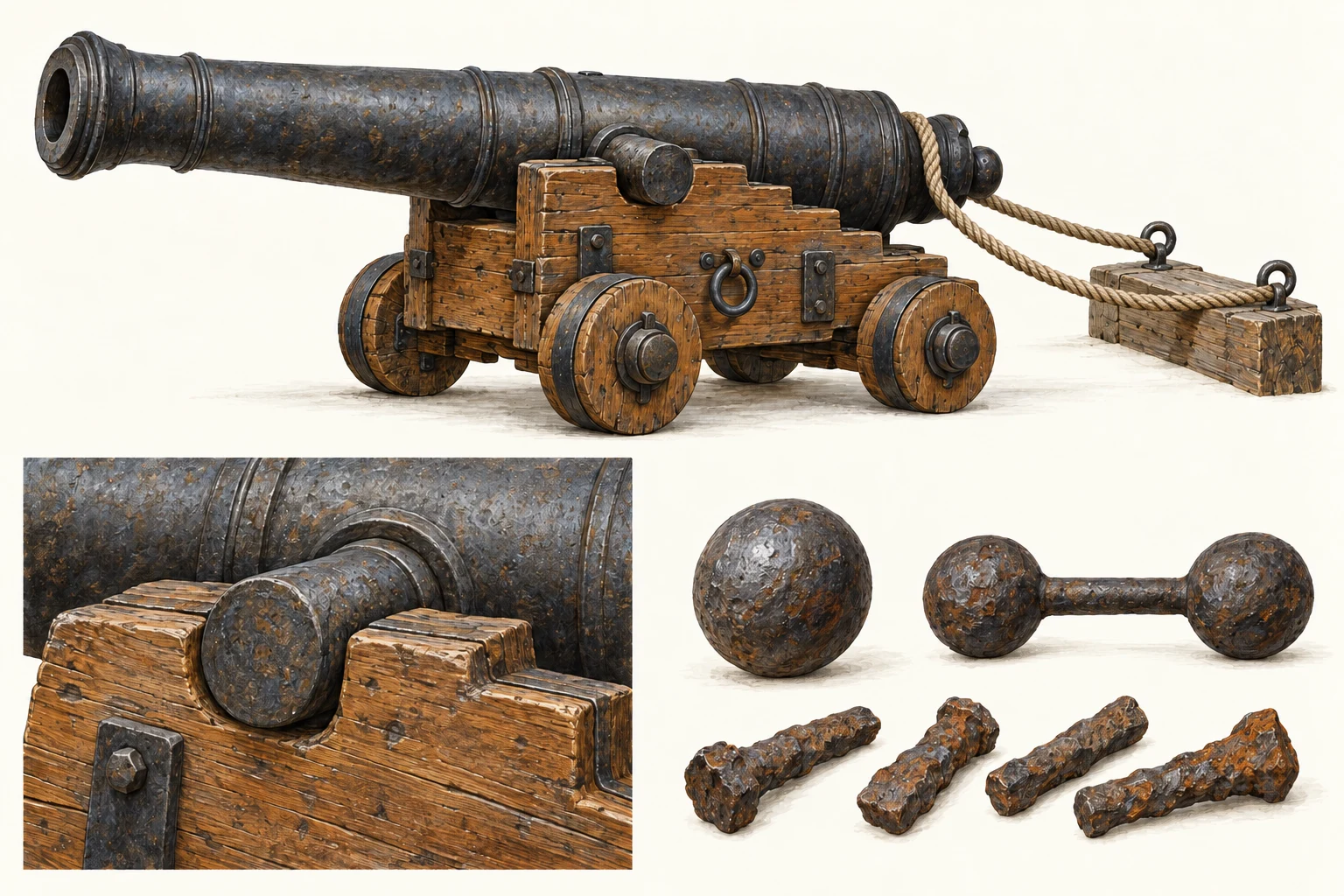 See the details.Cannon, shot and the meaning of a pounder.Explore the illustrated guide