
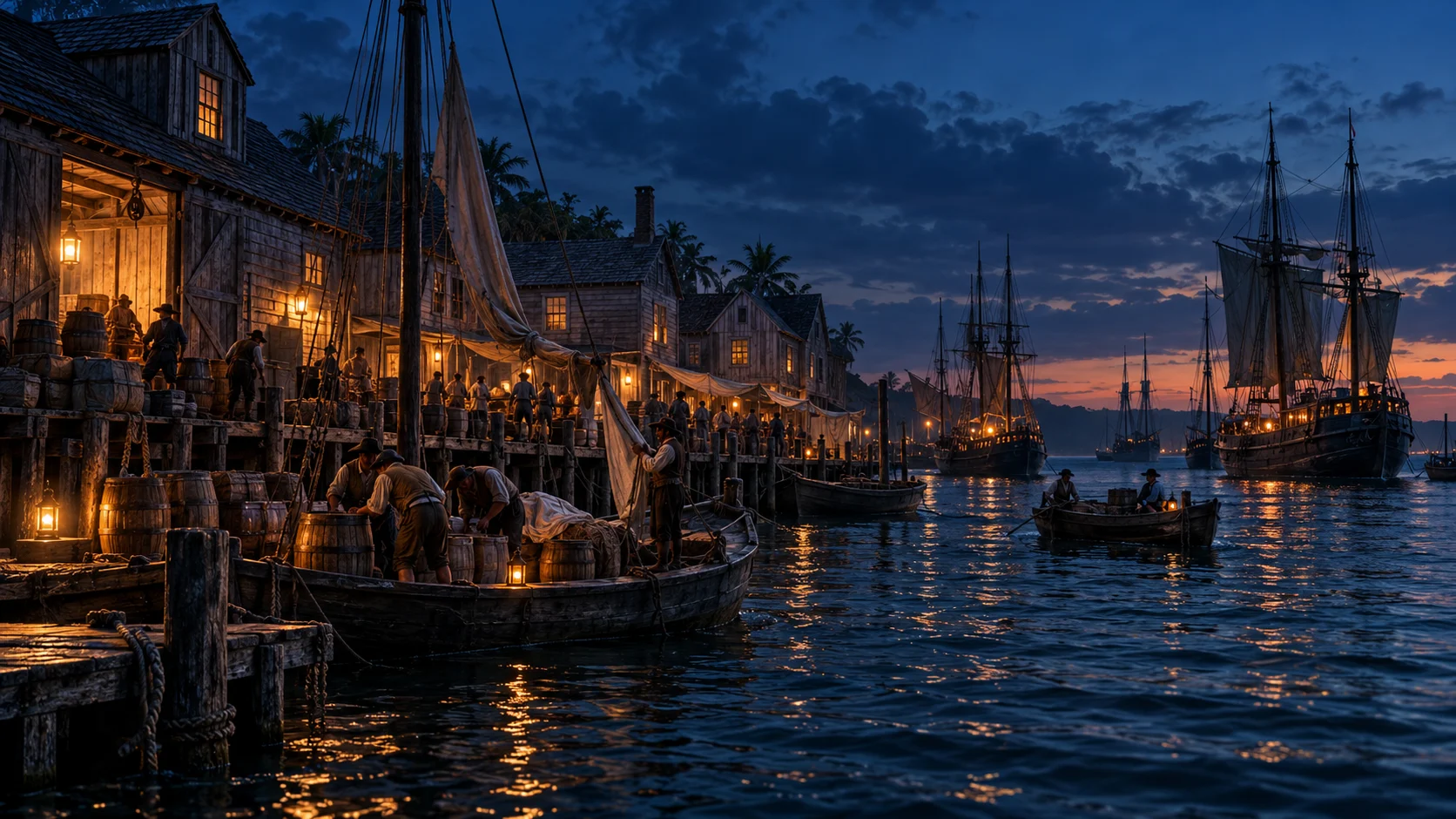
 AI-generated interpretation · not an archival image
The coast was part of the company.
A place could supply water, information, labor and markets. It could also expose a vessel to capture. Compare functions and dates rather than treating every place associated with pirates as the same kind of haven.
Guides in this topic.
13 guidesNo matching guide. Try another word or clear the search.
Nassau: what made a pirate haven work?
A haven was a place to find supplies, information and company—not a sovereign kingdom outside the rest of the world.
Tortuga: hunters, traders and buccaneers
The island’s history is more complicated than the familiar image of a permanent pirate town.
Port Royal: the port behind the privateers
Jamaica’s maritime center linked plunder, imperial policy and the ordinary business of a harbor.
Charleston: when the sea road became a hostage
Blackbeard did not have to occupy the town to interrupt its connection to the Atlantic.
Ocracoke: shallow water at the end of Blackbeard’s career
The final fight makes little sense without the inlet, the soundings and the draft of the vessels.
Tobago: a repair stop that broke a pirate company
When guns and stores are ashore and a ship is on its side, a haven can become a trap.
Petit-Goâve: a haven was also a political problem
The port on Hispaniola connected buccaneer companies to markets, governors and rival colonies.
Île-à-Vache: a rendezvous between voyages
An island off southern Hispaniola connected repairs, wrecks and temporary raiding coalitions.
Havana: the return fleet’s Caribbean hinge
A port’s value came from the routes and services converging there, not simply the treasure aboard visiting ships.
Juan Fernández: water, repairs and a disputed command
An island stop could supply a company while exposing it to weather, disagreement and pursuit.
Gorgona: a repair stop that others could predict
Rain, hull work and signs of pursuit made the same island useful and dangerous at different visits.
Golfo Dulce: a sheltered job still depended on people ashore
Sharp’s company sought a place to careen, and entered a landscape of provisions, exchange and captivity.
The Gulf of Nicoya: small craft, shallow water and useful prizes
The 1681 visit shows why a large captured vessel needed boats and local information.