
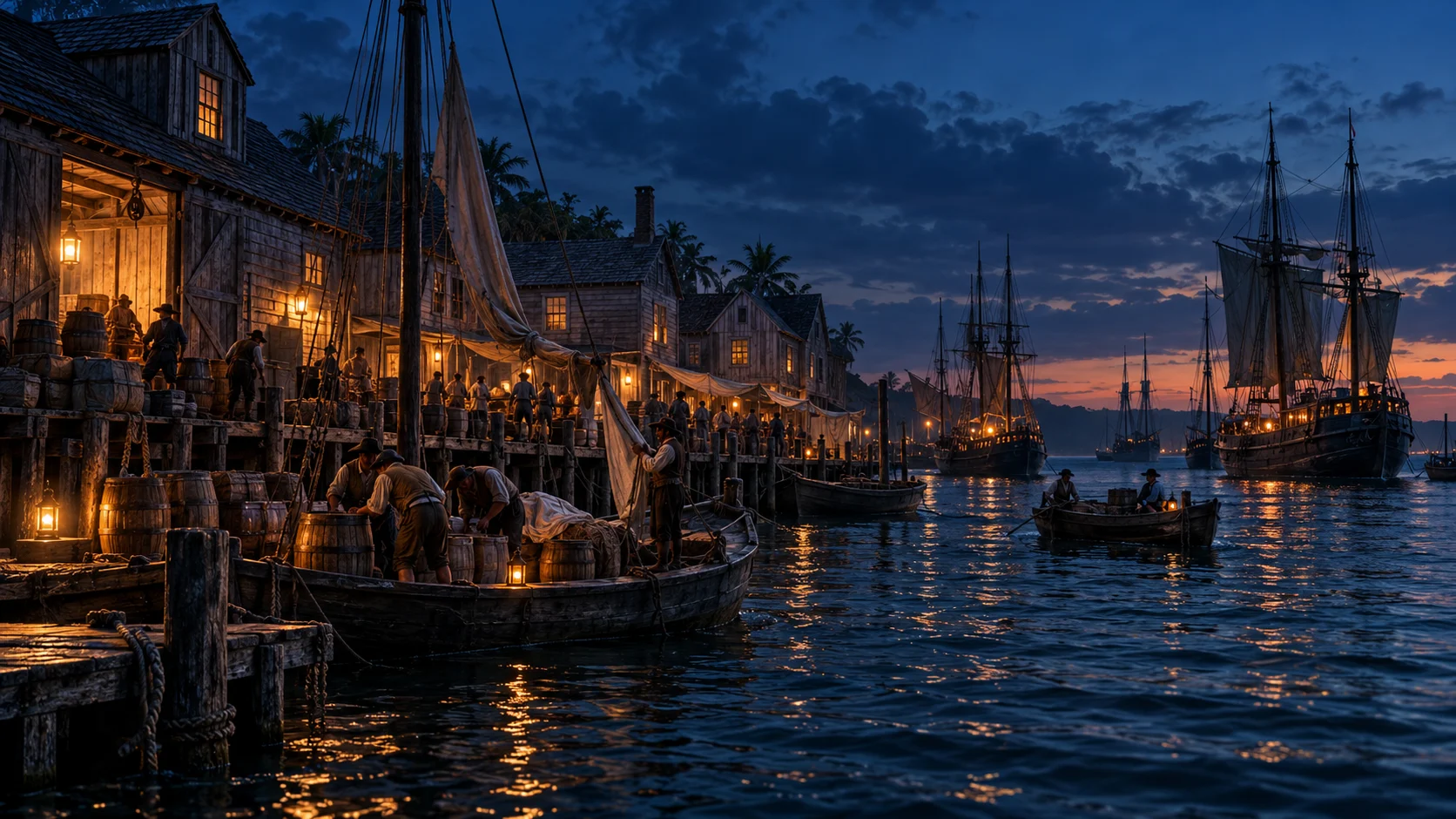
The entrance mattered
A commercial port is connected to the sea through routes vessels must actually use. In the General History, Blackbeard’s company lay off Charleston’s bar, taking outgoing and incoming shipping. The author describes vessels waiting rather than risk passing the pirates. [1]
The threat did not require a permanent occupation of the town. It worked by making normal movement uncertain. Merchants, passengers and authorities faced a problem created just outside the place where they conducted ordinary business.
A company with prisoners to bargain over
The account describes people taken aboard merchant vessels and held while the company made demands. The threat against the prisoners transformed a shortage of medicines into a negotiation with the provincial government. [1]
The captives were not a single category. Passengers, working seamen and enslaved people appear within the shipping described by the source. The text’s commercial language often treats enslaved people as cargo. A modern explanation should identify that violence rather than reproduce the classification uncritically.
An embassy backed by coercion
Richards and other pirates went ashore with a captive, Marks, to deliver the demand. The source emphasizes the anger of townspeople who could see the men but feared harming them while prisoners remained at risk. The authorities sent the medicines, and the visitors returned to the vessels. [1]
This scene makes the imbalance clear. Armed power at sea gave a small party leverage ashore. The action of walking through a town did not mean the pirates were welcomed, legally recognized or free of the threat behind their presence.
Release did not mean no loss
After receiving the medicines, the company released the ships and prisoners, having also taken property and provisions. The book gives financial estimates, but this guide does not convert those figures into a modern dollar value. Such conversions depend on what is being compared: purchasing power, wages, silver content or share of an economy. [1]
The immediate outcome was restored movement and the survival of captives. It was not a harmless transaction. The company had imposed the terms through threats of murder and destruction.
Connect the port to the coast
From Charleston the narrative moves toward North Carolina, the loss of the flagship and a changed relationship with colonial authority. That sequence is one reason Blackbeard’s career cannot be understood through a single famous battle. [1]
Read the episode alongside shipboard supplies and the vessels carrying the company. A port, a vessel and a medical shortage belong to the same story.
Questions, answered.
Did Blackbeard capture the town itself?
The account describes his company interrupting shipping and holding captives near the harbor entrance. That is different from occupying the town.
Was the demand only for treasure?
No. Medicines are central to the reported negotiation, alongside other property taken from shipping.
Sources & reading notes
Source checks distinguish an artifact, a reported account and a modern interpretation. They do not constitute independent historian review.
- A General History of the Pyrates (1724)Published under the name Captain Charles Johnson · Early printed account; public-domain text
Chapter III, paragraphs describing ships detained off the Charleston bar, the medicine demand, Richards and Marks ashore, and the release of captives. The account’s monetary valuations are omitted rather than treated as audited totals. Authorship is disputed. A near-contemporary compilation, not a surviving signed pirate code or a neutral transcript. Cite its claims as reported claims.
 See the details.Careening: the work that made a ship vulnerableExplore the illustrated guide