
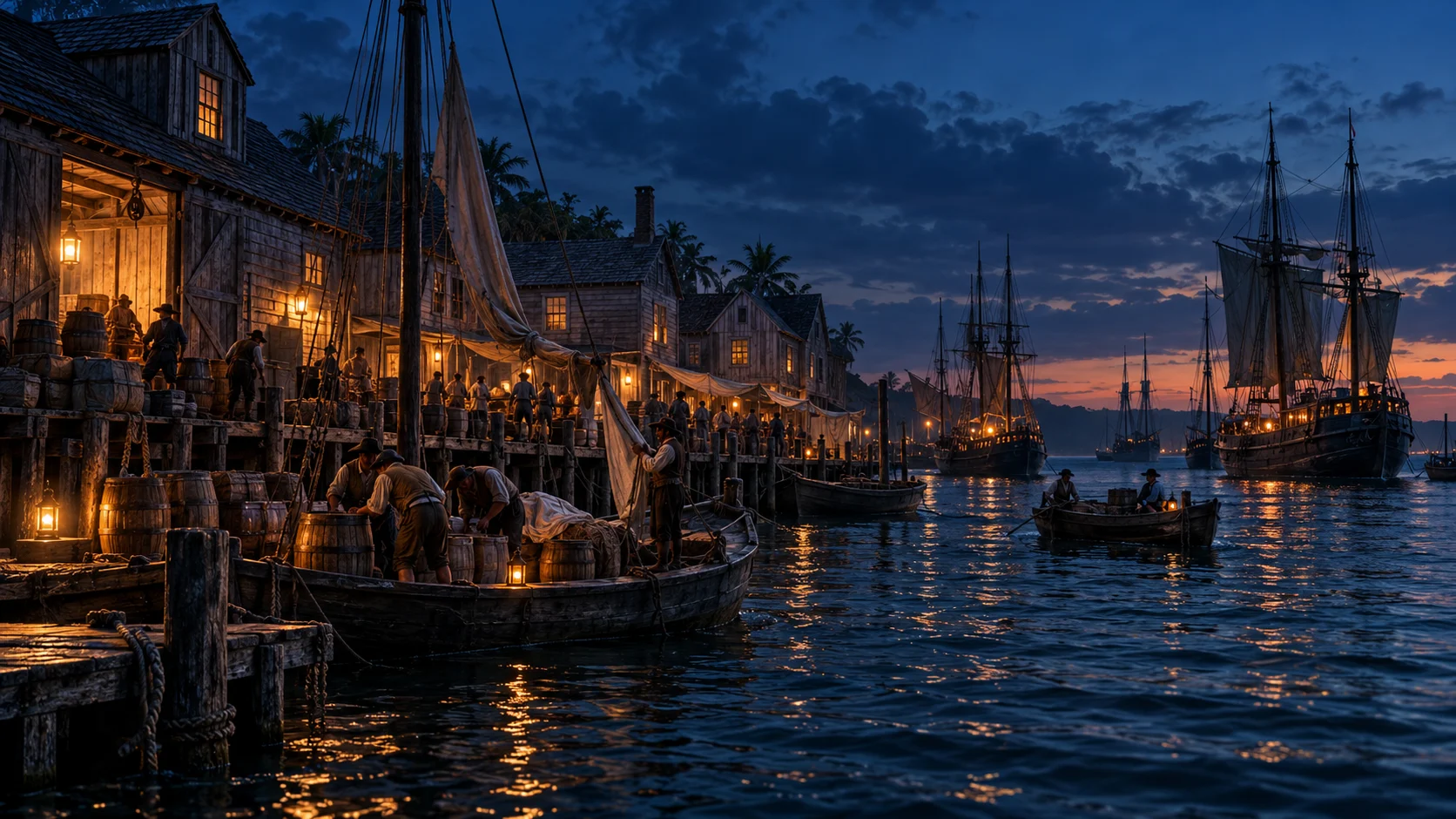
A port made raiding usable
An expedition could seize goods at sea or on a hostile coast, but its participants still needed a place to obtain equipment, recruit, sell and spend. Port Royal supplied access to a colonial economy. Haring repeatedly follows expeditions out of Jamaica and then back to the port with ships, captives or plunder. [1]
The familiar image of taverns and spending is only one part of that relationship. The proceeds of violence entered a network of merchants, officials, craftsmen and shipboard workers. Calling the port wicked does not explain how that network worked.
The governor was part of the story
Under Thomas Modyford, issuing or withdrawing commissions became a tool of colonial policy. Haring describes fears of attack, arguments about the treatment of English shipping and disagreement over what peace with Spain meant in the Americas. Buccaneering was entangled with those disputes. [1]
A commission could provide a claim of authorization, but it did not make every action acceptable to an opponent or to officials at home. When policy shifted, the same people could be treated as useful defenders or dangerous embarrassments.
Morgan’s returns were public events
Morgan’s raids brought reputation, wealth and diplomatic consequences back to Jamaica. Haring describes the return from Maracaibo in 1669 as part of a wider cycle: expeditions, Spanish complaints, instructions from England and renewed local insecurity. [1]
The port was therefore not simply a refuge after adventure. It was a point where the effects of the expedition were argued over, monetized and folded into the next decision about war and trade.
The earthquake was not a moral verdict
On 7 June 1692, an earthquake devastated Port Royal. Haring’s account reproduces contemporary descriptions of buildings and parts of the town being lost, followed by disease and further disruption. Such accounts need archaeological and modern historical checking before their dramatic numbers are repeated as exact totals. [1]
The event has often invited a story of punishment for a sinful town. That is an interpretation people placed on disaster, not a geological explanation. The people killed or displaced cannot be reduced to a moral ending for the history of pirates.
Compare ports by function and period
Port Royal’s connection to seventeenth-century privateering differs from the concentration of pirates at New Providence in the following century. Both were connected to commerce and authority, but they were not interchangeable pirate capitals. [1]
For a wider view, compare Tortuga’s hunters and traders, Nassau under pressure and a colonial port held hostage from the sea.
Questions, answered.
Was Port Royal entirely outside government?
No. Its history is closely connected to Jamaican governors, commissions, merchants and imperial policy.
Did the earthquake end all piracy immediately?
No. A disaster at one port is not a universal end date for piracy or privateering across the Atlantic.
Sources & reading notes
Source checks distinguish an artifact, a reported account and a modern interpretation. They do not constitute independent historian review.
- The Buccaneers in the West Indies in the XVII Century (1910)Clarence Henry Haring; Project Gutenberg transcription · Early twentieth-century historical study; public domain in the USA
Chapters on Jamaican privateering and Morgan, especially printed pages 98–99, 132–160 and the account of the June 1692 earthquake near page 260. Disaster numbers quoted in older accounts are not adopted here as precise modern findings. An older secondary study drawing on colonial records and earlier narratives. Its imperial framing, racial generalizations and claims about national character are not adopted as fact. Not a substitute for current scholarship.
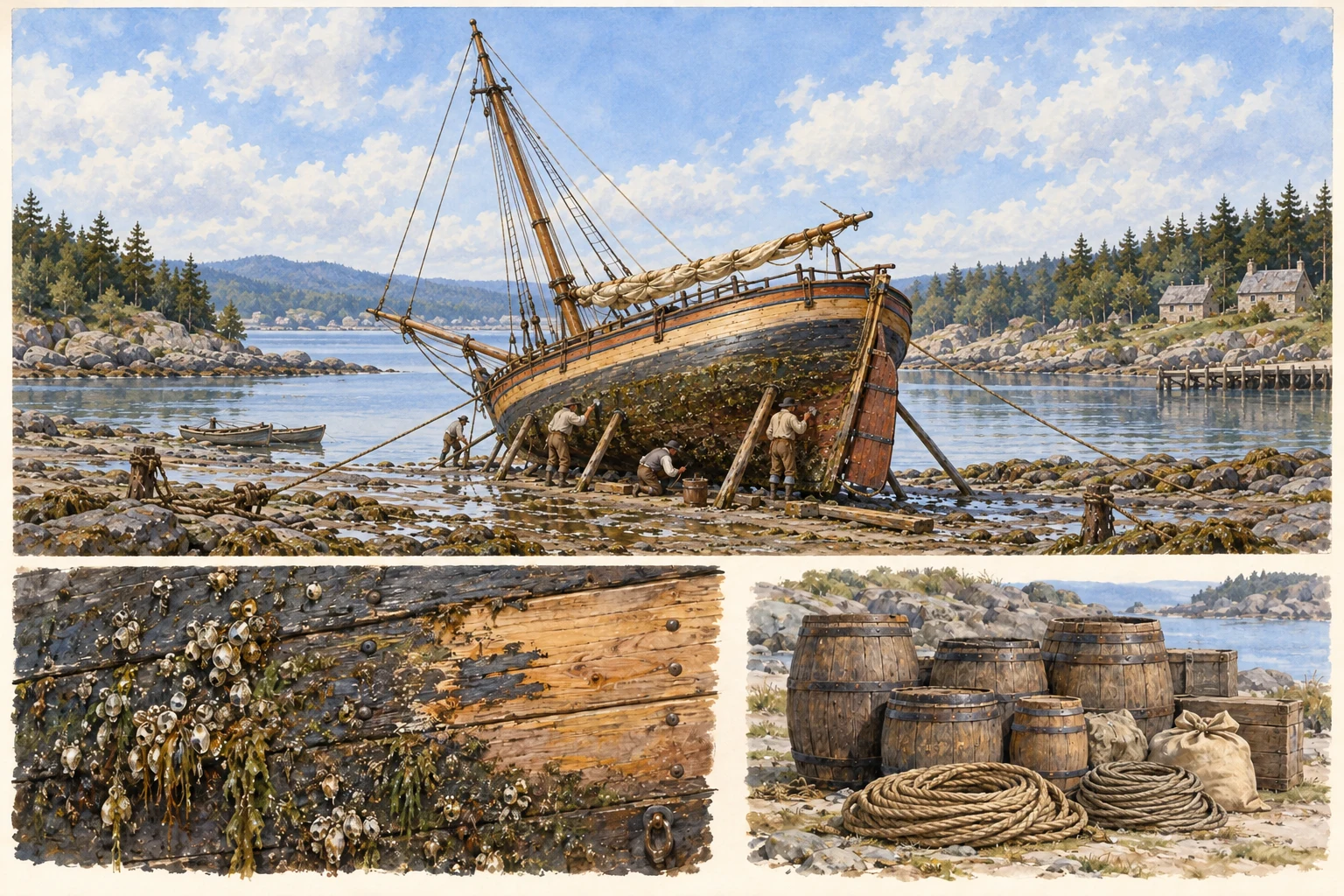 See the details.Careening: the work that made a ship vulnerableExplore the illustrated guide