
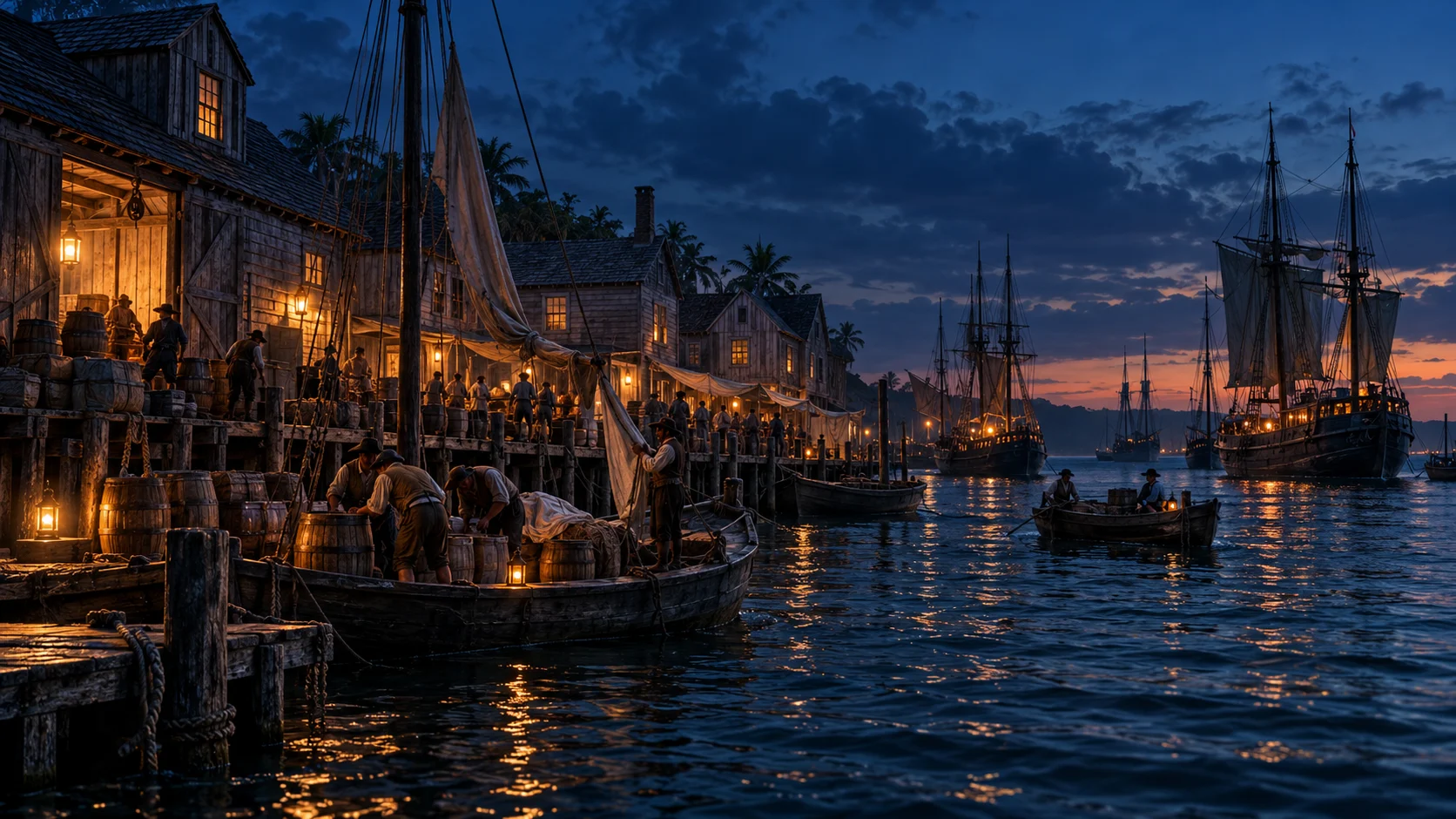
A location chosen for work
The company needed to clean and fit a captured vessel. The General History says it selected Tobago and arrived with a provision sloop, Antelope, in April 1723. Equipment and stores were taken ashore and the vessel put on the heel. [1]
The setting was therefore a working site, not a permanent pirate city. It had to support a process in which a vessel temporarily lost some of its ability to fight or depart. That condition changed the balance of risk.
A fleet is not always ready at once
Anstis remained with the brigantine while Fenn commanded the larger captured ship. The vessels did not all have the same condition or freedom of movement. The approach of a naval opponent could therefore have different consequences for different members of the same enterprise. [1]
This is one reason to resist treating a pirate company as a single ship with one captain. Consorts, tenders, prizes, provision craft and vessels under repair could share an operation without being interchangeable.
Winchelsea interrupts the operation
The arrival of Winchelsea forced a hurried response. In the printed account, vessels were burned and men fled into the woods, while Anstis escaped in the brigantine. Fenn and some companions were later taken. [1]
The event was not a neat contest in which every vessel formed a line and fought. Surprise during maintenance produced destruction, flight and scattered captures. A less orderly sequence can be more revealing than a familiar battle scene.
The escape did not preserve the command
The book then describes discontent within Anstis’s company leading to his killing and the surrender of the brigantine at Curaçao. Men left on Tobago had another history, including concealment ashore and eventual departure in a small vessel. [1]
Geography and company politics connect here. An external attack disrupted the material basis of the enterprise. It did not mechanically determine every later decision, but it left people facing new costs, risks and opportunities.
A case study, not a universal rule
Careening did not always end in disaster, and Tobago was not always a pirate repair site. This page isolates one documented narrative so its sequence remains inspectable. It should not become a claim about every visit to the island.
Read Anstis’s full career, another company caught during maintenance and the work performed by specialist sailors to place the episode in a wider maritime world.
Questions, answered.
Was this Anstis’s final battle?
The narrative describes a disruption at the careening site, his escape, and a later killing by members of his company. Those are separate events.
Was the ship fully ready to fight?
The account says guns and stores had been taken ashore and the vessel put on the heel. That is central to the vulnerability described.
Sources & reading notes
Source checks distinguish an artifact, a reported account and a modern interpretation. They do not constitute independent historian review.
- A General History of the Pyrates (1724)Published under the name Captain Charles Johnson · Early printed account; public-domain text
Chapter X, closing paragraphs: Captain Fenn’s new command, Antelope, arrival at Tobago in April 1723, Winchelsea, the destruction of vessels and the company’s subsequent split. This is a case study of the reported episode, not the island’s complete history. Authorship is disputed. A near-contemporary compilation, not a surviving signed pirate code or a neutral transcript. Cite its claims as reported claims.
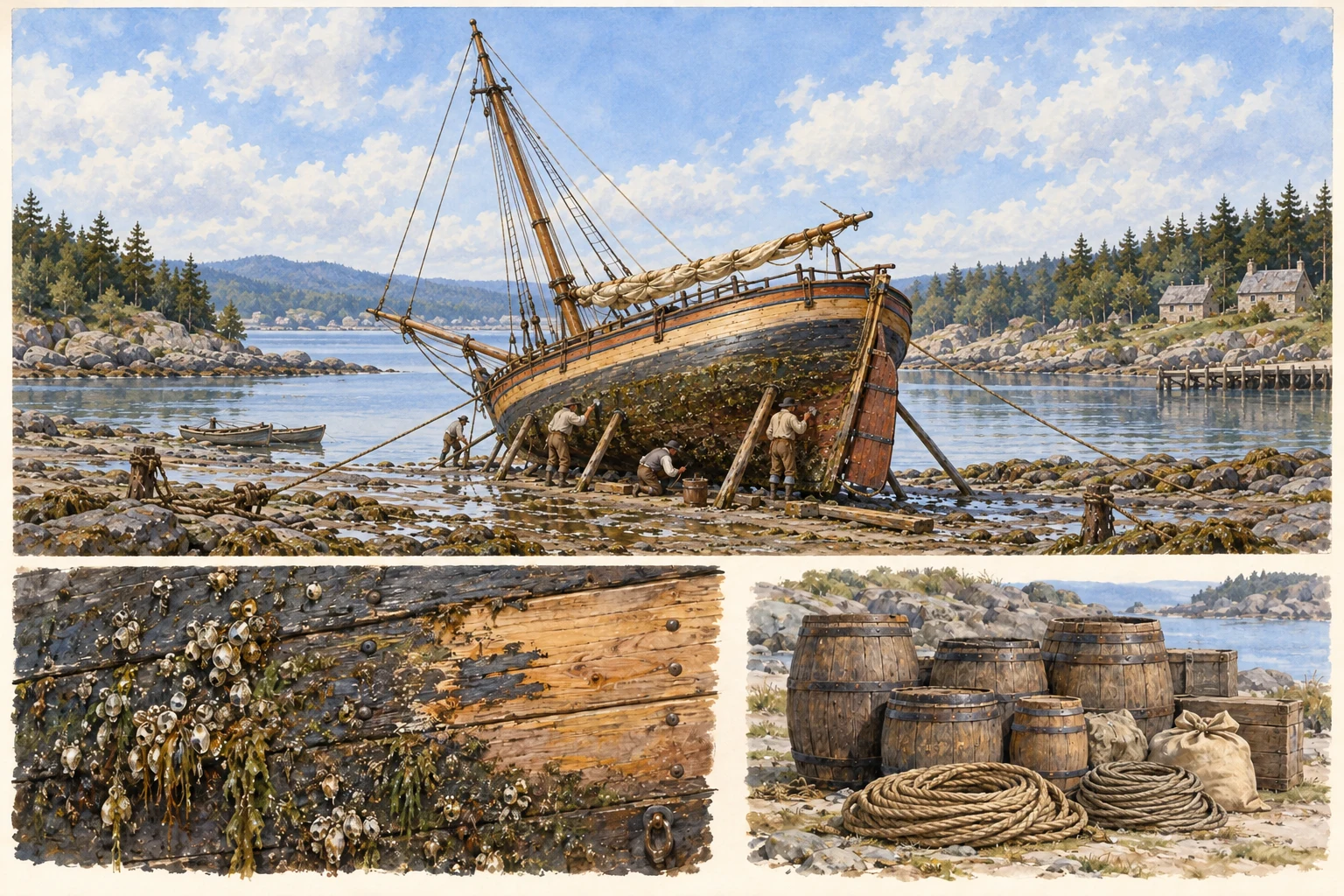 See the details.Careening: the work that made a ship vulnerableExplore the illustrated guide