
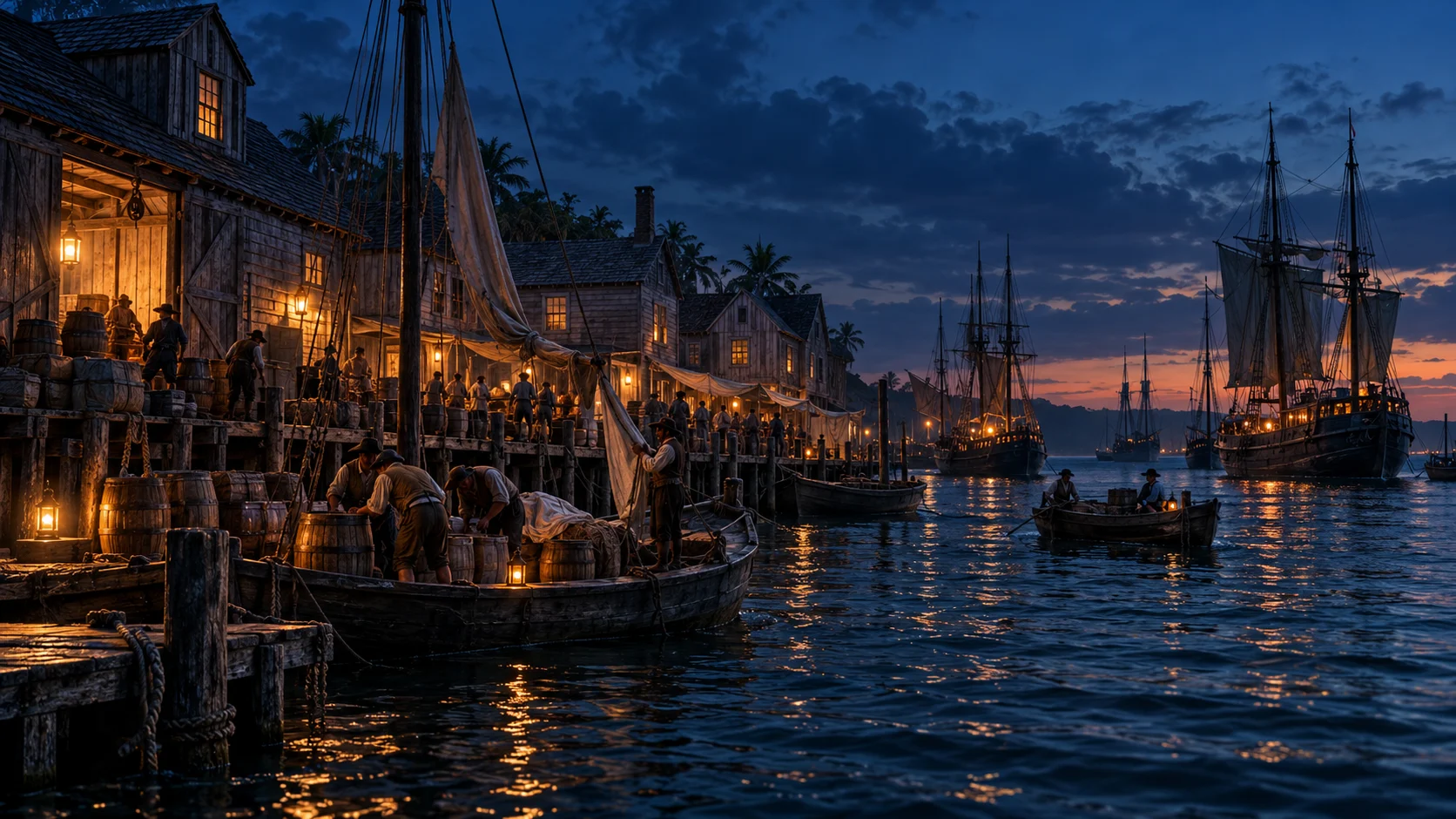
Separate circuits converged
The Mexican flota and the Tierra Firme galeones served different destinations, but Havana was important to their journeys home. Haring describes ships arriving with cargoes and instructions that shaped whether they waited or departed. [1]
The convergence was not an assurance that every ship arrived on the same day. Its value depended on managing different passages and the condition of vessels completing them.
Repair and provisions were strategic services
Returning ships refitted and victualed before the Atlantic crossing. Cuban tobacco, sugar and other exports joined the traffic. [1]
These functions gave the port an importance beyond the temporary presence of coin or bullion. A ship carrying wealth still needed food, water, sound equipment and a crew able to complete its voyage.
The homeward route was not the outward route reversed
Haring describes a return through the Bahama passage and into higher North Atlantic latitudes before sailing toward the Azores and Spain. Winds and shoals affected the possible choices, and winter alternatives could bring substantial risk. [1]
The fleet’s geography makes more sense when followed as a circuit. Simply drawing the shortest straight line back across a modern map misses the sailing environment.
The fleet’s strength had edges
In Gage’s account, as repeated by Haring, attackers singled out a merchant vessel near the departing fleet outside Havana. The defending ships’ response was constrained by the wind. [1]
The example is not proof that fleets were useless or every departure was attacked. It shows that proximity to armed companions and the ability to receive immediate help were different things.
Read the port through its working connections
Havana connected Cuba’s own commerce to Veracruz, Cartagena, Portobello, the northern passages and Europe. People ashore maintained this meeting point while commanders negotiated timing and instructions.
Explore the fleet system, early navigation and a vessel’s condition and loading. This guide concerns the historical port; its routes are not instructions for sailing in modern waters.
Questions, answered.
Was Havana important only because treasure was mined there?
No. Its importance here is as a junction, provisioning and refitting port in a much larger network.
Did returning ships simply retrace the outward Atlantic course?
No. The described circuits exploited different wind patterns on the return.
Sources & reading notes
Source checks distinguish an artifact, a reported account and a modern interpretation. They do not constitute independent historian review.
- The Buccaneers in the West Indies in the XVII Century (1910)Clarence Henry Haring; Project Gutenberg transcription · Early twentieth-century historical study; public domain in the USA
Chapter I, pp.19–24, Havana as a return rendezvous, provisioning point, departure route and site of the attack described through Gage. No modern navigation or travel advice is offered. An older secondary study drawing on colonial records and earlier narratives. Its imperial framing, racial generalizations and claims about national character are not adopted as fact. Not a substitute for current scholarship.
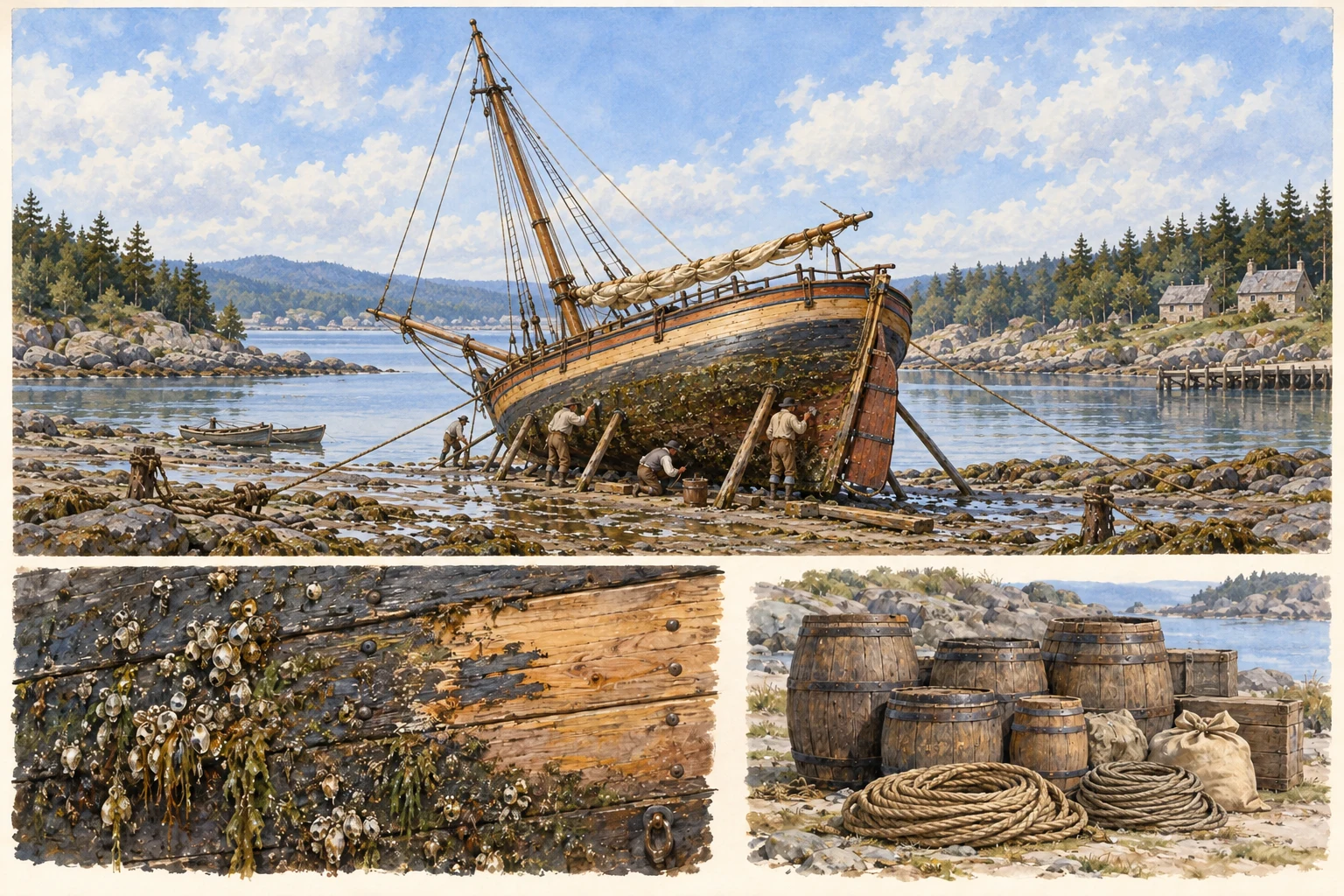 See the details.Careening: the work that made a ship vulnerableExplore the illustrated guide