
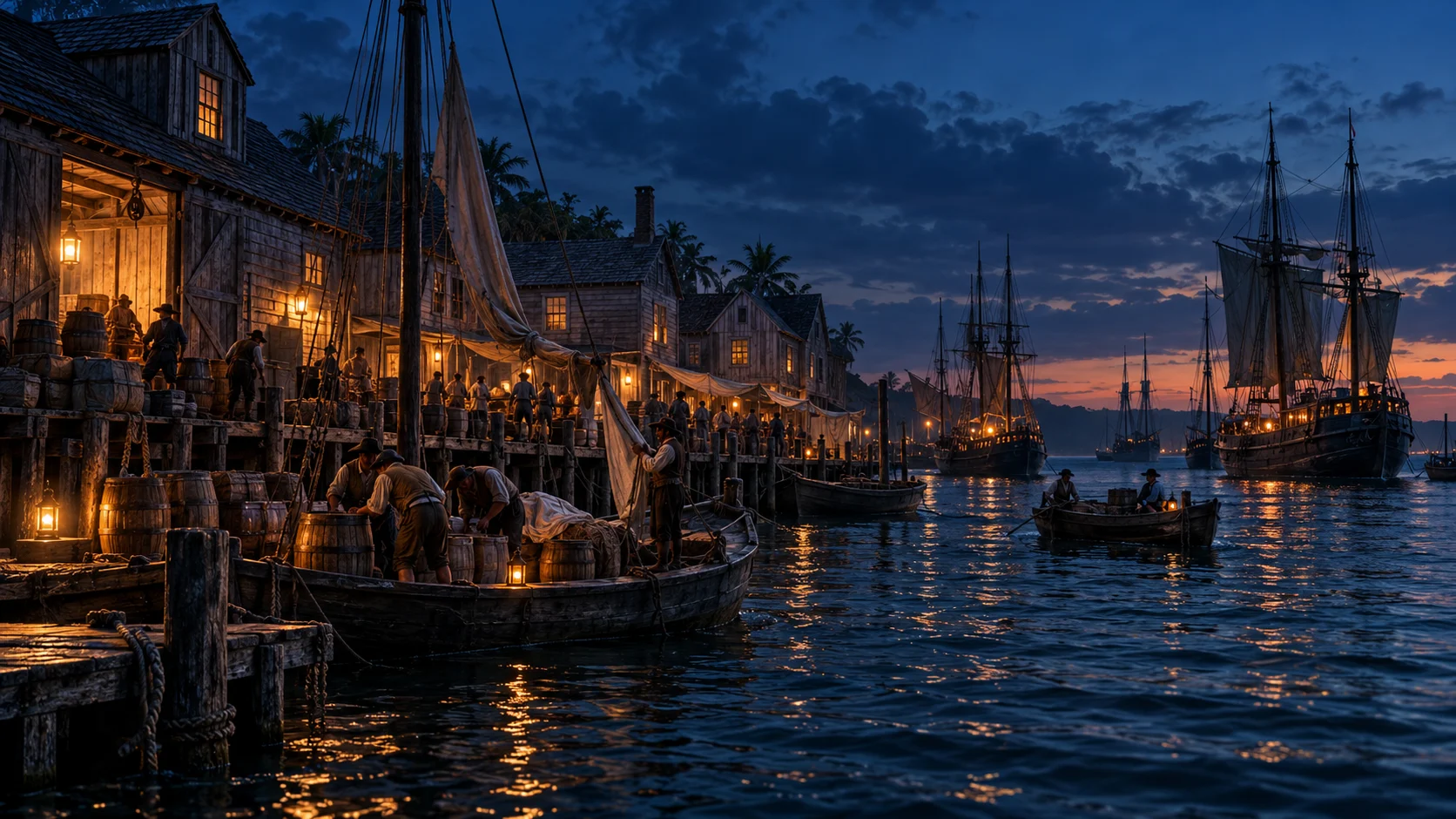
A base made separate voyages possible
Petit-Goâve appears repeatedly in Haring’s history as a place to which commanders returned and from which they recruited or departed. Van Hoorn gathered men there before joining de Graff; Grammont returned after recovery and campaigns. [1]
A haven was useful because it joined people and services. A ship alone could not provide a new crew, a market for all its goods and a working relationship with every official it might encounter.
Protection could be negotiated
Haring describes prizes and portions of booty being brought into arrangements with governors. He also records repeated English complaints that raiders found refuge at Petit-Goâve after attacking traders and fishing craft. [1]
To a returning company, the port could be a resource. To a neighboring governor seeking redress, it could appear to obstruct enforcement. Those perspectives belonged to the same place rather than two unrelated histories.
Orders from France met local dependencies
Officials charged with restraining buccaneers worried that driving experienced men away would weaken the colony or turn them into enemies. Haring traces negotiations under de Cussy and the commissioners sent to reform the colony in 1684. [1]
Dependence did not mean the authorities approved every attack. It helps explain why instructions, local practice and the complaints arriving from neighboring colonies could differ.
Mobilization was difficult even for a royal expedition
In 1697 Ducasse had to keep companies gathered while waiting for de Pointis. Men who normally expected to cruise were not easily held idle. The subsequent Cartagena expedition carried these tensions into command and distribution of plunder. [1]
A port was therefore a site of waiting, persuasion and expense as well as dramatic departures.
Place it in a network rather than on a treasure map
Petit-Goâve connected to Île-à-Vache rendezvous, Jamaican complaints, Spanish ports under attack and instructions crossing the Atlantic. Its importance came from those relationships, which changed with war and policy.
Explore Île-à-Vache, Cartagena in 1697 and Port Royal. These were different settlements with different jurisdictions, not interchangeable “pirate towns.”
Questions, answered.
Was Petit-Goâve outside all government?
No. French officials exercised and negotiated authority there, even when enforcing it was difficult.
Is this a guide to visiting the modern town?
No. It explains the historical port’s role in seventeenth-century maritime networks.
Sources & reading notes
Source checks distinguish an artifact, a reported account and a modern interpretation. They do not constitute independent historian review.
- The Buccaneers in the West Indies in the XVII Century (1910)Clarence Henry Haring; Project Gutenberg transcription · Early twentieth-century historical study; public domain in the USA
Chapter VI, pp.220–222;Chapter VII, pp.240–248,262–266. This is an account of the seventeenth-century port’s functions, not current travel or anchorage guidance. An older secondary study drawing on colonial records and earlier narratives. Its imperial framing, racial generalizations and claims about national character are not adopted as fact. Not a substitute for current scholarship.
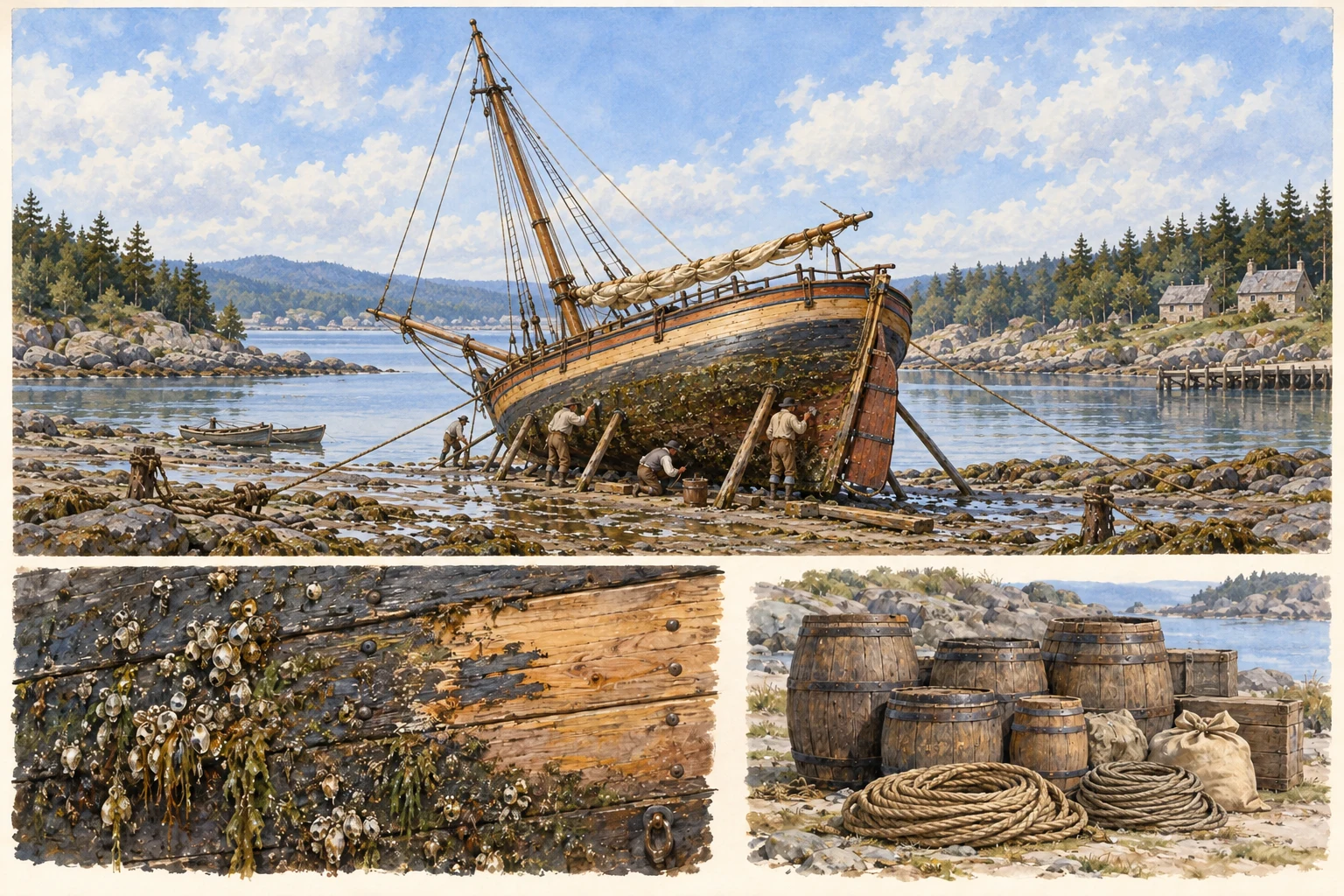 See the details.Careening: the work that made a ship vulnerableExplore the illustrated guide