
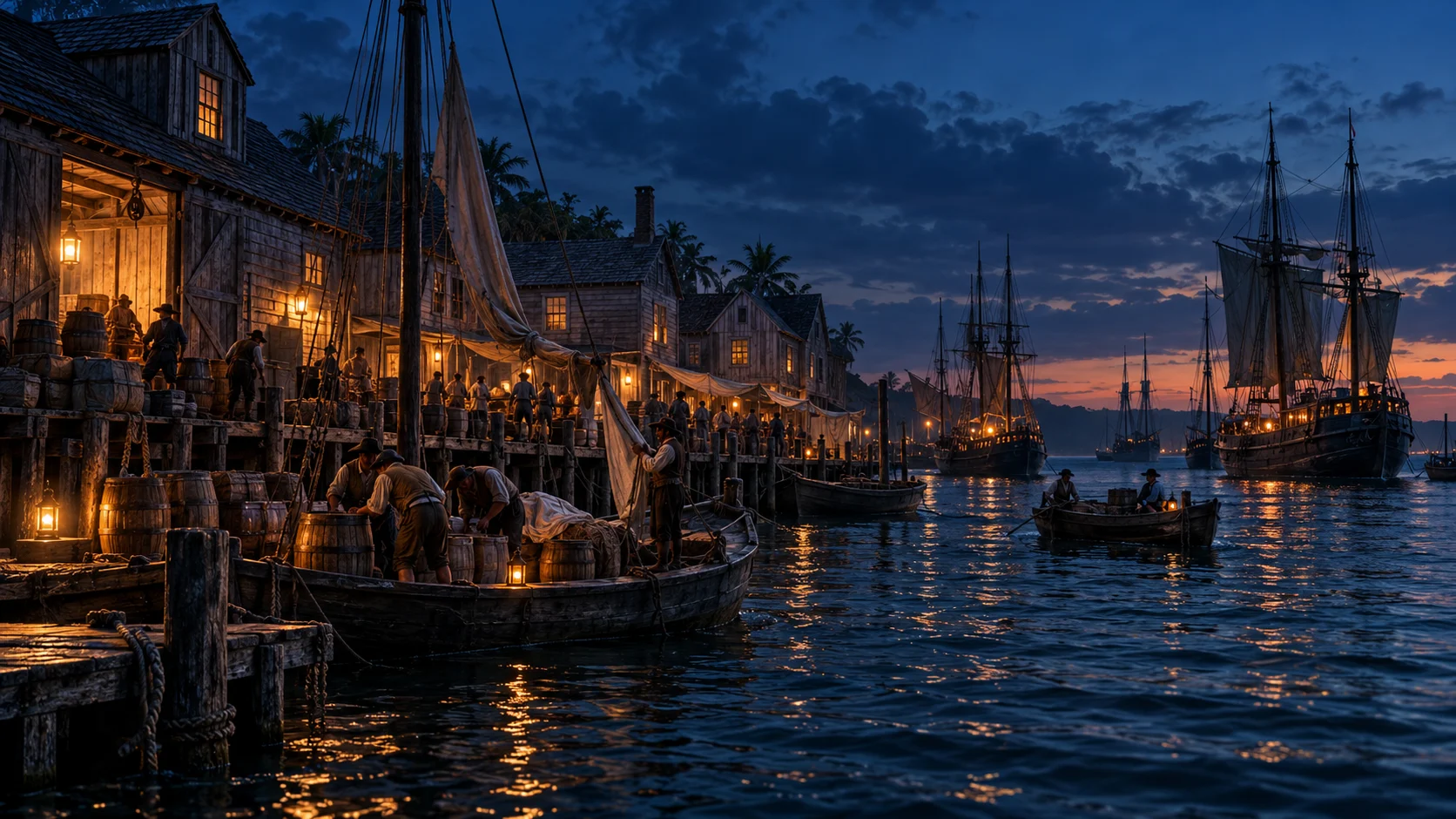
A refuge still needed choosing
Ringrose’s company looked for a workable anchorage and sent a canoe to examine another bay. Wood and access mattered alongside the depth of water. The first place a vessel reached was not necessarily the place where it could remain most usefully. [1]
An island’s outline on a map hides these differences. Sheltered-looking water, a landing place and a supply point are separate features that have to work together.
Food and water required journeys ashore
The narrative records parties hunting goats, catching fish and bringing filled water jars back to the vessel. Water had to be carried a substantial distance from where the ship lay. A rich supply did not deliver itself aboard. [1]
These trips consumed boat space and manpower. While some men collected provisions, others still had to maintain the ship and watch its surroundings.
Weather could cut the boats off
Ringrose describes a water party prevented by wind from getting safely back. Strong gusts and squalls also made the anchorage uncomfortable. The shore that supplied the company could become a place where a boat party was separated from it. [1]
The problem was not a lack of courage. A small craft carrying heavy jars had different limits from the anchored ship it was trying to reach.
Repairs continued through the dispute
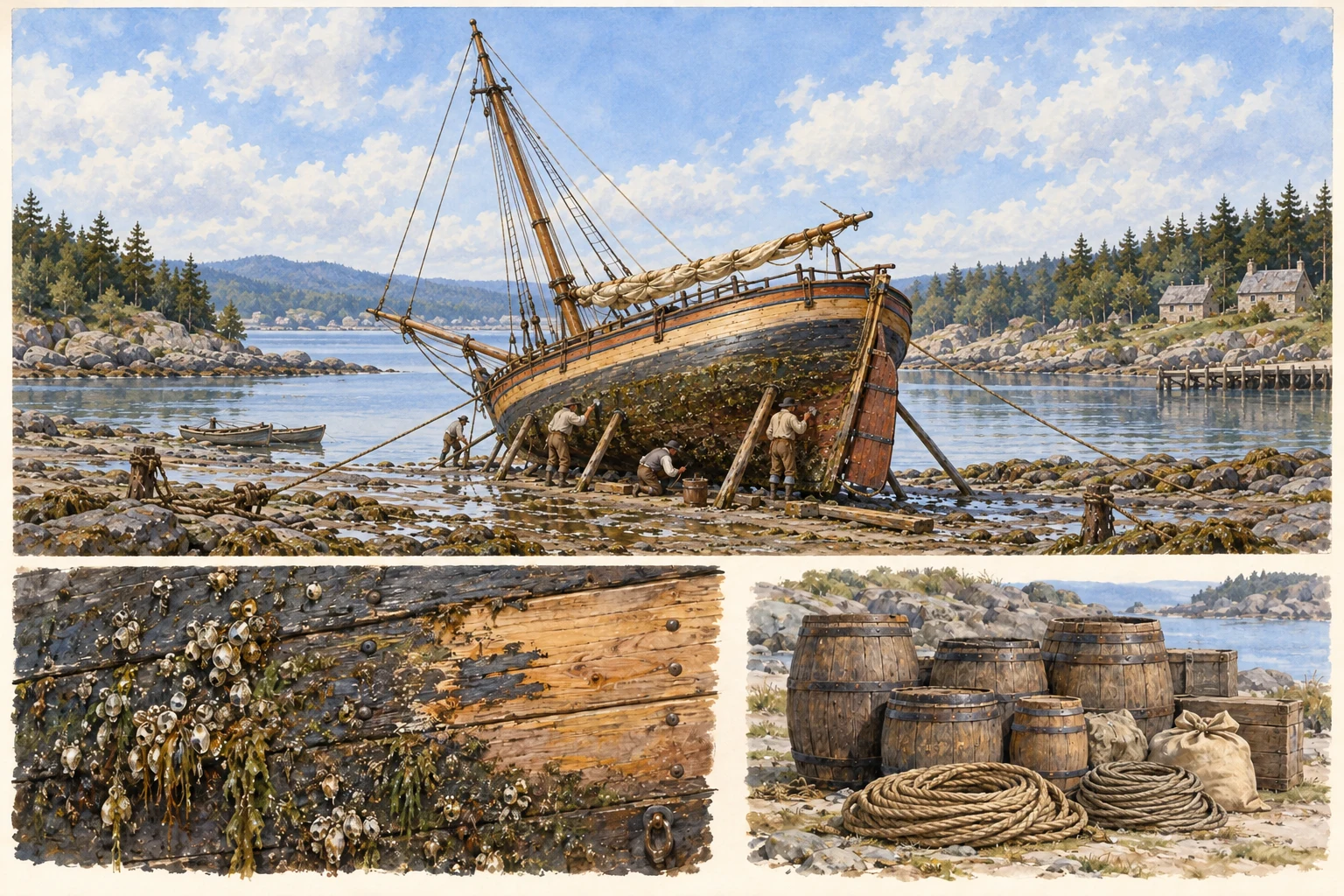
The journal places cleaning and tallowing the vessel alongside the growing argument over command. After Watling’s election, the company still had to complete work on the other side of the hull. A political change did not suspend the material needs of the ship. [1]
That overlap is why an island stop can explain a company better than a battle list. The men negotiated authority while doing the maintenance that made any subsequent choice possible.
The island did not stop the wider war
Spanish ships appeared during the stop, and the company eventually left. Its next major attempt was Arica, where Watling was killed. A useful stop offered resources, not a guarantee of security. [1]
Read the change of command, the attack that followed and the practical work on the hull. This guide describes the historical visit rather than present-day anchoring or travel advice.
Questions, answered.
Was Juan Fernández an organized pirate capital?
The account used here describes a stop for resources and repairs, not evidence of a permanent pirate government.
Was finding water enough to make a safe stop?
No. Carrying it aboard, the anchorage, weather and possible opponents all mattered.
Sources & reading notes
Source checks distinguish an artifact, a reported account and a modern interpretation. They do not constitute independent historian review.
- Bucaniers of America, the second volume (1685)Open the keyboarded source transcriptionBasil Ringrose; printed for William Crooke; EEBO–TCP transcription · Participant voyage narrative, published 1685; CC0 keyboarded transcription
Chapter XV, the anchorages, water parties, goats, storms, careening, command change and encounter with Spanish ships. Period descriptions are tied to this visit, not modern visitor information. The published journal is a mediated participant account. Its nationalist praise, judgments about peoples and claims about motives are not adopted as neutral fact. The XML marks damaged and missing text; page images are not the CC0 transcription.
 See the details.Careening: the work that made a ship vulnerableExplore the illustrated guide