
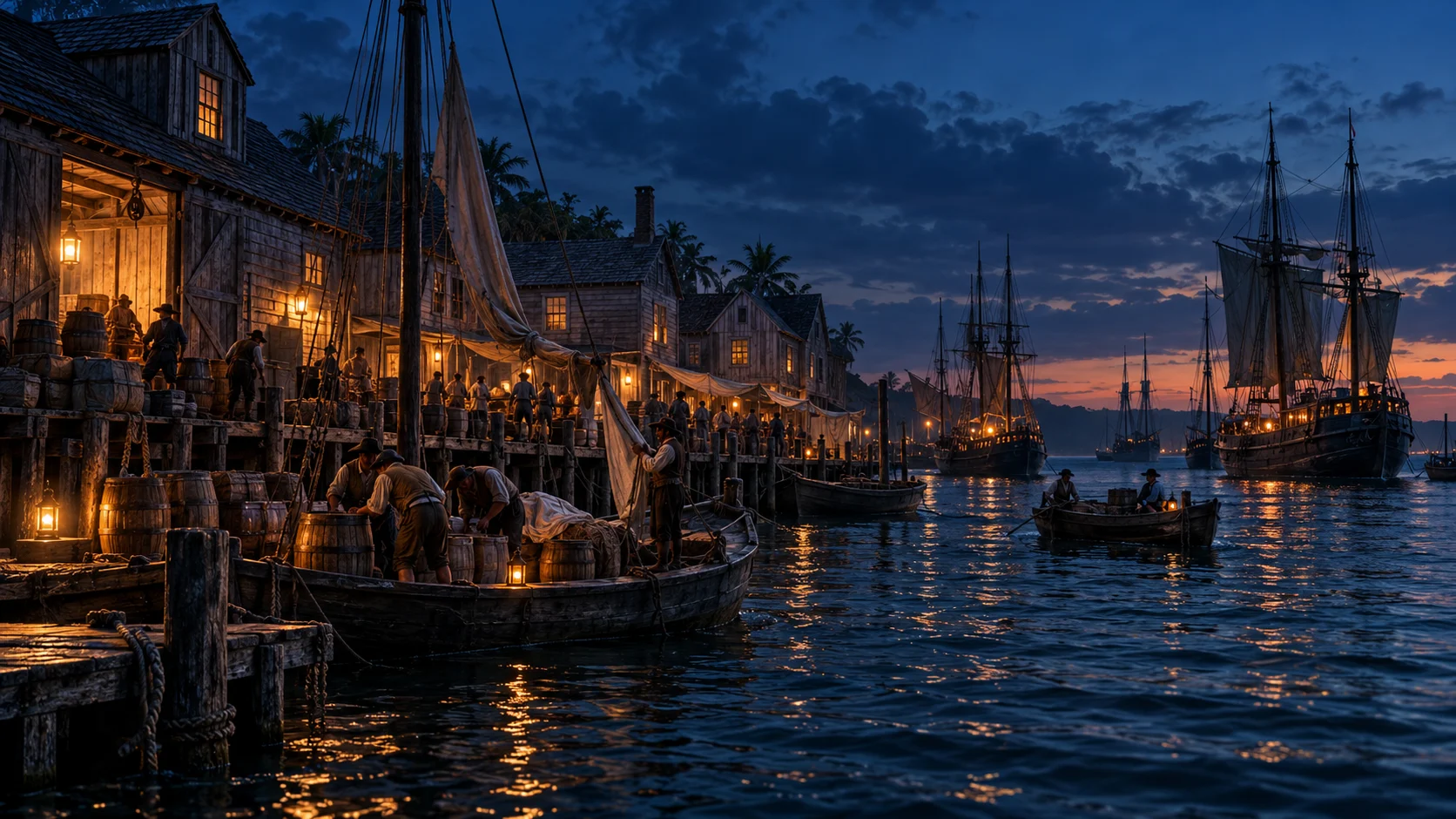
A haven is a system of services
A pirate company needed more than somewhere to hide a ship. It needed water and provisions, places to repair, news of shipping, people willing to deal in captured goods and opportunities to recruit. In the General History, New Providence is a meeting point for companies whose members later separate and reappear elsewhere. [1]
This is why a haven belongs in a history of work and trade, not just a map of buried treasure. A vessel that cannot obtain supplies or maintain its hull cannot live indefinitely on the romance of independence.
Not one captain’s island
The book does not describe one permanent command governing every company. Captains and crews arrive, depart, accept pardons or reject them. Relationships ashore create opportunities without making all pirates a single political organization. [1]
The modern phrase “pirate republic” can be a useful shorthand for the concentration of pirates, but it should not silently supply a written constitution, equal citizenship or uniform control. Those are separate claims requiring their own evidence.
The pardon changes the calculation
The royal offer of mercy introduced a way out of prosecution for eligible people who surrendered under its terms. Rogers’s arrival brought an administration and armed support to a place where enforcement had been weak. In the narrative, many submitted, while Vane left rather than accept the new order. [1]
The choice affected a company as well as an individual. If enough men accepted a pardon, a commander could lose crew, local support or access to familiar services. A harbor’s usefulness could change without its geography changing at all.
Trade connected the haven to its opponents
The same sea carried pirate vessels, interloping traders, merchant shipping and the forces sent to suppress robbery. Companies leaving Providence did not disappear into empty space: the narrative follows them toward colonial coasts and the routes joining islands and ports. [1]
That connected setting is essential to understanding Nassau. The attraction came partly from being close enough to a functioning maritime economy. Complete isolation would have removed many of the resources that made the haven useful.
Use a historical map with a date
A modern visitor map answers questions about roads and accommodation. It does not establish the location of an early eighteenth-century anchorage, the depth available to a particular ship or the placement of a lost building. Any detailed reconstruction should name the plan and period behind it.
The harbor artwork in this publication is a generic modern interpretation, not a measured reconstruction of Nassau. For the human history, follow Vane’s refusal, Rackham’s company and Davis’s connection to the wider network.
Questions, answered.
Are Nassau and New Providence two separate pirate havens?
Nassau is on New Providence. They should not be counted as two independent historical sites simply because both names occur in a source.
Did every pirate accept the pardon?
No. The narrative explicitly distinguishes people who submitted from Vane’s departure. Eligibility and later conduct also matter.
Sources & reading notes
Source checks distinguish an artifact, a reported account and a modern interpretation. They do not constitute independent historian review.
- A General History of the Pyrates (1724)Published under the name Captain Charles Johnson · Early printed account; public-domain text
Introduction, the description of New Providence, the proclamation and Rogers’s arrival; Chapters VI–VII for Vane, Rackham and the pardon. The book’s stated arrival month is not used as a verified date. Authorship is disputed. A near-contemporary compilation, not a surviving signed pirate code or a neutral transcript. Cite its claims as reported claims.
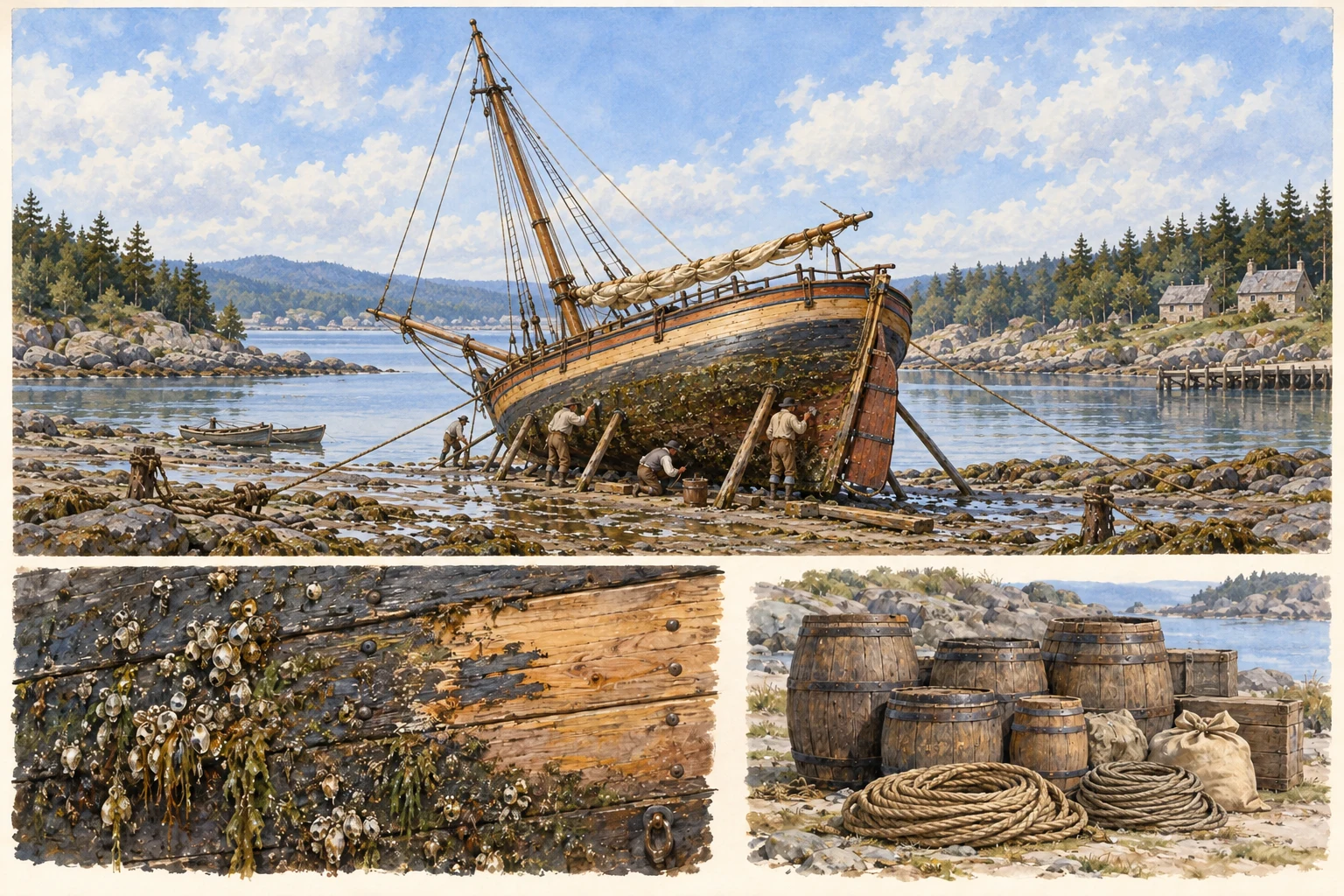 See the details.Careening: the work that made a ship vulnerableExplore the illustrated guide