
The intended stop changed
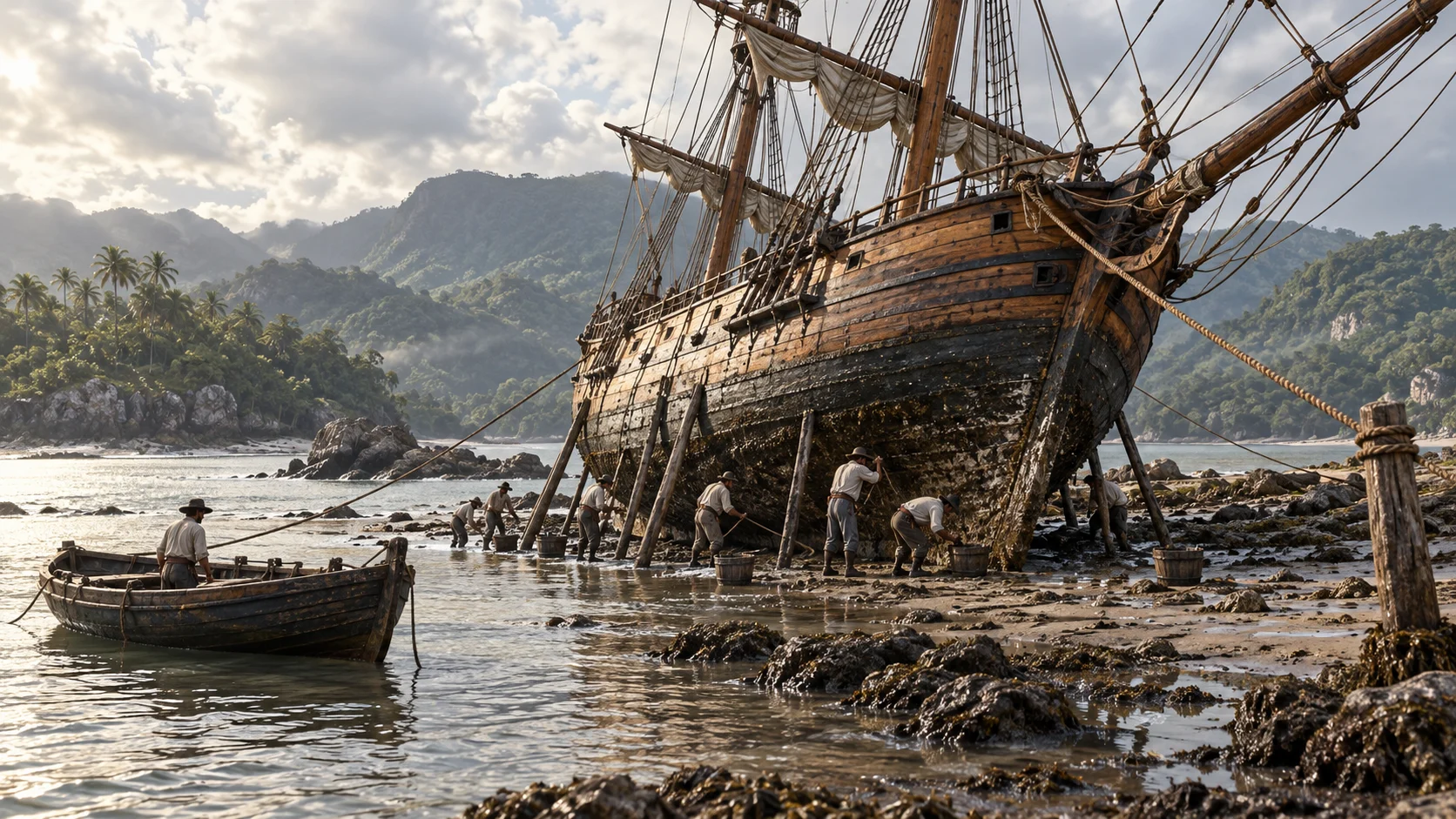
Ringrose initially records a plan to careen at the Galápagos. The company instead reached Gorgona during a passage marked by light winds, currents and uncertainty about the coast. An announced destination did not guarantee the route actually taken. [1]
The distinction matters when reconstructing an itinerary. Plans, sightings and completed visits belong in different columns.
Water was plentiful; dry work was difficult
The journal describes high ground, streams and an anchorage near a river. It also reports rain so frequent that drying sails before removing them took several days. The environment supplied one need while obstructing another. [1]
Maintenance depended on a sequence of jobs. A company could not skip drying and stowing sailcloth simply because it wanted to begin another task.
Work changed the ship and the next objective
Ringrose describes removing high carved work at the stern and other alterations intended to improve the vessel. During the stop, the company also debated its next target and shifted away from Guayaquil toward Arica. [1]
The relation between hull condition and ambition is direct: an altered ship might make a different passage seem possible, while delay could compromise surprise at the originally intended destination.
A later visit met an expected route
Dampier’s party returned in 1681 after separating from Sharp. It found a structure and cross suggesting Spanish activity. Prisoners reported a canoe that checked the island and would carry news onward if the buccaneers appeared. The report explains the party’s concern without proving every detail of the opposing plan. [2]
The party cleaned its newly captured bark and filled water before leaving. The repair stop remained useful, but lingering carried another risk.
A haven was a relationship, not a label
The same geography could serve a damaged ship, a returning boat party and those trying to locate them. Calling Gorgona a pirate haven without dates obscures that changing relationship.
Compare the stop at Tobago, Dampier’s return and the work that drew companies toward a suitable shore. None of these historical descriptions is present-day navigation guidance.
Questions, answered.
Did every plan to careen at the Galápagos actually reach those islands?
No. Ringrose’s account distinguishes the intended destination from the stop made at Gorgona.
Was Gorgona always safe for the company?
No. Dampier’s later visit describes evidence and reports of Spanish watching.
Sources & reading notes
Source checks distinguish an artifact, a reported account and a modern interpretation. They do not constitute independent historian review.
- Bucaniers of America, the second volume (1685)Open the keyboarded source transcriptionBasil Ringrose; printed for William Crooke; EEBO–TCP transcription · Participant voyage narrative, published 1685; CC0 keyboarded transcription
Chapter X, the island description, unrigging, rain, repairs and choice of a new destination. The published journal is a mediated participant account. Its nationalist praise, judgments about peoples and claims about motives are not adopted as neutral fact. The XML marks damaged and missing text; page images are not the CC0 transcription.
- A New Voyage Round the World (1697), with collected voyage textsOpen the keyboarded source transcriptionWilliam Dampier; James Knapton; EEBO–TCP transcription · Voyage writing and later collected parts; CC0 keyboarded transcription
Chapter I, the April 1681 return visit, Spanish-built structure, reported watching canoe and the captured bark’s cleaning and departure. Dampier writes as an involved traveler, not an impartial observer. His racial, colonial and medical judgments are not present-day facts. The catalogue describes a multi-volume set; individual parts and dates must be distinguished. Volume 3 is absent from this transcription.
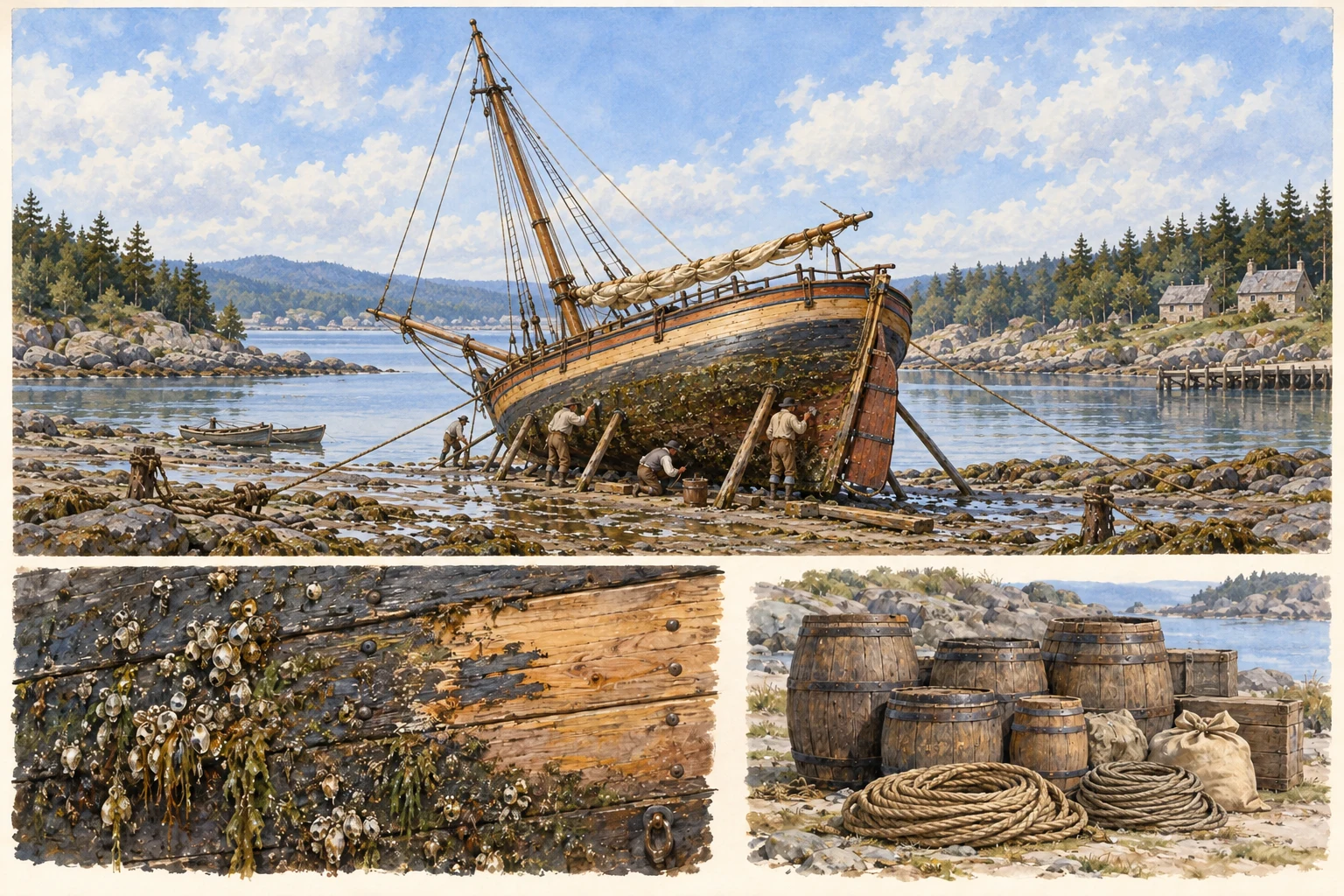 See the details.Careening: the work that made a ship vulnerableExplore the illustrated guide