
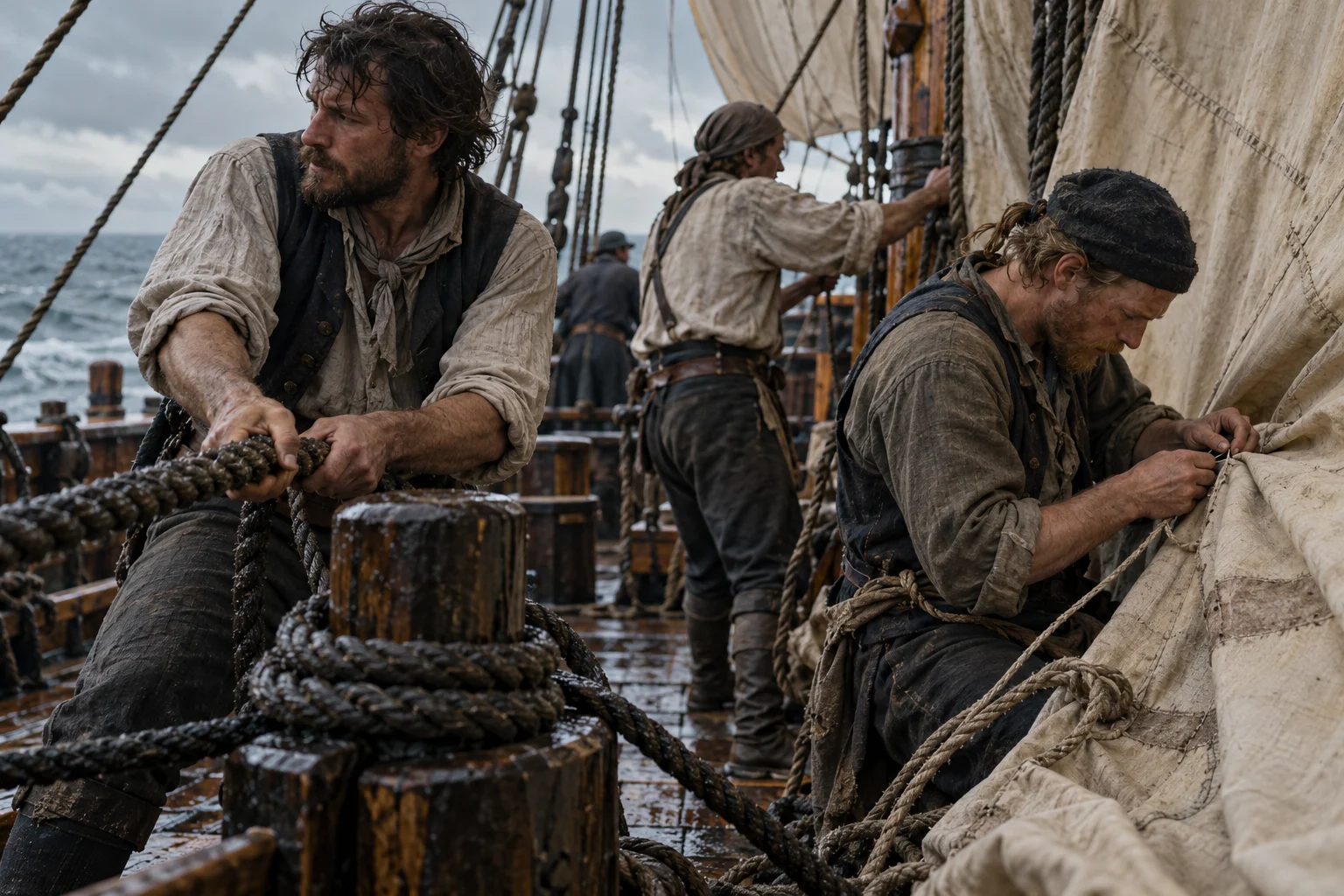
They appear in a particular traveling company
At the beginning of his account of the 1681 separation from Sharp, Dampier lists two Miskito men alongside other armed travelers and enslaved people. [1]
The list is evidence of their presence in that group, not a complete list of their names, earlier experiences or intentions. It also shows why “the pirates” is too coarse a term for everyone moving in the same boats.
Provisioning gave their skill a central role
Dampier praises their ability to obtain fish, turtle and manatee. He connects that expertise to the survival of larger companies and the selection of careening places. [1]
His large claims about productivity express admiration in a travel narrative. They do not supply a measured daily ration model, but the repeated attention makes the underlying dependence clear.
The work came with some control over its conditions
The narrator describes specialists using their own canoes, choosing how to work and resisting interference. He also says that English associates allowed them to return on suitable vessels when they wished. [1]
Those are important details of the relationship he presents. They should not be stretched into a guarantee that every Indigenous person on every venture enjoyed the same freedom.
A useful account can still misrepresent a society
Dampier moves from observations aboard ships into broad assertions about appearance, religion, government and allegiance. His understanding and interests limit those claims. A visitor’s inability to recognize an institution does not prove the absence of one.
This guide uses the passage for the specific maritime relationships it records. It does not turn it into a definitive ethnography of Miskito communities past or present. [1]
Give the expertise a place in the main story
Navigation, repair and food procurement depended on more than European officers. The account makes visible people whose knowledge helped a company choose a stop and continue its voyage, even when the narrator failed to preserve their individual names.
Read turtling, the 1681 return and Dampier. The connection is part of the voyage itself, not an optional aside about people met on the way.
Questions, answered.
Does Dampier give a complete account of Miskito society?
No. It is a partial European traveler’s account, especially useful here for particular maritime relationships.
Were the specialists simply interchangeable extra hands?
His account emphasizes distinctive skill, their own craft and some control over how they worked.
Sources & reading notes
Source checks distinguish an artifact, a reported account and a modern interpretation. They do not constitute independent historian review.
- A New Voyage Round the World (1697), with collected voyage textsOpen the keyboarded source transcriptionWilliam Dampier; James Knapton; EEBO–TCP transcription · Voyage writing and later collected parts; CC0 keyboarded transcription
Volume I,Chapter I, opening 1681 roster and the extended Moskito description;Chapter III, canoes and provisioning. “Moskito” is the source’s spelling; this guide uses Miskito. Racial generalizations and claims of no government or religion are not adopted. Dampier writes as an involved traveler, not an impartial observer. His racial, colonial and medical judgments are not present-day facts. The catalogue describes a multi-volume set; individual parts and dates must be distinguished. Volume 3 is absent from this transcription.
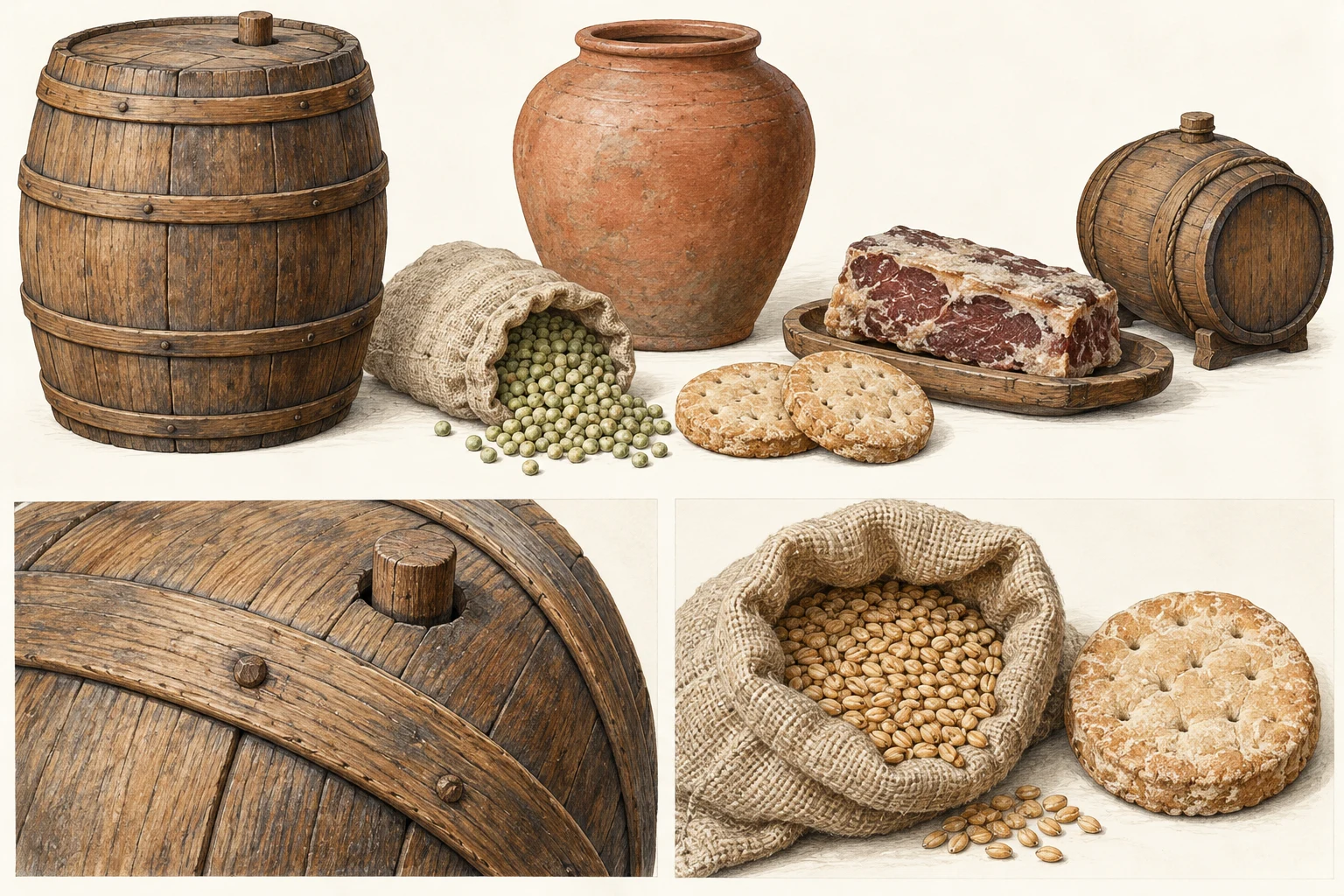 See the details.What did pirates eat and drink?Explore the illustrated guide