
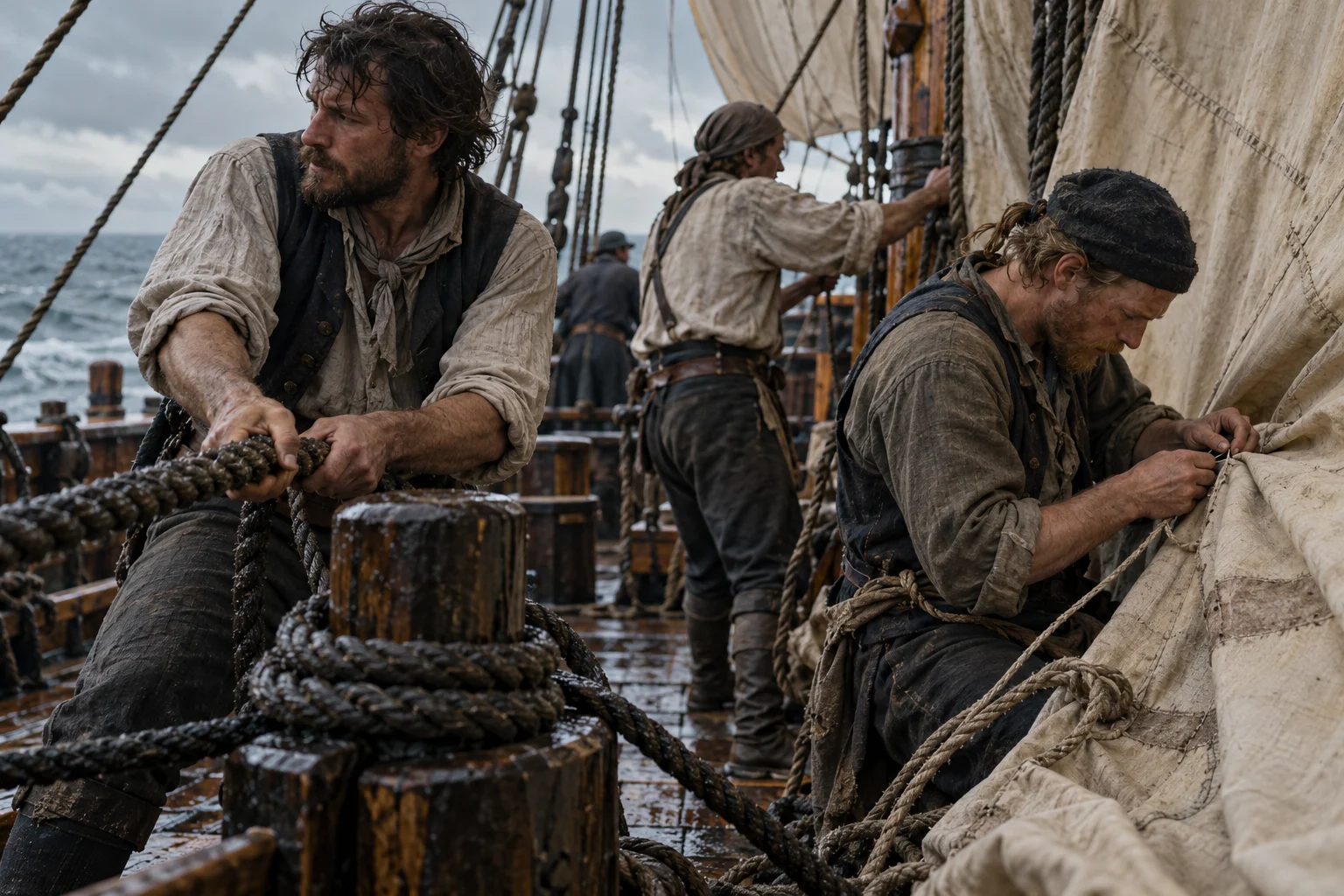
A term of service promised an eventual end
People arriving in the Caribbean could owe labor under an agreement for a specified term. Haring describes servants working for planters and hunters, with differing customary terms and the possibility of resale. [1]
The nominal end of an agreement mattered, but it did not guarantee an easy release. Distance, illness and the power of an employer could make a person’s ability to enforce the bargain extremely limited.
The narrator of a famous pirate history had been a servant
The English Bucaniers of America presents Exquemelin arriving, being sold into service, suffering under an employer and eventually obtaining freedom through an arrangement with a surgeon. His later maritime life followed this account of dependence. [2]
This is useful firsthand-positioned testimony. It also remains a story selected and mediated through publication and translation, rather than proof that every servant followed his exact sequence.
Escape could supply recruits without explaining every pirate
Haring treats runaway servants as one source of buccaneer manpower. Joining a passing company could offer a break from an abusive master and the prospect of a return from a voyage. [1]
The same choice brought dangers, new obligations and the possibility of violence against others. Explaining a recruit’s constrained circumstances does not make all the later company’s actions harmless.
Do not collapse distinct forms of unfreedom
The sources also place enslaved Africans and Indigenous people within the same colonial economy. A finite contract and racialized hereditary enslavement had different legal structures. Severe treatment under one system does not erase those differences.
Exquemelin’s reported bondage should not be used to claim that every person in the region could gain freedom on the same terms, or that European servants and enslaved people held equal prospects. [2] [1]
Follow the labor into the wider maritime story
Hunting, planting, port work and sea service were connected by the movement of people. Some could negotiate another occupation; others were sold, captured or forced aboard. Those different paths need to remain visible.
Read buccaneer beginnings, forced maritime service and piracy and slavery. The crew list is the beginning of a question about how people arrived there, not proof that all had volunteered.
Questions, answered.
Were all indentured servants pirates?
No. They worked in several occupations, and only some joined maritime raiding companies.
Was indenture legally identical to hereditary slavery?
No. Coercion could be severe in both, but their terms, status and prospects differed.
Sources & reading notes
Source checks distinguish an artifact, a reported account and a modern interpretation. They do not constitute independent historian review.
- The Buccaneers in the West Indies in the XVII Century (1910)Clarence Henry Haring; Project Gutenberg transcription · Early twentieth-century historical study; public domain in the USA
Chapter II, pp.79–80, recruits and Exquemelin’s reported experience. Haring’s comparison that servants could be worse treated than enslaved people is not adopted as a general ranking of suffering or legal status. An older secondary study drawing on colonial records and earlier narratives. Its imperial framing, racial generalizations and claims about national character are not adopted as fact. Not a substitute for current scholarship.
- Bucaniers of America (1684 English edition)Open the keyboarded source transcriptionAlexandre Olivier Exquemelin; printed for William Crooke; EEBO/TCP transcription · Early English translation through a Spanish version; TCP transcription released under CC0
Part I,Chapter II, the author’s account of sale, illness, transfer to a surgeon and conditional freedom. This is the English edition’s presentation of his experience, not a complete servant register. This 1684 English edition is not the 1678 Dutch original. Translation, selection, authorial position and transcription gaps remain part of the evidence. Attribution to a participant does not make every anecdote independently verified.
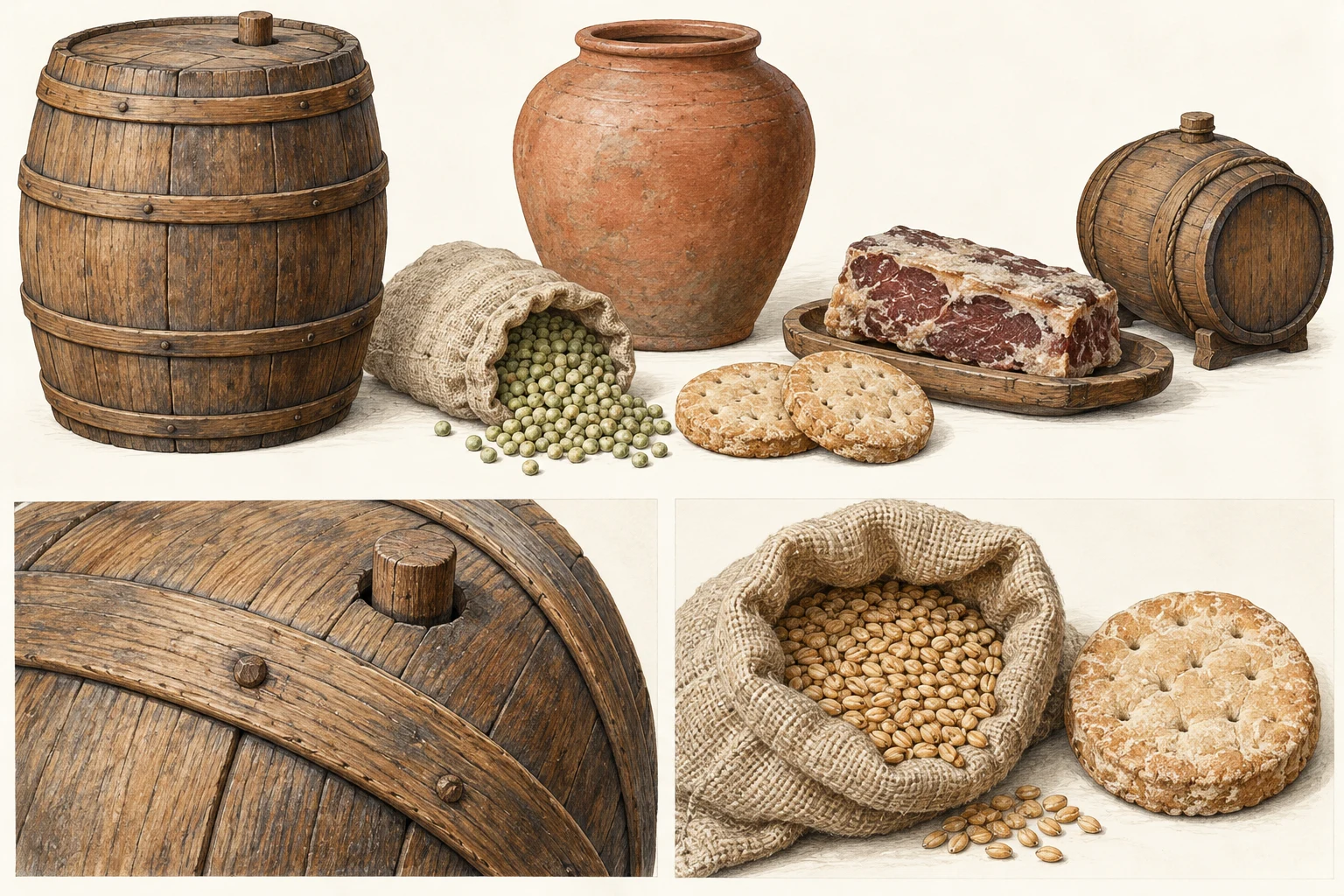 See the details.What did pirates eat and drink?Explore the illustrated guide