
The earlier name belongs in the story
The QAR Project identifies the ship’s previous life as La Concorde, employed in the French slave trade. Its account draws on French records, including reports by officers after the 1717 capture. It also notes that the vessel’s construction date and place are unclear. [1]
A renamed vessel does not begin history at the instant a famous captain steps aboard. The people carried and the work performed before the capture are part of what the hull had been used to do.
A flagship operated with other craft
The 1724 General History places Teach aboard the captured large vessel while other captains commanded sloops. It describes a tender as well as the principal ship. The company’s reach depended on that combination, not one giant vessel doing every job. [2]
Small craft could intercept another vessel, communicate with shore or work in water that constrained the flagship. A fleet’s practical arrangement is more informative than the outline of its largest ship alone.
The Charleston blockade reveals a working need
The account describes captured shipping and detained people outside Charleston, followed by a demand for medicines. The company used the vulnerability of passengers and crews to obtain supplies from the authorities. [2]
The flagship’s guns did not provide medicine, food or replacement equipment. A powerful vessel remained dependent on resources taken from other people and obtained along a functioning commercial coast.
Grounding changed the company
The narrative reports the large ship running aground and a sloop lost while trying to assist. It accuses Teach of deliberately arranging the loss to divide the company and secure resources for favored companions. That intention is the author’s claim, not something a wreck position by itself can prove. [2]
The distinction separates an event from an explanation of motive. The loss broke the existing arrangement of vessels whether or not every accusation in the telling is accepted.
The wreck answers another set of questions
The QAR Project links the wreck near Beaufort to the flagship through the position, recovered material and documentary history. An archaeological identification is a reasoned combination of evidence rather than a nameplate alone. [1]
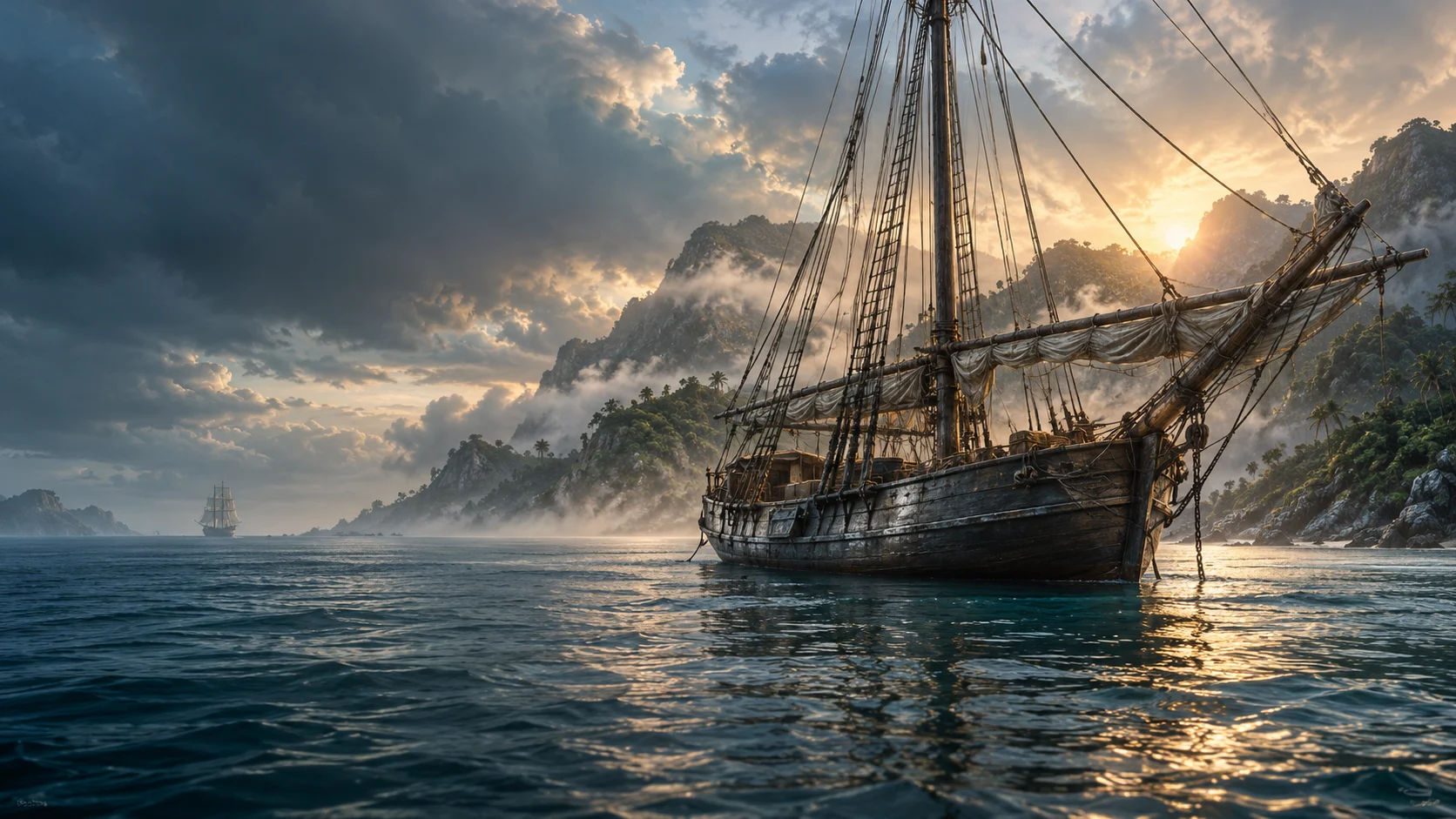
For the material side, continue with the recovered armament, the dividers and the sounding weights. The generated scene on this page is not a measured reconstruction of the wreck.
Questions, answered.
Were La Concorde and Queen Anne’s Revenge two different ships?
They are the earlier and later identities of the vessel described here.
Can the wreck alone prove why Blackbeard grounded the ship?
No. A claim about deliberate motive needs documentary evidence and interpretation beyond the wreck’s position.
Sources & reading notes
Source checks distinguish an artifact, a reported account and a modern interpretation. They do not constitute independent historian review.
- The pirate ship’s journeyNorth Carolina Queen Anne’s Revenge Project · Archaeological project / historical synthesis
The QAR Project’s “Pirate Ship’s Journey,” especially the vessel’s earlier identity, French documentary research and the officers’ depositions. This guide does not claim to have inspected the original French manuscripts. Voyage dates may use different calendars; this chapter avoids an exact capture day.
- A General History of the Pyrates (1724)Published under the name Captain Charles Johnson · Early printed account; public-domain text
Chapter III, the captured French vessel, associated sloops, Charleston and grounding. The author’s allegation of deliberate grounding is identified as an allegation. Authorship is disputed. A near-contemporary compilation, not a surviving signed pirate code or a neutral transcript. Cite its claims as reported claims.
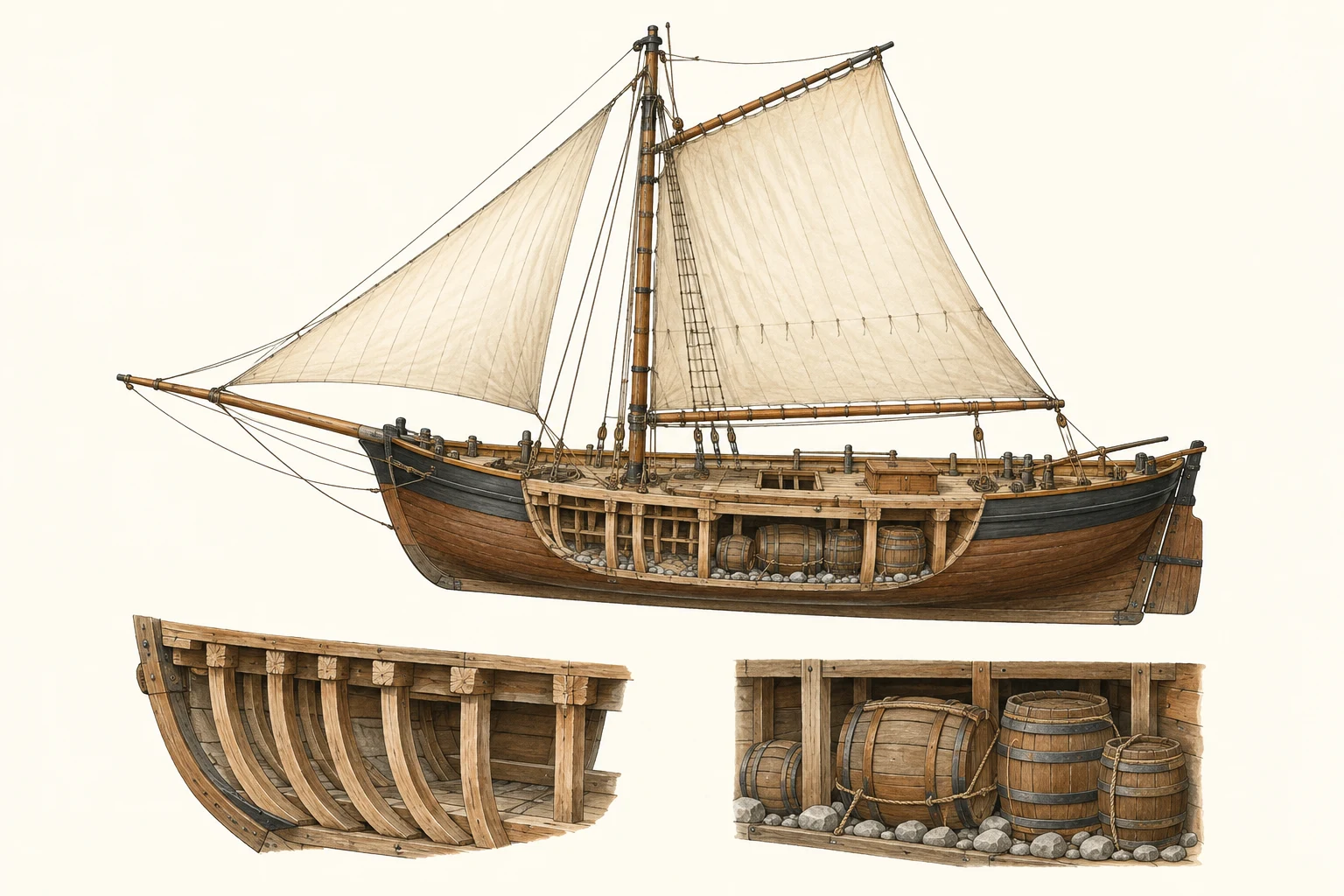 See the details.Inside a pirate-era ship.Explore the illustrated guide