
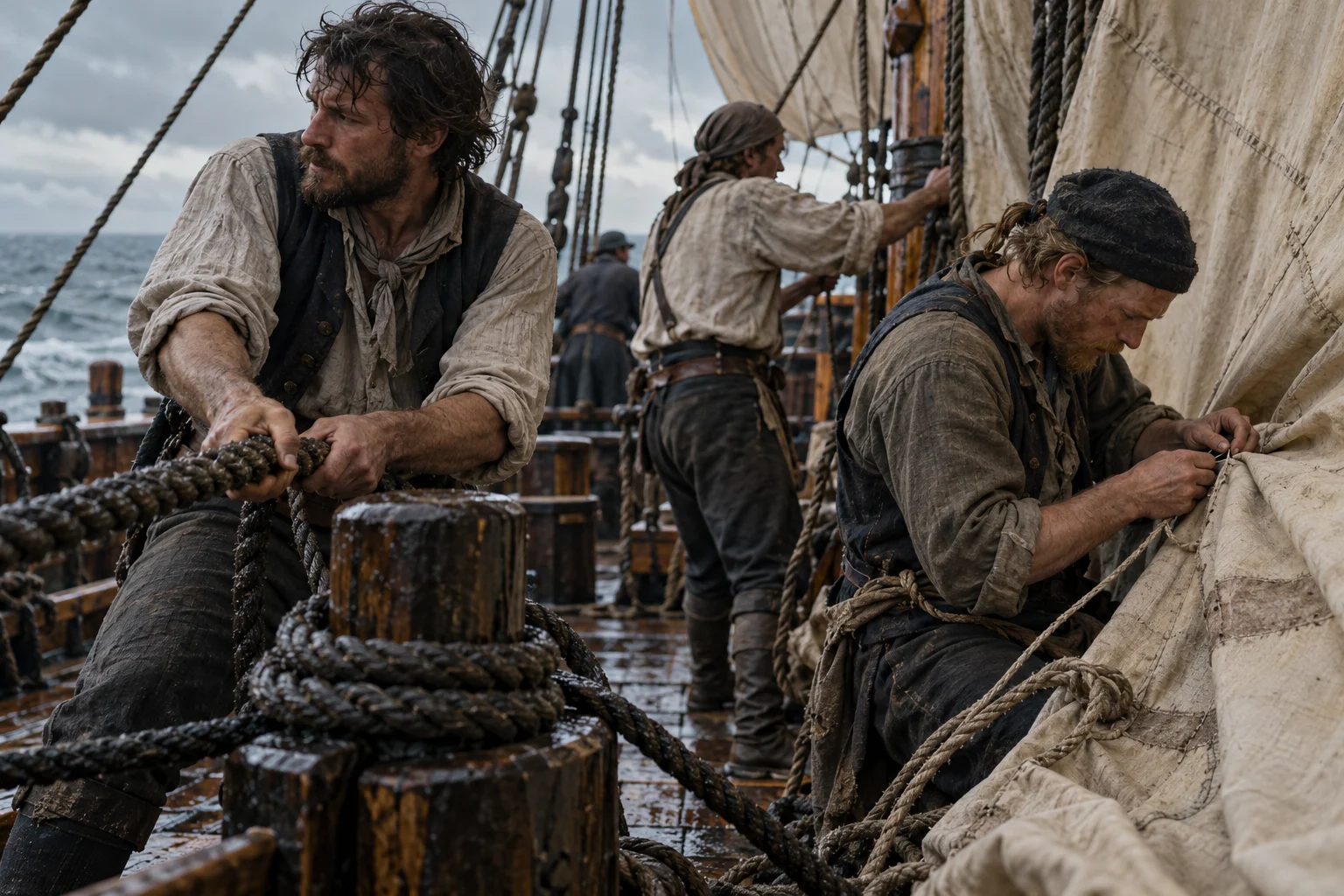
A trading vessel becomes a flagship
The vessel now inseparable from Blackbeard’s name had an earlier life. La Concorde carried enslaved people before its capture and renaming as Queen Anne’s Revenge. Changing the name did not erase the vessel’s place in the Atlantic slave trade. A pirate biography that begins with an ominous silhouette misses that history. [1]
The 1724 General History places Teach in partnership with Benjamin Hornigold before command of the larger captured vessel. Its narrative treats piracy as a sequence of changing ships and alliances. The flagship was an opportunity within that career, rather than the beginning of a lifelong, purpose-built pirate fleet. [2]
Charleston: medicine at the point of a gun
Off Charleston, the company interrupted shipping and detained passengers and crews. In the early account, the demand delivered to the provincial authorities was a chest of medicines. Threats against the prisoners gave the demand its force. The authorities complied, and the captives were released after other property was taken. [2]
The episode is more revealing than a conventional treasure story. A successful raiding company still depended on supplies, medical equipment and access to a working commercial coast. Its power came from making ordinary people and ordinary trade vulnerable.
The coast offered refuge—and exposure
After the loss of the flagship near the North Carolina coast, Teach obtained a pardon. The General History then accuses him of renewed robbery and close connections with colonial officials. These are serious allegations in a strongly opinionated narrative; they should be read as attributed accusations, not quietly converted into a neutral official finding. [2]
What matters structurally is that pirates did not operate in a separate fantasy economy. Vessels, provisions and captured goods passed through places governed by magistrates, merchants and customs officers. Protection on shore could be as consequential as firepower afloat.
A fight shaped by shallow water
Lieutenant Robert Maynard’s expedition found Teach at Ocracoke. The account describes sounding the channel, grounding, lightening a vessel and a close fight after boarding. Depth and draft were part of the action: a larger battery of guns was not the only advantage that mattered. Teach was killed, and his severed head was taken away as a public demonstration of the expedition’s success. [2]
The detailed dialogue and extraordinary wound count belong to the book’s dramatic telling. They need not be accepted word for word to understand the outcome: an armed expedition eliminated a locally connected pirate commander, while using his body to advertise restored authority.
Separate the image from the man
The same source describes the enormous beard, intimidating appearance and theatrical behavior that helped make Blackbeard a cultural figure. That portrait explains part of his later reputation, but it is not a photograph of his character. Read it beside the ship’s prior history, the coerced captives and the coastal campaign. [2]
Continue with the vessels pirates used, command aboard a pirate company and the later stories that changed the image.
Questions, answered.
Was Blackbeard’s real name definitely Edward Teach?
The 1724 account uses Edward Teach. Historical names and spellings require documentary care; this guide does not claim to settle his entire early identity.
Was his flagship always a pirate ship?
No. La Concorde had been used in the transatlantic slave trade before its capture and renaming.
Sources & reading notes
Source checks distinguish an artifact, a reported account and a modern interpretation. They do not constitute independent historian review.
- The pirate ship’s journeyNorth Carolina Queen Anne’s Revenge Project · Archaeological project / historical synthesis
La Concorde, French depositions and capture in 1717. Voyage dates may use different calendars; this chapter avoids an exact capture day.
- A General History of the Pyrates (1724)Published under the name Captain Charles Johnson · Early printed account; public-domain text
Chapter III, “Captain Teach alias Black-Beard”: Charleston blockade, grounding, North Carolina connections and Maynard expedition. The book’s dramatic conversations, private motives and precise wound counts are reported claims, not independently verified here. Authorship is disputed. A near-contemporary compilation, not a surviving signed pirate code or a neutral transcript. Cite its claims as reported claims.
 See the details.Pirate ranks and crew duties.Explore the illustrated guide