

An equipped vessel rather than a first prize
The early account says Bonnet fitted out a sloop at his own expense in Barbados. It calls the vessel Revenge and supplies a reported armament and company size. This starting point differs from a company formed by seizing its employer’s ship. [1]
Purchasing the vessel supplied a material platform. It did not establish that the owner could navigate it effectively or hold the confidence of its sailors.
The hull remained while authority shifted
During Bonnet’s association with Blackbeard, the narrative places Richards in command of the sloop and Bonnet aboard Teach’s larger ship. Revenge continued working inside the combined force while its owner no longer directed it. [1]
This is why a vessel history should track the commander separately from ownership. A familiar person’s name can conceal who was actually giving orders at a particular moment.
A new name complicates the paper trail
After pardon and renewed raiding, the account calls Bonnet Captain Thomas and the sloop Royal James. These changes are not treated as proof of a new person and a replacement hull. They are changes of identity within the narrative that need to be followed. [1]
The name Revenge also occurs elsewhere in maritime history. Matching names alone is insufficient to connect separate voyages.
The leaking hull fixed the company’s location
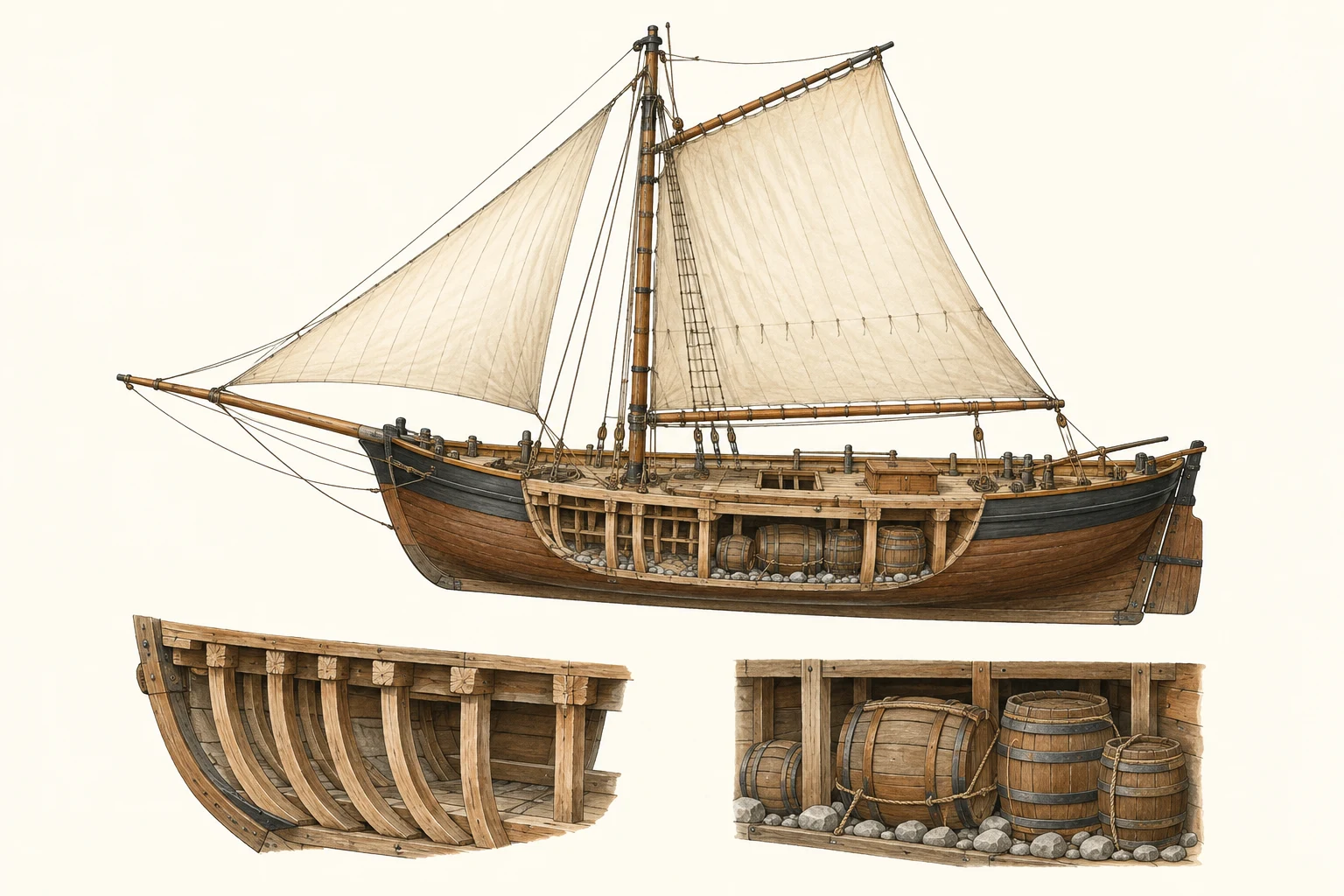
The vessel needed substantial repair at Cape Fear. The company obtained material by breaking up another craft, according to the account. While the work continued, news of its presence reached South Carolina and an expedition under William Rhett came after it. [1]
Maintenance created a strategic constraint: an exposed seam or damaged hull could matter more immediately than the captain’s desire to escape.
The final encounter depended on water and ground
The account of the fight describes vessels grounding and the tide affecting their positions before Bonnet surrendered. A comparison based only on the number of guns would miss those conditions. [1]
Read Bonnet’s biography, the demands of hull work and the smaller craft around a company. The ship’s story connects command to the practical limits of moving and repairing a vessel.
Questions, answered.
Does the name Royal James establish a second ship?
Not in the account followed here, which describes the sloop under its changed name.
Did Bonnet always command the vessel he owned?
No. The narrative places Richards in command during part of the association with Blackbeard.
Sources & reading notes
Source checks distinguish an artifact, a reported account and a modern interpretation. They do not constitute independent historian review.
- A General History of the Pyrates (1724)Published under the name Captain Charles Johnson · Early printed account; public-domain text
Chapter IV, initial purchase and equipment, Richards’s command, Bonnet’s return, change to Royal James, repairs at Cape Fear and Rhett’s expedition. Reported capacities and dialogue are not independently audited specifications. Authorship is disputed. A near-contemporary compilation, not a surviving signed pirate code or a neutral transcript. Cite its claims as reported claims.
 See the details.Inside a pirate-era ship.Explore the illustrated guide