
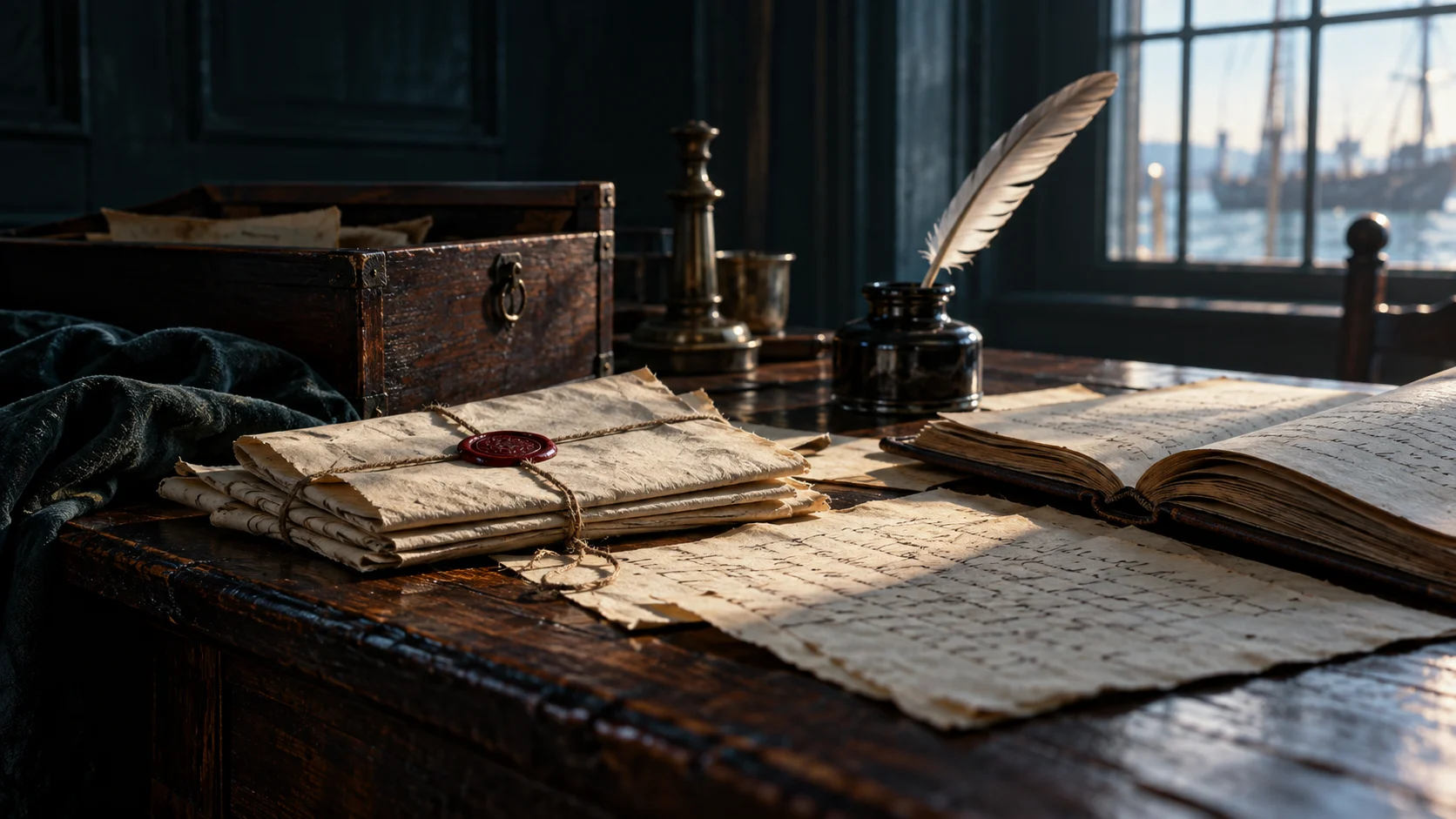
A name is not an edition
A citation reading only “Exquemelin” leaves important questions unanswered. Which language? Which year? Was the passage checked in the printed edition being named, or encountered through a later adaptation? Haring’s discussion of the publication history makes those differences visible. [1]
Different spellings of the author’s name are another reason to record the actual title and publisher rather than relying on a modern search label.
The 1684 translator announced a purpose
The English address to the reader praises curiosity, extraordinary exploits and the valor of English participants. It presents the book as useful and admirable reading for an English audience. That framing is part of the edition, alongside its descriptions of violence. [2]
The text reached English through translation rather than appearing as an untouched set of notes in the author’s original language. Its wording and selection belong to that transmission.
The 1914 edition tells us about its cuts
George Alfred Williams’s introduction says long descriptions of plant and animal life were cut and celebrates a form suitable for juvenile readers. It argues that the narrative remains exciting for adults as well. These are explicit editorial choices, not something the reader has to infer from the pictures. [3]
This does not make every retained sentence false. It means that the edition should be cited as an adapted publication rather than silently treated as the complete seventeenth-century original.
Compare a consequential passage
The Panama narrative assigns responsibility for the city’s fire to Morgan. His own reported relation assigns it elsewhere. An edition question and a source disagreement meet here: first establish which Exquemelin text makes the allegation, then compare it with the other account. [2]
Choosing whichever version has the most memorable prose would confuse literary force with corroboration.
A useful reading trail has several layers
Record the authorial attribution, original publication, edition actually used, translator or editor and the chapter locator. A digital transcription adds another layer, especially where gaps or doubtful readings are marked.
The articles here use the 1684 text for new buccaneer claims and retain the 1914 edition as evidence of later presentation. Begin with the fire comparison and Morgan’s changing position.
Questions, answered.
Is the 1914 edition the untouched 1678 original?
No. Its introduction identifies editorial cuts and a juvenile readership, and it is itself far later.
Does finding an older edition automatically prove every anecdote?
No. Date, authorial position, translation and corroboration remain separate questions.
Sources & reading notes
Source checks distinguish an artifact, a reported account and a modern interpretation. They do not constitute independent historian review.
- The Buccaneers in the West Indies in the XVII Century (1910)Clarence Henry Haring; Project Gutenberg transcription · Early twentieth-century historical study; public domain in the USA
Discussion of the publication history and later editions, including alterations in translation. An older secondary study drawing on colonial records and earlier narratives. Its imperial framing, racial generalizations and claims about national character are not adopted as fact. Not a substitute for current scholarship.
- Bucaniers of America (1684 English edition)Open the keyboarded source transcriptionAlexandre Olivier Exquemelin; printed for William Crooke; EEBO/TCP transcription · Early English translation through a Spanish version; TCP transcription released under CC0
Title and translator’s address to the reader; Parts II–III for the Morgan narratives. The accessible TCP text is a keyboarded transcription with marked gaps. This 1684 English edition is not the 1678 Dutch original. Translation, selection, authorial position and transcription gaps remain part of the evidence. Attribution to a participant does not make every anecdote independently verified.
- The Pirates of Panama / The Buccaneers of America (1914 edition)Alexandre Olivier Exquemelin; edited and illustrated by George Alfred Williams · Later English edition of a seventeenth-century narrative; public domain in the USA
George Alfred Williams’s introduction to the 1914 edition, explaining cuts to natural history and a form suitable for juvenile readers. This is the 1914 edited English edition, not the 1678 Dutch original. Its introduction explicitly describes abridgment and adaptation for juvenile readers. Retained as an edition-comparison source, not the default text for new historical claims. Compare the 1684 edition before using a disputed detail.
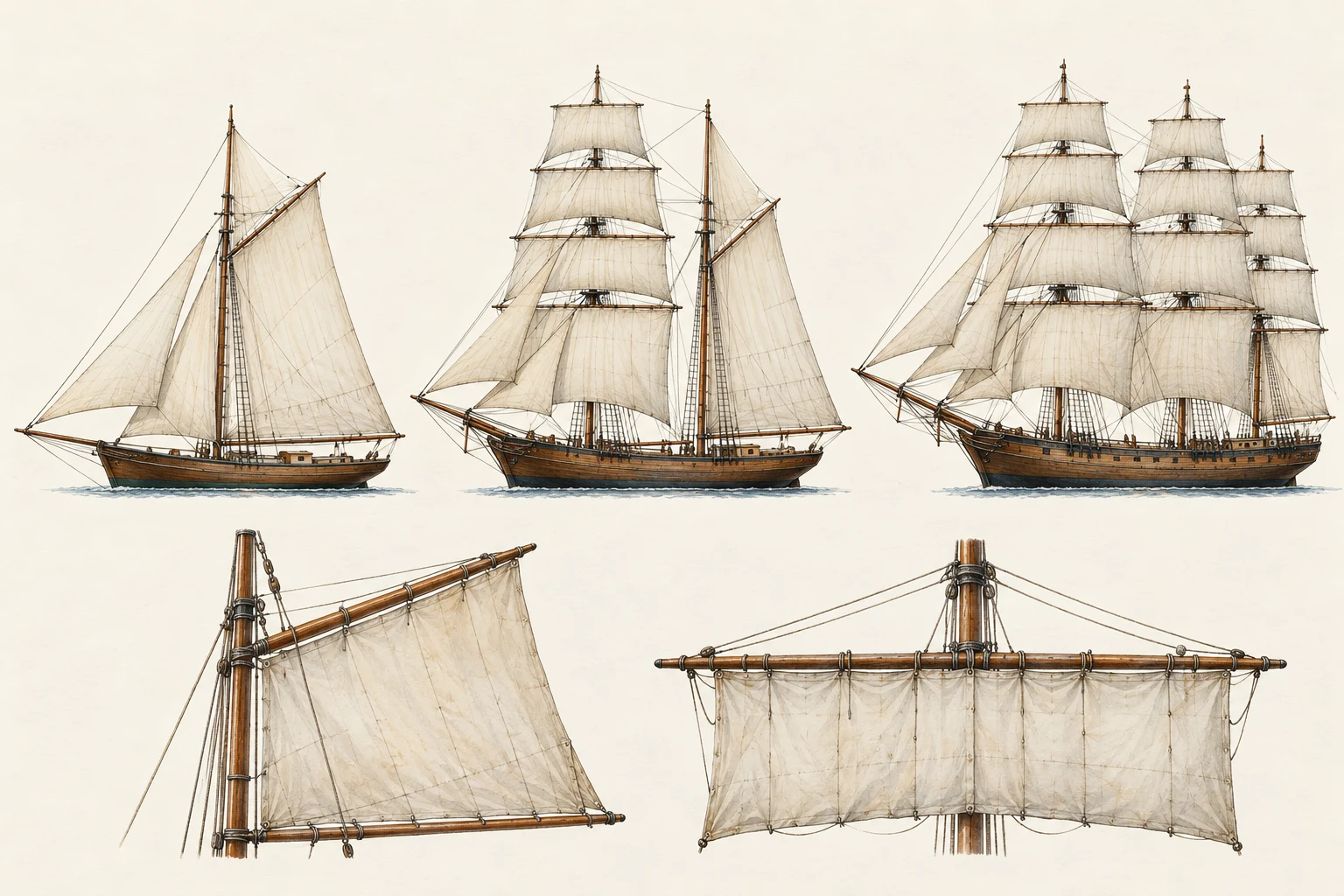 See the details.Pirate ship types, explained.Explore the illustrated guide