
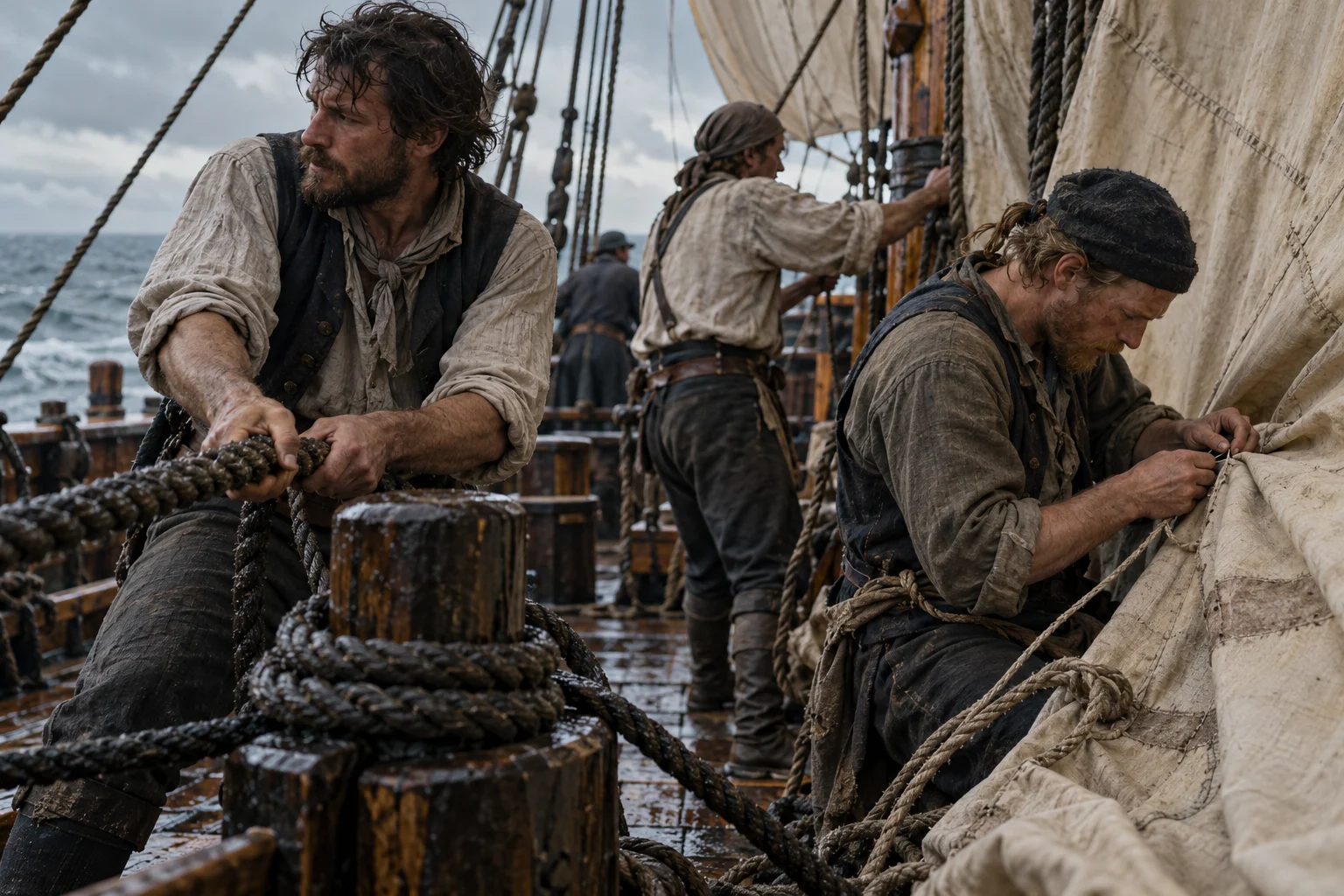
A company within a colonial system
Morgan’s expeditions gathered vessels and men who expected shares of what they took. They also operated through relationships with Jamaica’s governor, council and commercial community. A raid could be profitable to participants and useful to people on shore without becoming an ordinary naval operation. [1]
The early narrative gives colorful explanations of his beginnings. Those details are less secure than the documented relationship between his later commands and Jamaican authority. The career is best entered through particular campaigns and records.
Three campaigns, three different problems
At Portobelo in 1668, capture and ransom turned a commercial port’s population into leverage. At Maracaibo in 1669, movement through the lake system ended with an opponent threatening the way out. In 1671, the Panama expedition had to secure a Caribbean approach and cross the isthmus before reaching its Pacific target. [2][1]
The differences explain more than a list of spectacular victories. Each operation required supplies, suitable craft, information and a return route. Command meant managing those constraints as well as directing attacks.
He described his own permission
Morgan’s relation of the Panama expedition claimed a commission from Governor Thomas Modyford, issued with the council’s advice. Its account casts the expedition in terms of Jamaica’s safety. This is evidence of the justification Morgan offered, not a neutral ruling that every action met every instruction. [3]
A later deposition by his secretary, John Peek, reported that Modyford was informed of the design and sent no countermand. Read together, the documents complicate any simple story in which a lone adventurer acted entirely beyond the governor’s knowledge. [3]
The people in the path of success
Captives, coercion and threats appear throughout the campaign narratives. The population’s loss was part of how the company sought gain. At Panama, responsibility for the destructive fire is itself disputed between Exquemelin’s telling and Morgan’s relation. [2][3]
Neither the official’s later standing nor the writer’s dramatic detail removes the need to examine what happened to those people. The page on the competing fire accounts retains that disagreement.
A government title changed his position
The calendar records a commission dated 6 November 1674 appointing Colonel Henry Morgan lieutenant-governor of Jamaica. That document is a concrete point in the movement from expeditionary commander to colonial officeholder. It does not turn earlier attacks retrospectively into disinterested public service. [3]
Haring follows his return and later place in the island’s administration. The same maritime skills and local connections that supported raiding could matter in a government trying to manage privateers and defend trade. [1]
Follow the career through its connections
Begin with Portobelo, then compare Maracaibo and Panama. The loss of Oxford shows how fragile an assembled fleet could be; the commission system explains the claim of permission around it.
Morgan is a route into the wider world of merchants, governors, sailors and captives. A biography that ends at the famous name leaves most of that world unexplained.
Questions, answered.
Was Morgan simply an outlaw outside government?
That misses his connections with Jamaican government and his later appointment as lieutenant-governor. The authority claimed for a particular campaign still needs to be examined separately.
Did he attack Panama in 1668?
No. Portobelo was attacked in 1668, Maracaibo in 1669 and Panama in 1671.
Sources & reading notes
Source checks distinguish an artifact, a reported account and a modern interpretation. They do not constitute independent historian review.
- The Buccaneers in the West Indies in the XVII Century (1910)Clarence Henry Haring; Project Gutenberg transcription · Early twentieth-century historical study; public domain in the USA
Chapters on Morgan’s campaigns and Jamaican administration; the older study’s national and imperial judgments are not adopted. An older secondary study drawing on colonial records and earlier narratives. Its imperial framing, racial generalizations and claims about national character are not adopted as fact. Not a substitute for current scholarship.
- Bucaniers of America (1684 English edition)Open the keyboarded source transcriptionAlexandre Olivier Exquemelin; printed for William Crooke; EEBO/TCP transcription · Early English translation through a Spanish version; TCP transcription released under CC0
Part II, Chapters IV–VII; Part III, Chapters I–VI. Printed narrative, translation and mediation require attribution. This 1684 English edition is not the 1678 Dutch original. Translation, selection, authorial position and transcription gaps remain part of the evidence. Attribution to a participant does not make every anecdote independently verified.
- Calendar of State Papers Colonial, America and West Indies, 1669–1674 (1889)Edited by W. Noel Sainsbury; Her Majesty’s Stationery Office · Nineteenth-century calendar of colonial documents; public-domain printed text
Entry 504, Morgan’s relation of the Panama expedition;542 and its annexes, council response and secretary’s deposition;1379, commission as lieutenant-governor dated 6 November 1674. The calendar contains abstracts and transcripts, not a substitute for every original manuscript. The downloaded searchable copy is machine OCR; doubtful readings require collation. A commander’s report or deposition remains an interested claim even when preserved in an official record.
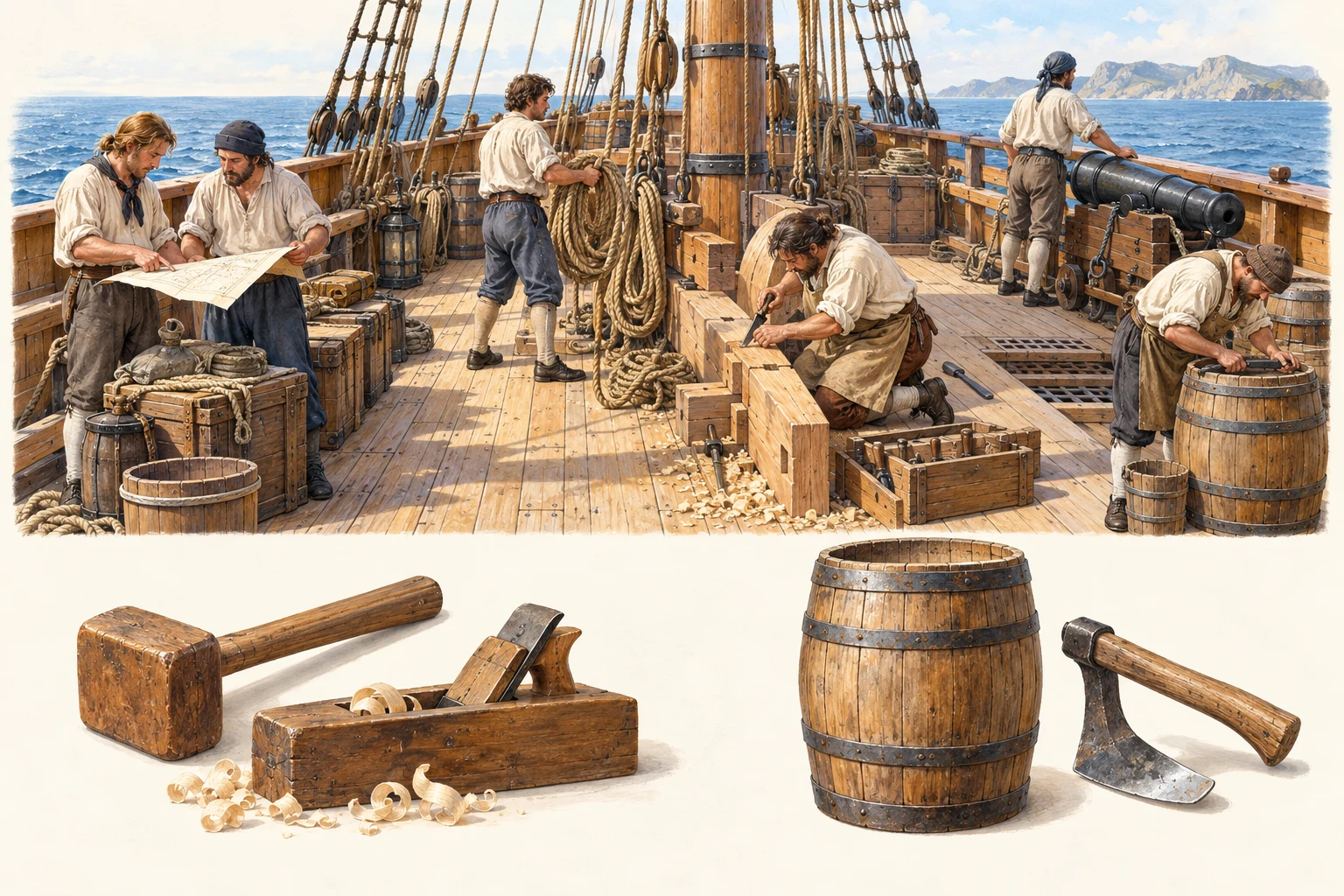 See the details.Pirate ranks and crew duties.Explore the illustrated guide