

Use a scale of evidence, not a novelty verdict
A good myth explanation asks what the claim is, what source supports it and how far the conclusion can extend. “Some sailors lost limbs” and “all pirates wore the same costume” are different claims. Proving the first does not prove the second.
Our evidence scale has three useful stopping points: an object or attributable report, a broader interpretation with limits, and a later cultural image. These are not grades of entertainment. A film can be important to the history of pirate imagery without being evidence of a practice in 1718.
The comparisons below are reading tools, not statistical scores. It does not attach invented confidence percentages to uncertain history.
A treasure map is a story device, not a fleet practice
Royal Museums Greenwich distinguishes the familiar buried-treasure story from the historical evidence, while discussing Kidd’s 1699 concealment on Gardiner’s Island as a specific case. One example does not validate a routine of burying every prize and drawing an X-marked map. [1]
Johnson’s text provides a useful counterweight to the image of nothing but chests of coins. Its captures include clothing, provisions, stores and goods, and it reports disputes over shares and valuables. Those are claims from an early narrative, but they describe a much wider material world than the treasure-map trope. [2]
Read the share example to see why a rule about entitlement is different from a guaranteed fortune.
The familiar voice has a modern history
The Children’s Museum of Indianapolis traces the familiar pirate voice to Robert Newton’s influential performance as Long John Silver in the 1950 film Treasure Island, drawing on a West Country accent. That explains a modern stereotype, not the way all historical pirates spoke. [3]
Keep the scope of the answer precise. “This performance helped popularize the voice” is supportable. “No sailor ever made that sound” would require a different kind of evidence. Pirate crews encountered different languages and backgrounds; a single entertainment voice should not stand in for them all.
The mechanism is interesting on its own: repeated performance can become so familiar that it feels older than its source.
Walking the plank: a lesson in conflicting summaries
Two Greenwich explainers use different language: one says the practice occurred rarely; another states it never happened. Rather than silently choosing the more dramatic claim, this chapter makes the narrower conclusion: these pages do not establish walking the plank as a routine Golden Age pirate punishment. The disagreement is recorded in our source policy. [1]
Johnson’s printed articles do describe marooning and other brutal punishments. Those references support discussing the punishments in that particular text; they are not proof that every story outside it is impossible. [2]
A strong source is still worth reading critically. A museum logo does not remove the need to compare the wording of two claims.
The code and the cutlass need the same discipline
A reported code is not the same thing as an original signed document. A recovered handle is not a complete surviving sword. The articles source trail and the weapons guide demonstrate the same habit with different evidence.
For every attractive detail, ask whether it is observed, reported or reconstructed. Name the period. Keep a specific crew specific. Do not let a striking diagram hide the uncertainty its caption should explain.
That approach does not make history less vivid. It moves the interest from repeating a familiar image to discovering how we know anything about it—and where the next good question begins.
Questions, answered.
Does “not established” mean “never happened”?
No. It means the evidence used here does not justify that conclusion. Universal negative claims need especially careful support.
Why not simply label each myth true or false?
Many claims change when you specify who, where and when. The page shows the supported narrower statement and its limits.
Sources & reading notes
Source checks distinguish an artifact, a reported account and a modern interpretation. They do not constitute independent historian review.
- Pirate myths debunkedRoyal Museums Greenwich · Museum interpretation
Greenwich treasure and pirate summaries, specific Kidd concealment and differing statements about walking the plank; the conflict remains recorded. Its categorical plank claim differs from another RMG explainer. We use a narrower evidence claim.
- A General History of the Pyrates (1724)Published under the name Captain Charles Johnson · Early printed account; public-domain text
Roberts, Phillips and Lowther chapters, reported articles and punishments; captures of material besides coins. Authorship is disputed. A near-contemporary compilation, not a surviving signed pirate code or a neutral transcript. Cite its claims as reported claims.
- Why do pirates say ‘arrr’?The Children’s Museum of Indianapolis · Museum interpretation
Museum explanation of Robert Newton’s 1950 Long John Silver performance and its influence on the familiar voice. Explains the modern stereotype, not every historical sailor’s speech.
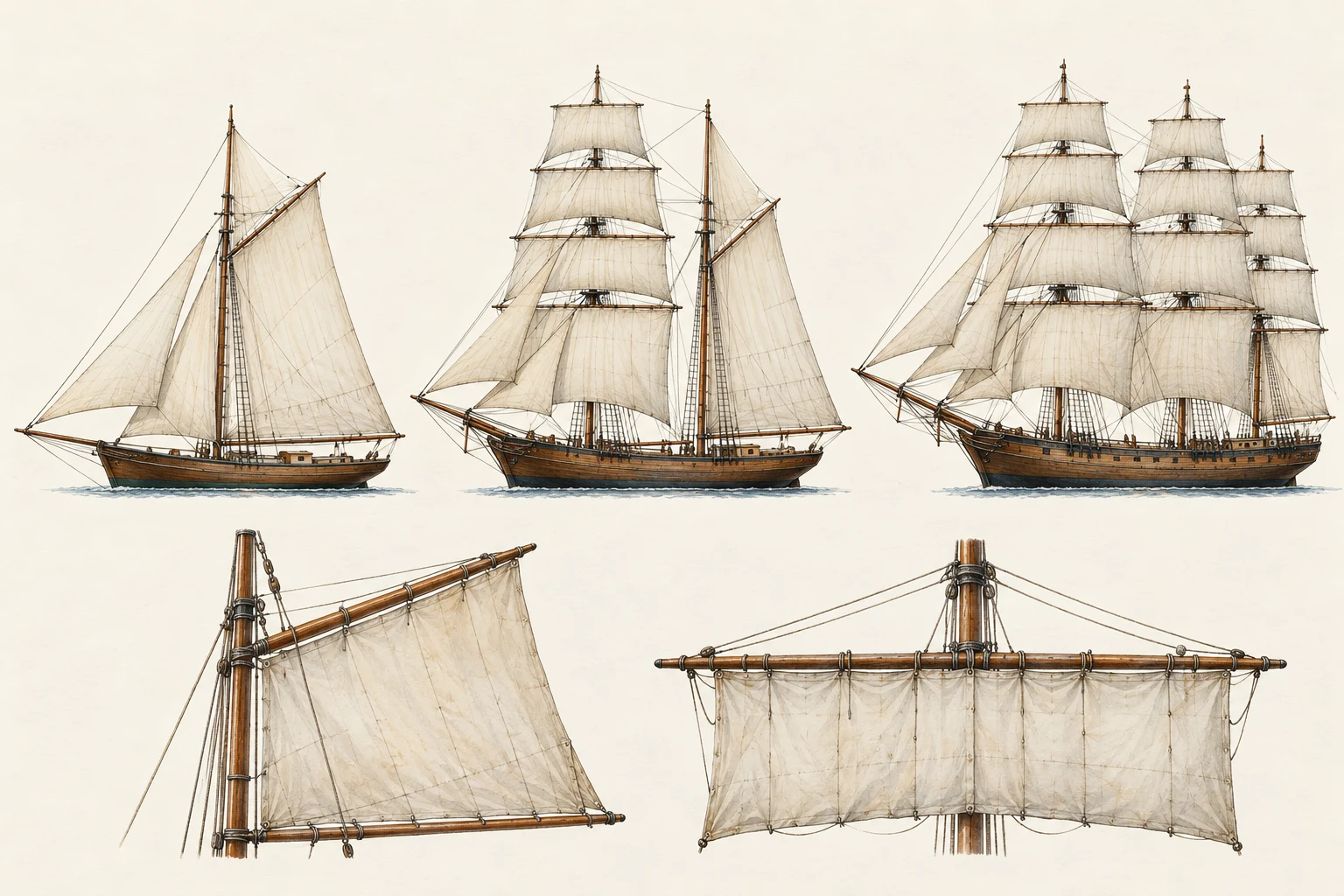 See the details.Pirate ship types, explained.Explore the illustrated guide