

A first-person voice does not settle whether a text is testimony
Crusoe narrates a life, supplies dates and lists possessions. Those devices give an invented experience the texture of a personal record. They do not make him a witness whose statements can be filed alongside Rogers’s encounter with Selkirk. [1] [2]
The question is not whether the novel feels convincing. It is what kind of claim the work makes and how a reader can use it as evidence.
The fictional island contains the remains of a wider economy
Crusoe repeatedly retrieves equipment and materials from the wreck. Tools, cordage, books and instruments help him build a life ashore. He also constructs a dated post to preserve a reckoning of time. [1]
The scenes complicate the idea of a man creating everything from nothing. Much of his apparent self-sufficiency depends on manufactured objects, prior knowledge and the ship’s surviving cargo.
Selkirk’s retained equipment belongs to another account
Rogers lists supplies Selkirk had kept and reports his time ashore. Dampier recognized the man’s earlier service, and Rogers engaged him as a mate. Selkirk then helped provide food and knowledge to the arriving company. [2]
The overlap with a fictional castaway invites comparison. The different circumstances, people and sequence prevent the two stories being merged into one biography.
Friday’s naming exposes the novel’s hierarchy
Crusoe assigns Friday a name tied to the day of their encounter and teaches him to call Crusoe Master. The passage is explicit about who controls the relationship in the narrator’s telling. [1]
It should not be treated as a transparent account of an actual Indigenous person attached to Selkirk. Literary analysis can examine its colonial assumptions without inventing a historical counterpart for every character.
Read across the two works without erasing their differences
The novel’s later encounter with mutineers links its island back to ships, command and return. Rogers’s voyage places Selkirk inside an ongoing privateering venture. In both, the island is connected to a wider sea, but through different kinds of narrative. [1] [2]
Continue with Selkirk, Rogers and Juan Fernández. Comparison is useful without claiming a single proven chain of inspiration for every feature of the novel.
Questions, answered.
Can Robinson Crusoe be read as Selkirk’s literal memoir?
No. The novel and Rogers’s account concern different people, circumstances and forms of writing.
Does a fictional object or character prove its historical counterpart existed?
No. Such a connection requires evidence outside the invented scene.
Sources & reading notes
Source checks distinguish an artifact, a reported account and a modern interpretation. They do not constitute independent historian review.
- The Life and Adventures of Robinson Crusoe, Daniel DefoeProject Gutenberg; public-domain literary text · Primary literary text
Island arrival, dated post and salvage;the naming of Friday;later recovery of a ship from mutineers. Chapter divisions belong to the reading edition and are not attributed to every original printing. A novel. Compare specific features with historical accounts without treating the fictional narrator as Selkirk or asserting a single proven model for every episode.
- A Cruising Voyage Round the World (1712; 1928 reprint)Woodes Rogers; 1928 edition with introduction and notes by G. E. Manwaring; Project Gutenberg · Participant voyage narrative in a later public-domain edition
2 February 1709 and the ensuing Selkirk description, retained supplies, reported isolation, assistance and engagement as mate. Distinguish Rogers’s journal from Manwaring’s 1928 introduction and notes. Rogers writes as a commander accounting for his decisions and profits. Reported medical explanations and national or racial judgments are not adopted as modern science or neutral fact.
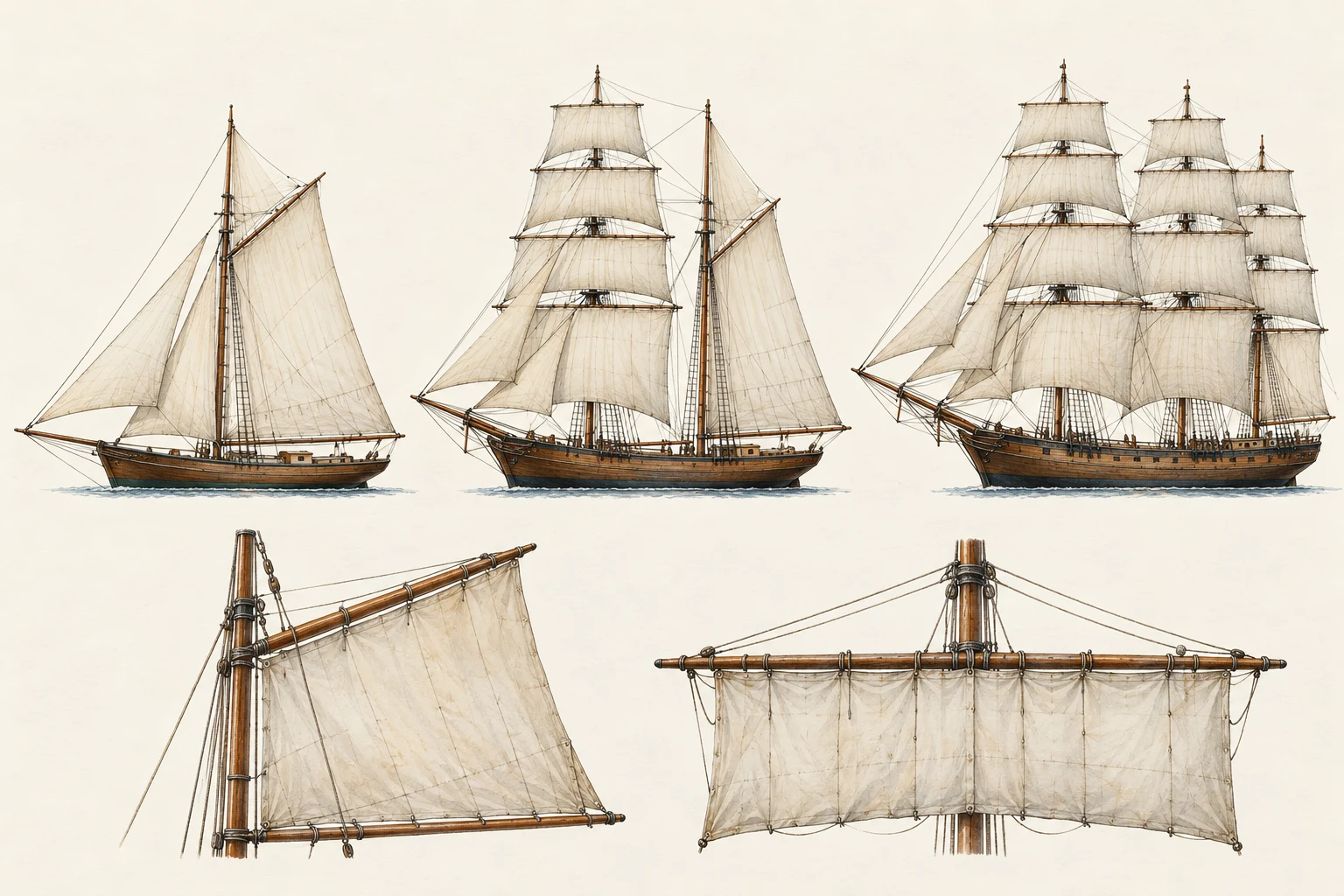 See the details.Pirate ship types, explained.Explore the illustrated guide