
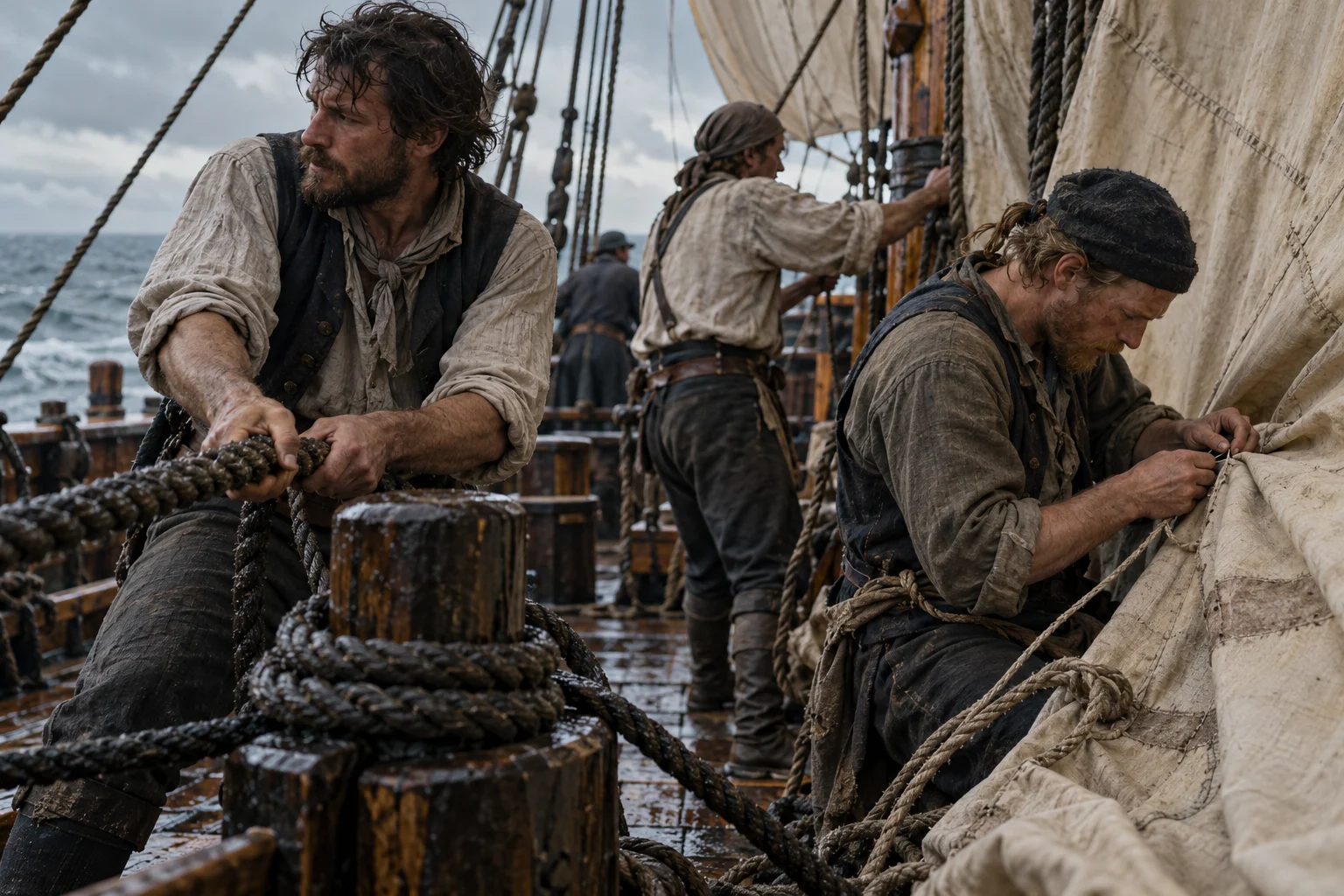
From a captured crew to a new company
Davis appears in the General History as a mate aboard the Cadogan, captured by England’s company. The narrative then follows a complicated passage through released command, rejection by his crew and detention before his later turn to piracy. It is not a simple tale of one moment of temptation. [1]
Aboard the trading sloop Buck, Davis and associates seized control. The book’s later chapter on Anstis identifies a small network of men connected to that conspiracy. Pirate companies could grow from an existing workplace and its relationships.
The value of seeming ordinary
The account of the attack on Gambia Castle depends on an explanation that appeared commercially plausible. Davis’s men presented themselves as traders whose plans had been disrupted. That story gained access, and the narrative describes the fort being taken with little initial disturbance. [1]
It is a reminder that raiding was not always a frontal attack against a wall of cannon. Information, appearances and a believable place within regional trade could be weapons. The fort was also part of slave-trading commerce, a context that should not disappear behind the ingenuity of the trick.
A claim of public authority
At Príncipe, Davis was received by Portuguese officials. When he plundered a French vessel, he offered an account that made the seizure sound like action against pirates on behalf of a king. In the book, the governor initially accepted that explanation. [1]
The difference between a naval officer, commissioned privateer and pirate could not always be read directly from sails and guns. Papers, flags, introductions and what a commander said he was doing all entered the encounter. Recognition could be manipulated, but it could also be withdrawn.
The invitation turns against him
The narrative says Davis planned to invite the governor and leading men aboard and hold them for ransom. A man swam ashore and disclosed the plan. Davis then went ashore, expecting to bring the governor out, and was killed in an ambush. [1]
The person who carried the warning is described through the period text’s racial language and is not given the same biographical attention as the pirate captain. Even within that unequal account, his action changes the outcome. Reading only the named captains misses an important agent in the story.
A successor inherits more than a title
After Davis’s death, the surviving company chose Roberts. It inherited a vessel, an armed community, relationships and grievances—not merely a vacant office. The printed narrative then follows the company’s retaliation and wider Atlantic voyages. [1]
Continue with Roberts’s command and England’s company. Together these careers reveal a connected maritime world instead of a row of isolated famous pirates.
Questions, answered.
Did Davis lead with deception as well as force?
That is a central theme of the early account, particularly at Gambia Castle and Príncipe. The details remain attributed to that narrative.
Who replaced him?
The General History describes the surviving company electing Bartholomew Roberts.
Sources & reading notes
Source checks distinguish an artifact, a reported account and a modern interpretation. They do not constitute independent historian review.
- A General History of the Pyrates (1724)Published under the name Captain Charles Johnson · Early printed account; public-domain text
Chapter VIII: Cadogan, the Buck conspiracy, Gambia Castle and the final Príncipe invitation; Chapter IX opening for Roberts’s succession. The opening claim that Milford lay in Monmouthshire is not adopted; exact origin and chronology need separate documentary checking. Authorship is disputed. A near-contemporary compilation, not a surviving signed pirate code or a neutral transcript. Cite its claims as reported claims.
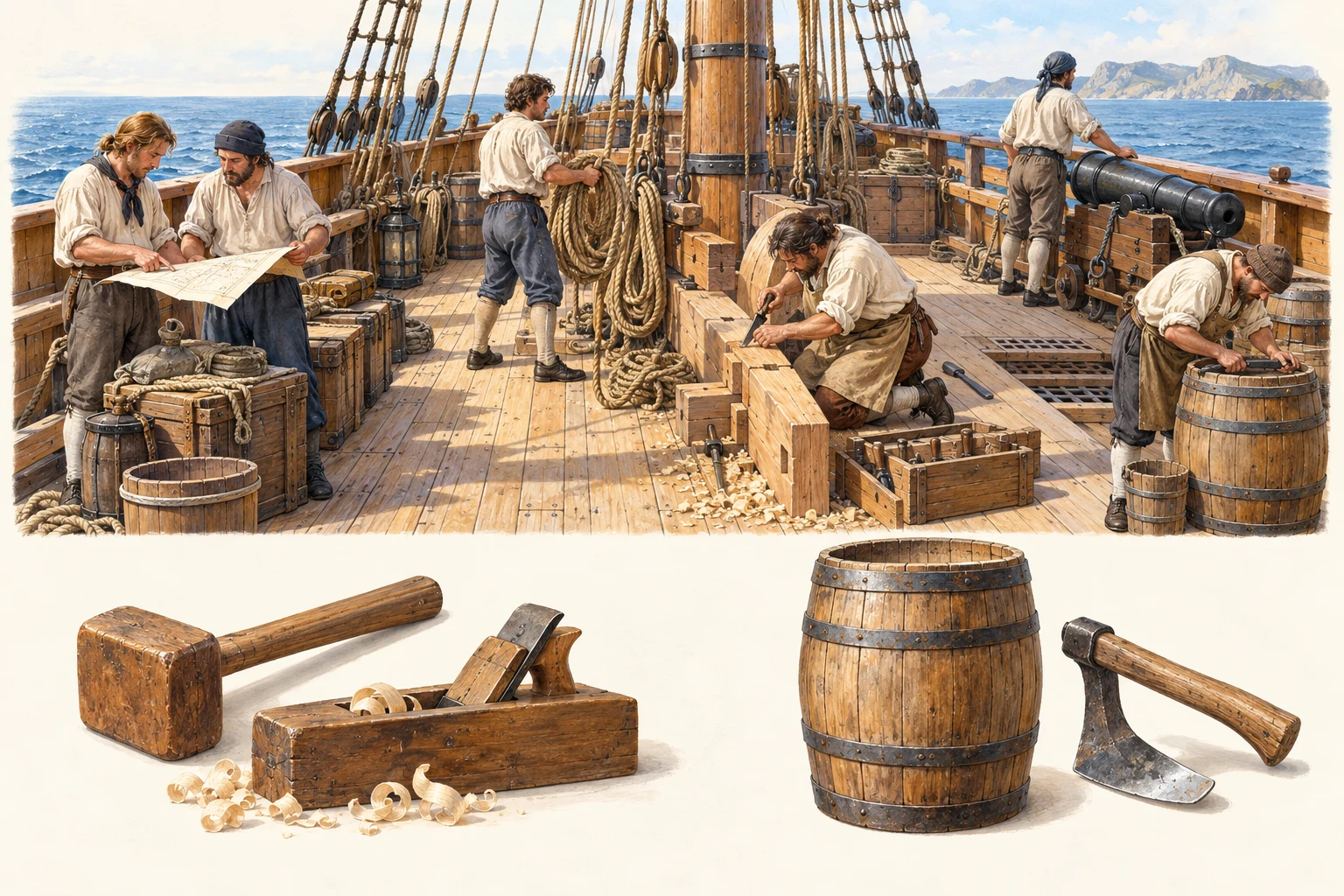 See the details.Pirate ranks and crew duties.Explore the illustrated guide