
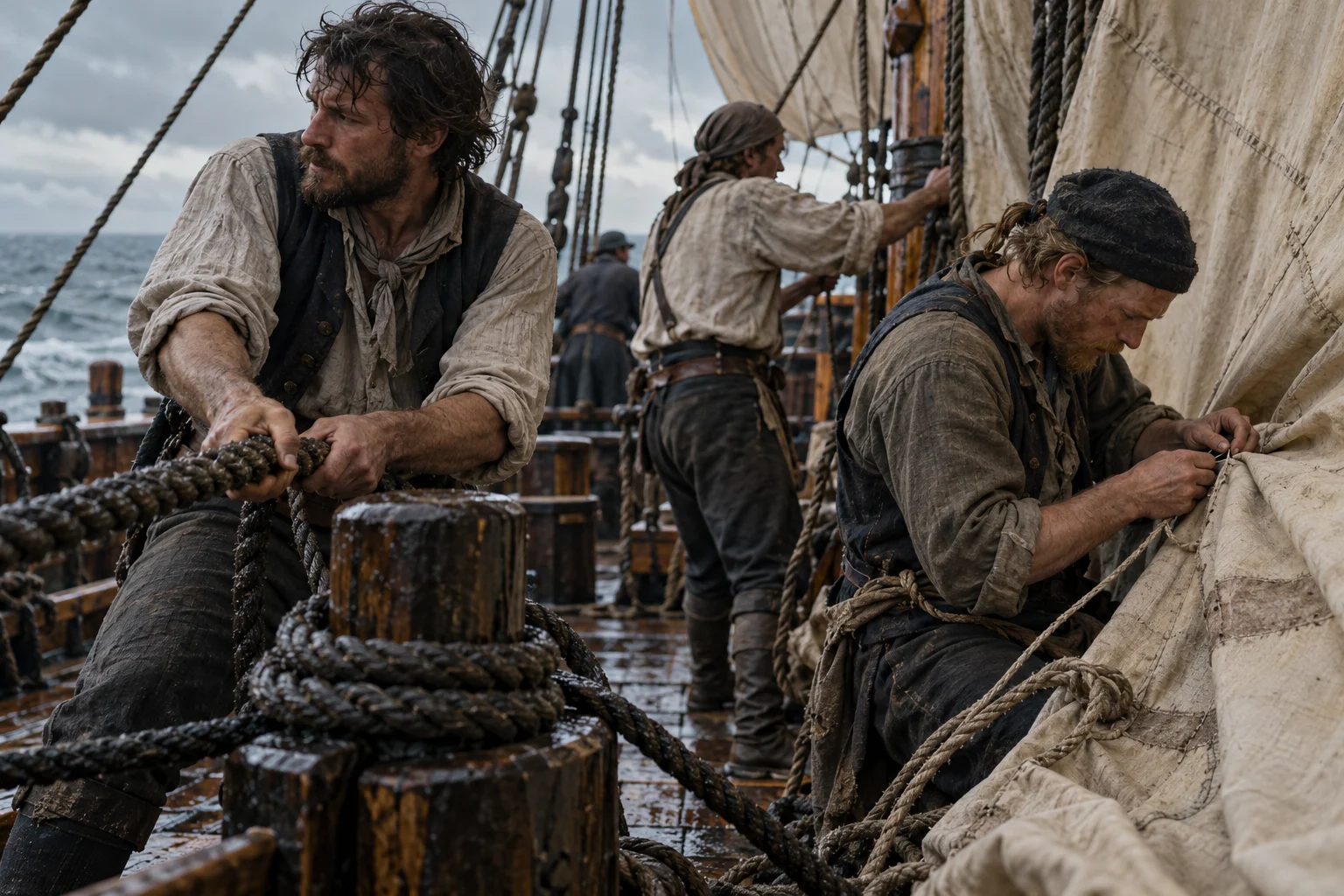
A captain made by disagreement
Rackham’s command begins in the General History with a dispute over Vane’s refusal to engage a stronger-looking opponent. Rackham, then quartermaster, favored fighting. The company removed Vane and chose Rackham, leaving Vane with a smaller party. [1]
The episode is frequently reduced to pirate democracy. It is more specific than that. A company could enforce its preference over a commander in this reported case. It does not follow that every crew used the same procedure, or that a majority’s appetite for an attack made the action wise.
A small company in a busy sea
The later narrative follows Rackham through pardon and renewed piracy. His final cruising near Jamaica involved coastal craft and small vessels rather than an enormous floating fortress. Anne Bonny and Mary Read belonged to this company, which is one reason his name remains familiar. [1]
The crew’s size and working environment matter. Piracy did not require a ship resembling a later film set. A small vessel operating near islands could take exposed boats, obtain information and draw the attention of local authorities quickly.
The capture near Jamaica
The account describes Captain Barnet pursuing and taking Rackham’s sloop after a brief fight. It then gives an Admiralty proceeding at St Jago de la Vega in November 1720 and names officers as well as ordinary participants. The punishment extended beyond the captain: the law treated the company as a collective problem. [1]
Bonny and Read’s reported conduct and their pregnancy pleas are important parts of that aftermath. They are not evidence that Rackham’s entire career can be reconstructed from a few famous exchanges.
The nine men who said they came for a drink
A separate group of nine men said they had gone aboard shortly before the capture after an invitation to drink. Witnesses described their weapons, their behavior during the chase and whether they helped the sloop escape. The men denied a piratical intention and said they had been coerced. The majority of the commissioners nevertheless convicted them, according to the printed account. [1]
This dispute is the most unsettling part of the chapter. Presence aboard, physical participation, reputation and intention could lead to different interpretations of the same moment. It is a useful counterweight to the idea that every person on a pirate vessel freely chose the life.
A flag is not the whole biography
Popular images often identify Rackham through a skull-and-crossed-swords design. This guide does not use a modern flag attribution to stand in for the evidence about his command. The more productive connections are to Bonny, Read, Vane and the question of how companies organized power.
Questions, answered.
Were Jack Rackham and John Rackam the same person?
This guide follows the John Rackam of the early printed account, commonly called Jack Rackham in modern usage. Spelling differences are not treated as different people.
Was everyone captured aboard necessarily a willing pirate?
That was disputed. The account of the nine late arrivals records competing claims about intention, assistance and coercion.
Sources & reading notes
Source checks distinguish an artifact, a reported account and a modern interpretation. They do not constitute independent historian review.
- A General History of the Pyrates (1724)Published under the name Captain Charles Johnson · Early printed account; public-domain text
Chapter VI conclusion and Chapter VII: Vane’s displacement, Rackham’s voyages, capture by Barnet, reported November 1720 proceedings and the separate prosecution of nine men. The printed trial narrative is not an independently checked court transcript. Authorship is disputed. A near-contemporary compilation, not a surviving signed pirate code or a neutral transcript. Cite its claims as reported claims.
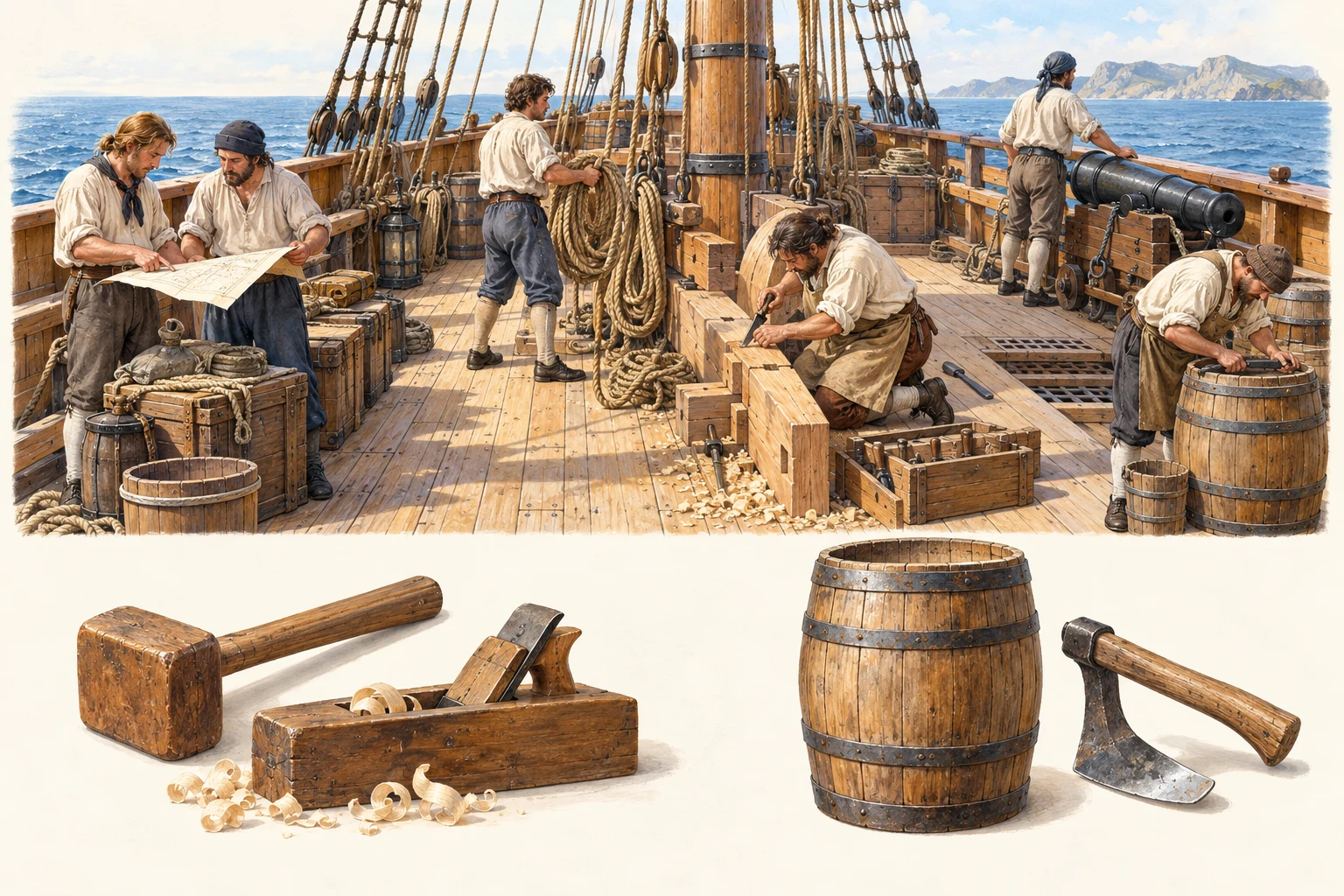 See the details.Pirate ranks and crew duties.Explore the illustrated guide