
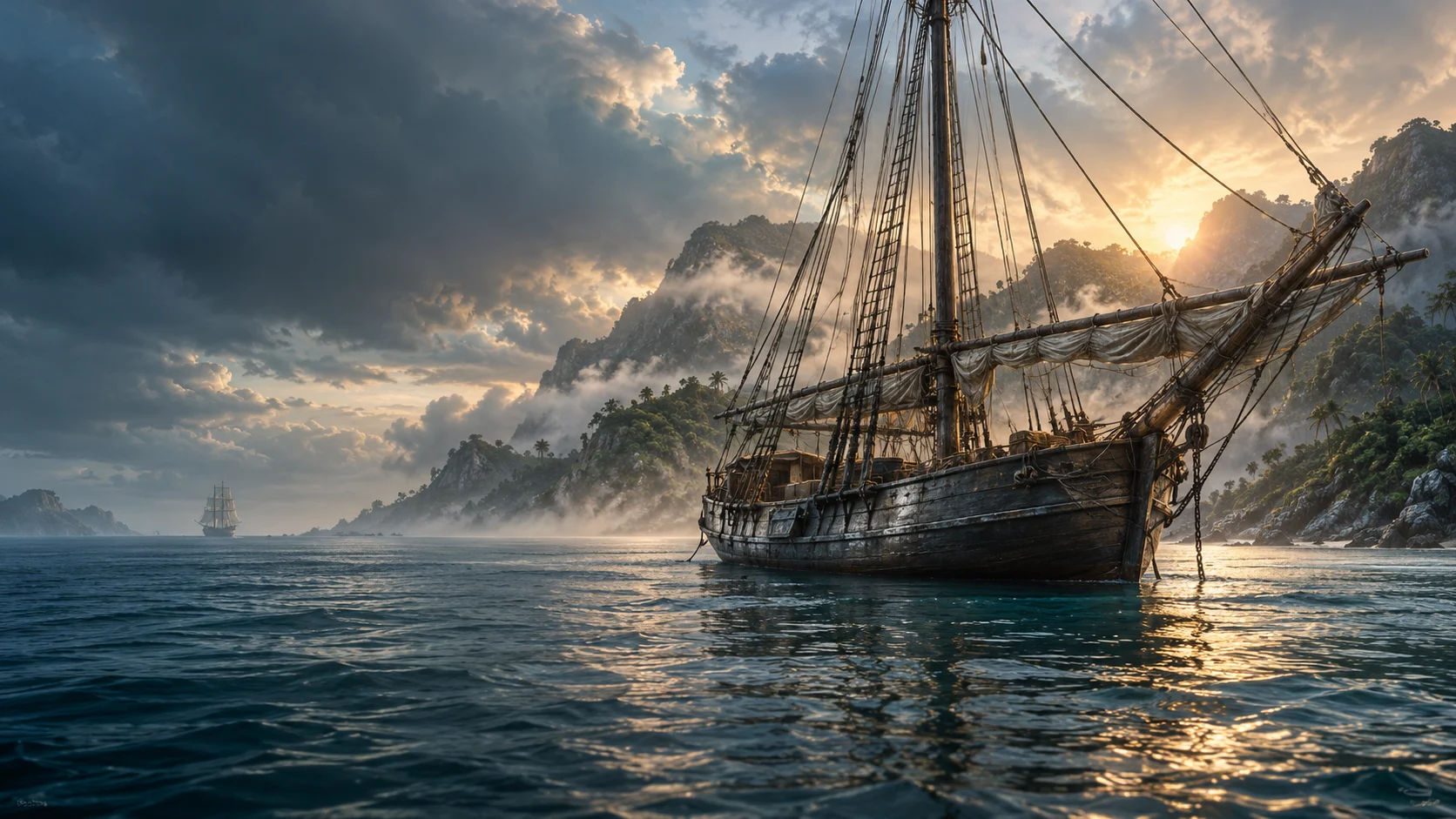
A first-person account inside a compilation
The England chapter prints a letter attributed to James Macrae describing the loss of Cassandra. It gives a survivor’s account of combat, escape ashore and negotiation with the pirate company. The embedded letter has a different voice and position from the surrounding compiler’s narrative. [1]
Its force comes partly from that position: the writer needed to explain his decisions and the condition of the men and property entrusted to him.
The pirates exchanged platforms
Macrae says the company considered burning one of its own vessels because it had been so badly damaged, while fitting Cassandra in its place. His negotiation ended with the damaged, Dutch-built vessel called Fancy being given to him instead. [1]
The same hull could be an encumbrance to a company acquiring a better ship and a means of escape to people otherwise stranded.
A jury rig made departure possible
The letter describes leaving with jury-masts and old sails. Macrae’s party had to turn what the pirates left into a vessel capable of another passage. This was emergency adaptation, not a new ship built to an ideal plan. [1]
A repaired-looking silhouette in later art would conceal how uncertain the next stage remained. The equipment available set limits on speed, handling and endurance.
Water became the central problem
Macrae reports a long passage, very limited water and calms before arrival at Bombay. The reported quantities and dates belong to his letter; they explain why acquiring a hull did not end the survivors’ danger. [1]
The voyage after the fight belongs in the history of the ship. A vessel can save lives while remaining damaged, poorly supplied and difficult to handle.
Follow identities rather than names alone
The name Fancy is associated with more than one pirate story. This article follows the vessel in the 1720 Macrae account and makes no unsupported identification with Every’s earlier ship.
Continue with England’s company, the importance of supplies and the material work that kept a damaged vessel moving. The exchange is a useful example of why capture, command and vessel identity should be recorded separately.
Questions, answered.
Was this definitely the same Fancy as Henry Every’s?
The shared name does not establish that connection, and this article does not make it.
Did receiving a ship make the survivors’ return straightforward?
No. Macrae describes a damaged vessel, improvised rig and severe water shortages.
Sources & reading notes
Source checks distinguish an artifact, a reported account and a modern interpretation. They do not constitute independent historian review.
- A General History of the Pyrates (1724)Published under the name Captain Charles Johnson · Early printed account; public-domain text
Chapter V, letter headed Bombay, 16 November 1720, attributed to Captain James Macrae, including the Cassandra fight, negotiation, transfer of damaged Fancy, jury rig and passage. The letter is read through the printed compilation, not a separately collated manuscript. Authorship is disputed. A near-contemporary compilation, not a surviving signed pirate code or a neutral transcript. Cite its claims as reported claims.
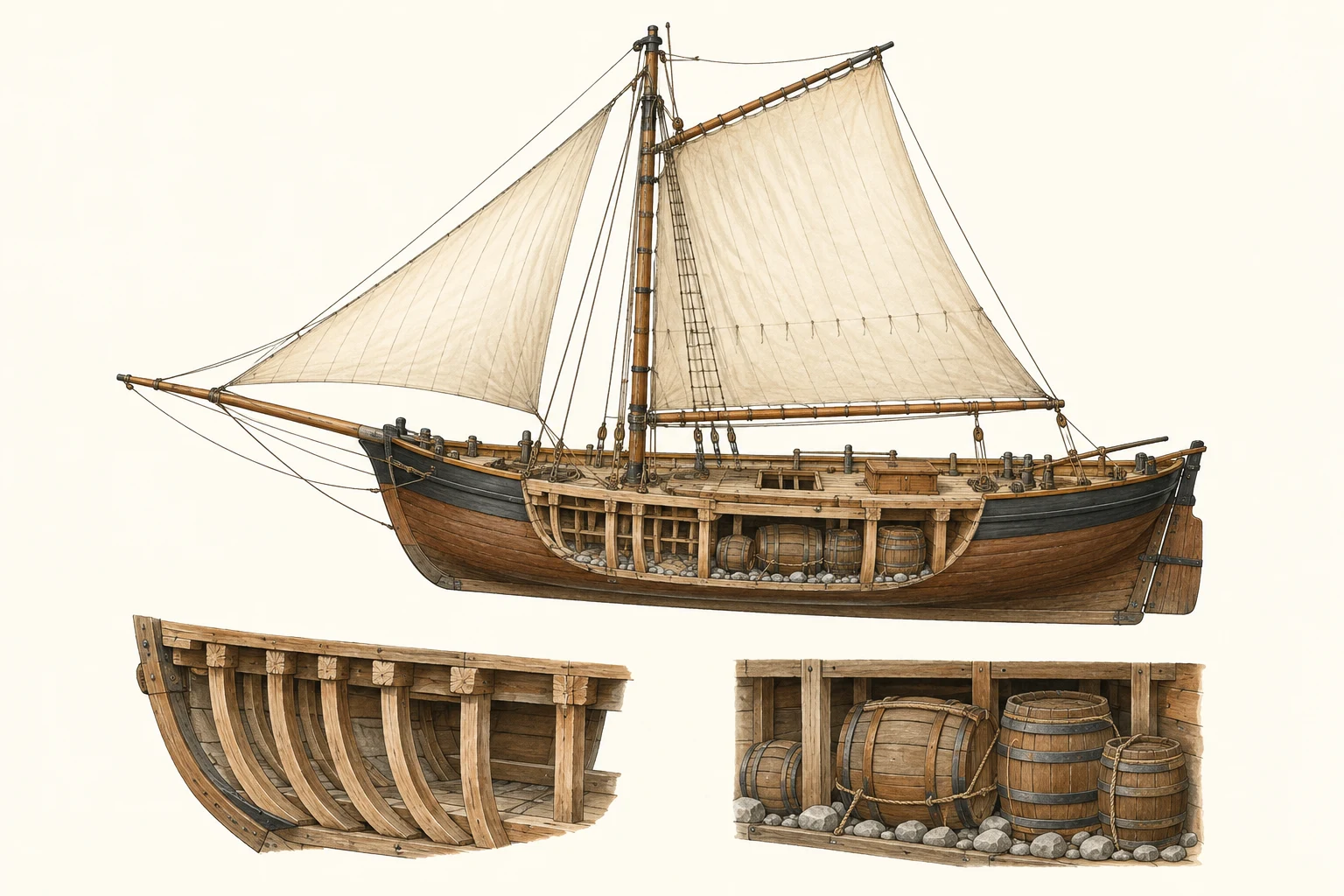 See the details.Inside a pirate-era ship.Explore the illustrated guide