
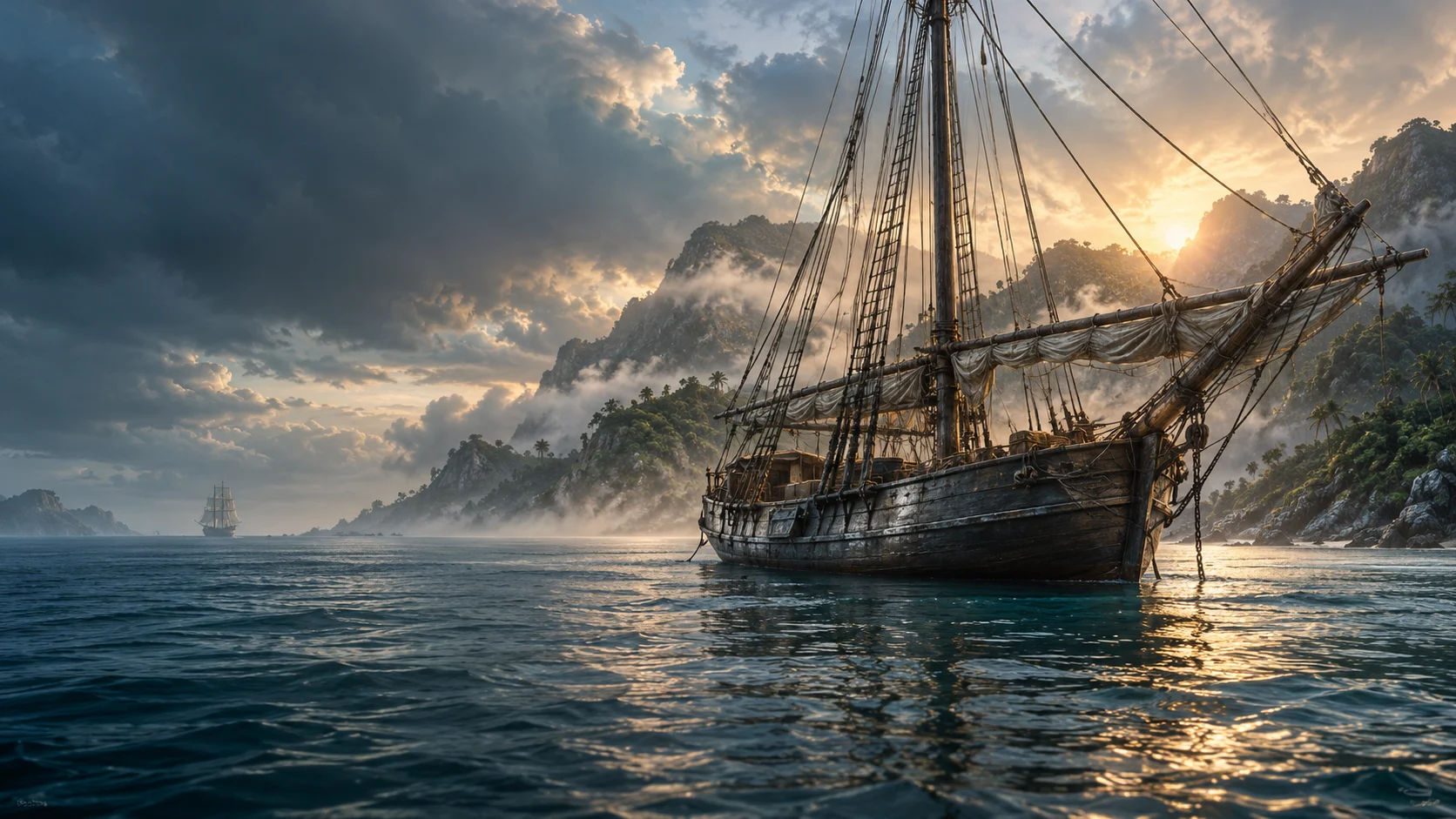
The ship carried a military and commercial problem
The General History places Lowther as second mate of Gambia Castle, carrying soldiers to a Royal African Company settlement. Its account describes disputes over provisions and authority between military men and company factors. [1]
The author admits uncertainty about whether the allowance had actually been reduced. That qualification matters: an asserted grievance is evidence of a dispute, not proof of every accusation inside it.
Seizing the ship also involved the shore
Lowther and Massey coordinated the seizure while the captain was ashore. Stores and the governor’s possessions were brought aboard. The vessel then grounded during departure, and Massey returned to hold the fort while it was freed. [1]
The mutiny was therefore not one isolated act on an empty deck. Boats, a company settlement, armed men and shore stores all entered the process.
A new arrangement was made aboard
Once at sea, the narrative gives Lowther a speech against returning to England and describes the company’s agreement to go raiding. Cabins were knocked down, black colors prepared and the vessel renamed Delivery. The printed articles follow. [1]
The later narrative uses Happy Delivery. These name forms are followed together here rather than counted as two independent hulls.
The principal ship needed a small fleet
The company used smaller sloops and a tender alongside the larger vessel. After taking Greyhound, it incorporated people and equipment while destroying the captured ship. The fleet was an assemblage built through encounters. [1]
It could expand its opportunities, but it also distributed work, supplies and authority across several craft.
Maintenance exposed what had been accumulated
At the careening stop, sails, plunder and stores were placed ashore while the vessels were heeled. An attack by local people caught the company unprepared. The pirates escaped in sloops and burned their principal ship, according to the narrative. [1]
The loss links Lowther’s career to careening and company agreements. A valuable ship could become a liability at the moment when it most needed work.
Questions, answered.
Are Gambia Castle and Happy Delivery unrelated vessels in this account?
The narrative follows the captured company ship under the Delivery name forms.
Was the main ship lost in a conventional naval battle?
The cited account describes an interrupted careening operation and the company’s escape in smaller craft.
Sources & reading notes
Source checks distinguish an artifact, a reported account and a modern interpretation. They do not constitute independent historian review.
- A General History of the Pyrates (1724)Published under the name Captain Charles Johnson · Early printed account; public-domain text
Chapter XII, Gambia Castle, Lowther and Massey’s seizure, the name Delivery, later use of Happy Delivery, Greyhound and the interrupted careening at Port Mayo. The author’s claims about grievances and intentions are attributed, not modern findings. Authorship is disputed. A near-contemporary compilation, not a surviving signed pirate code or a neutral transcript. Cite its claims as reported claims.
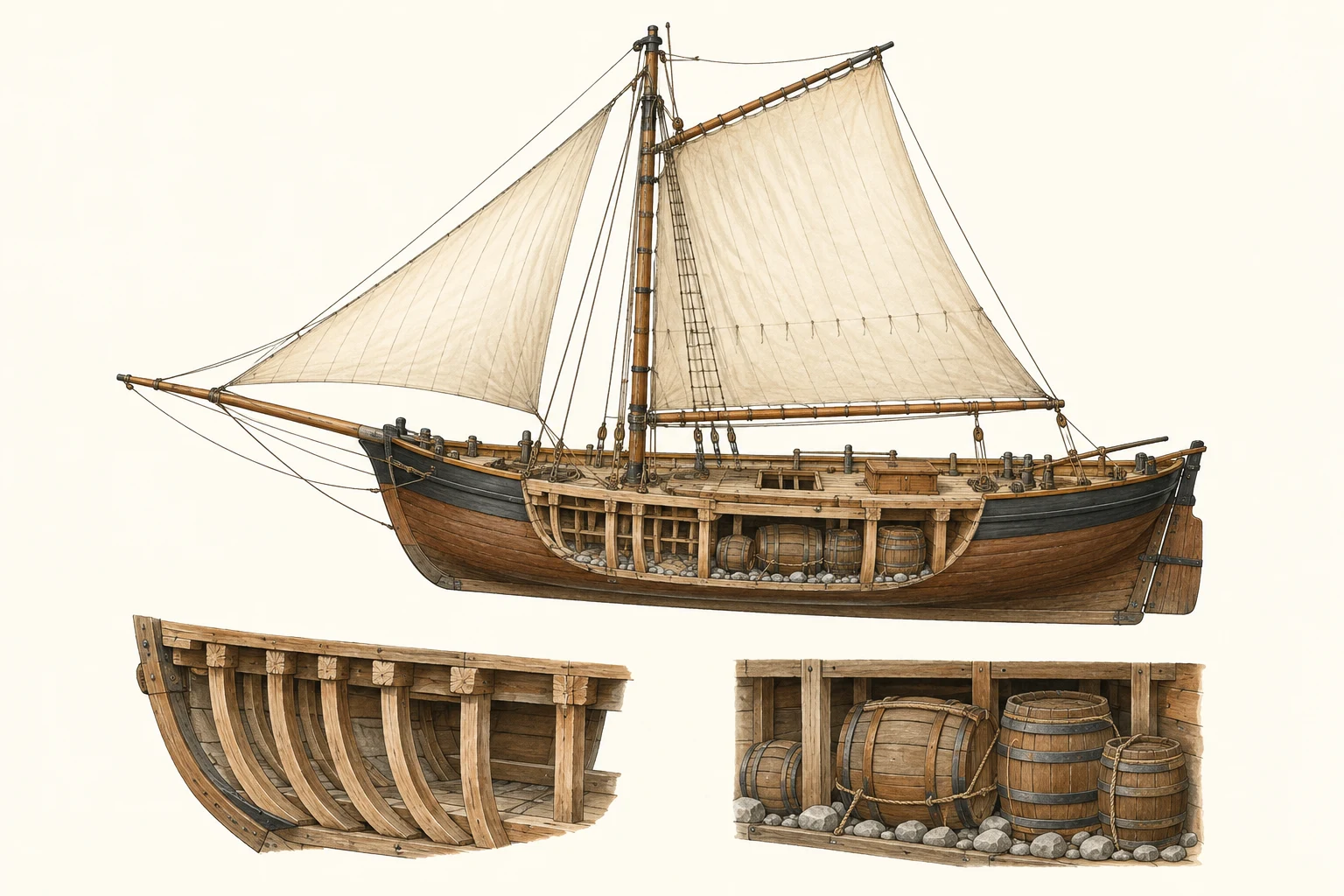 See the details.Inside a pirate-era ship.Explore the illustrated guide