
A battle told by more than one voice
The General History does something useful in its chapter on England: it inserts a letter attributed to the commander of Cassandra, dated at Bombay in November 1720. The letter describes a hard-fought encounter, casualties, retreat and the desperate need to negotiate after the vessel was lost. [1]
A letter reproduced inside a later book is still mediated evidence. Yet distinguishing the captive commander’s account from the compiler’s surrounding explanation gives the reader two positions to examine, rather than one anonymous story.
Survival depended on relationships
The captive commander says that some pirates knew him and had sailed with him. Those connections mattered when others wanted to kill him and the men who would not join them. England and some associates helped protect him. [1]
The passage makes a pirate vessel look less like a sealed world of strangers. Sailors moved between employments and met former shipmates in radically changed circumstances. A personal reputation could offer protection, although it was not a reliable substitute for control of the ship.
A damaged vessel was an escape route
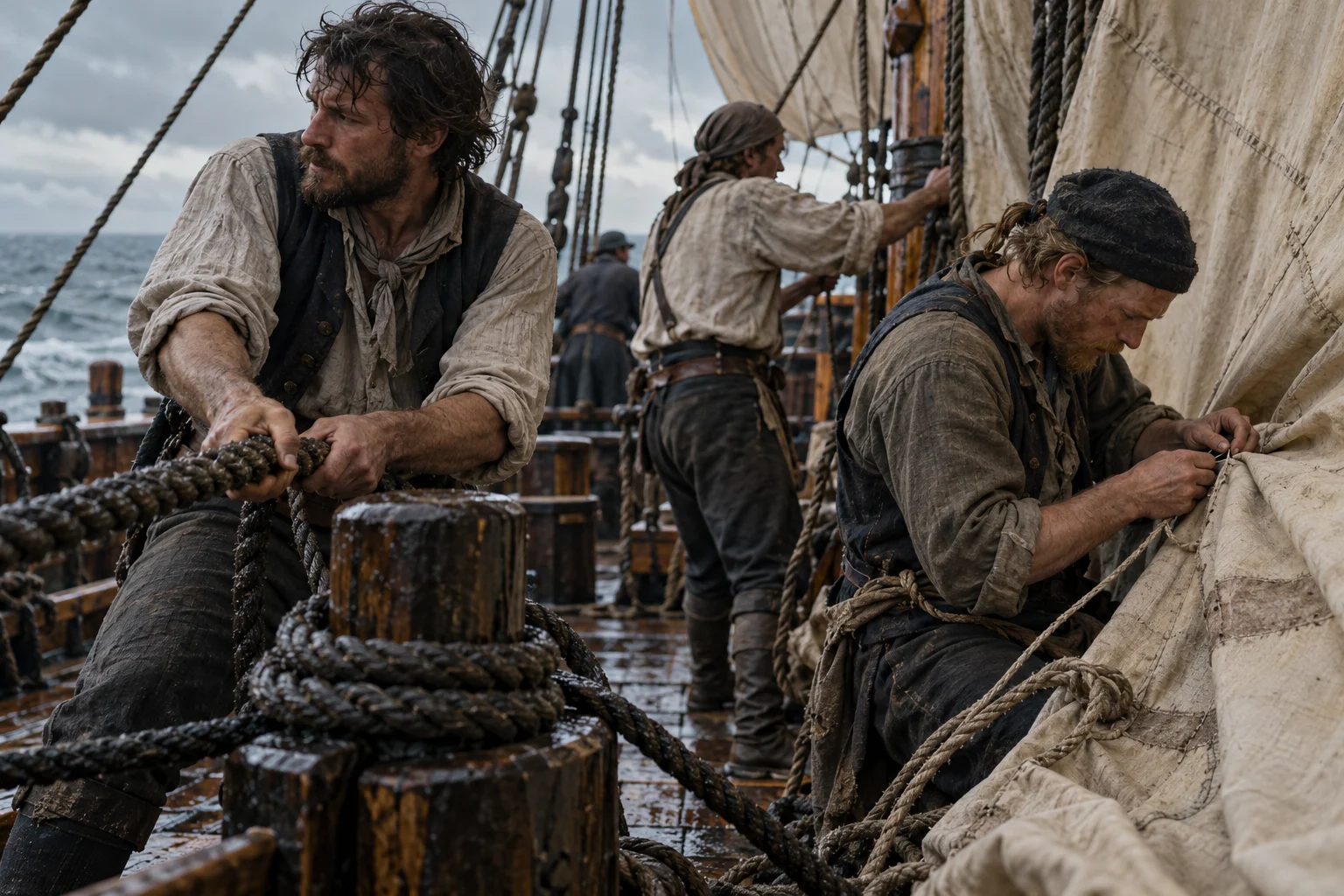
In the letter, the pirates give the commander a damaged vessel named Fancy and some cloth. He describes leaving with jury masts, old sails, limited water and a reduced company, then reaching Bombay after a difficult passage. [1]
This was not generous freedom without cost. A seaworthy-enough replacement, repair material and provisions were the difference between a negotiated release and a workable return. The incident also warns against identifying a vessel by name alone: this Fancy should not automatically become Henry Every’s earlier ship of the same name.
A captain without sufficient backing
The compiler says England’s favorable treatment of the captive made enemies within the company. His interest was declining, and Taylor had influence. Eventually England was removed and marooned with three others on Mauritius. [1]
The account portrays England as relatively less cruel than his associates. “Less cruel” is a comparison inside a violent enterprise, not a finding that he was harmless. His ability to help a prisoner was also limited by the men whose cooperation made command possible.
What the episode explains
England’s story joins the practical and political sides of piracy: battle damage, water, repair, old shipmates and contested authority. It is especially valuable beside Vane’s removal and the everyday limits of a captain’s power. Each case has its own cause; none establishes a single rule for all companies.
Questions, answered.
Was Edward England the captain of Cassandra?
Cassandra’s commander in the reproduced letter is James Macrae, spelled Mackra there. England was one of the pirate commanders involved in its capture.
Was the Fancy in this story Every’s ship?
A shared name does not establish identity. This episode describes a damaged vessel used after the Cassandra encounter, in a different setting and period.
Sources & reading notes
Source checks distinguish an artifact, a reported account and a modern interpretation. They do not constitute independent historian review.
- A General History of the Pyrates (1724)Published under the name Captain Charles Johnson · Early printed account; public-domain text
Chapter V, including the letter attributed to Captain Mackra dated Bombay, 16 November 1720, and the following account of England’s declining influence and marooning. The letter and the compiler’s commentary are separate voices. Authorship is disputed. A near-contemporary compilation, not a surviving signed pirate code or a neutral transcript. Cite its claims as reported claims.
 See the details.Pirate ranks and crew duties.Explore the illustrated guide