
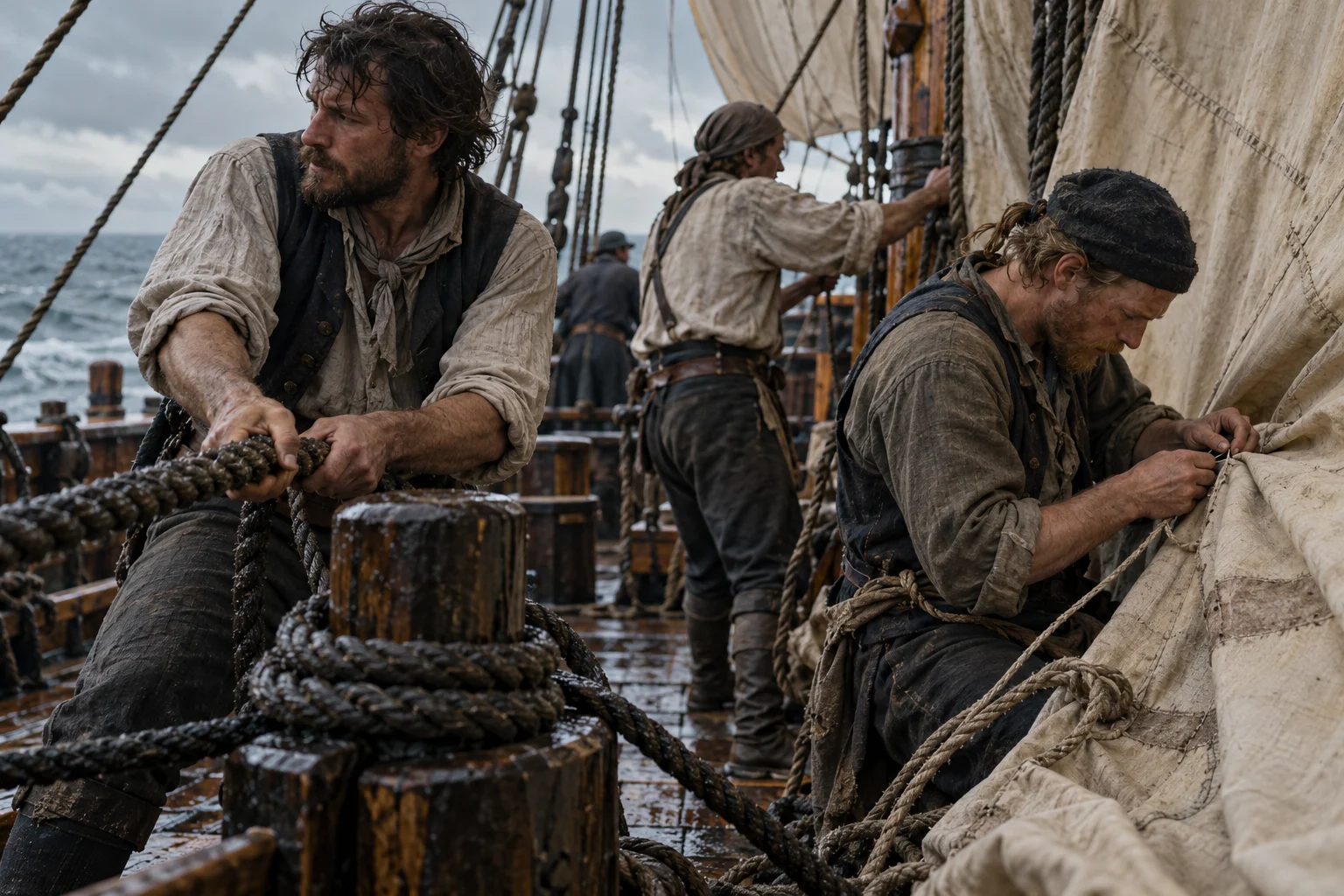
A ship with several hierarchies aboard
The Gambia Castle carried sailors and soldiers to a Royal African Company settlement. Lowther served as second mate; John Massey commanded the soldiers. At the destination, the narrative describes friction between men carrying official titles and the merchants controlling practical supplies. [1]
Aboard and ashore, rank did not always mean control over resources. The book connects dissatisfaction to provisions, while acknowledging that it cannot say whether company representatives had actually reduced the authorized allowance. A reported grievance and a proven short ration are different claims.
The mate and the soldiers’ commander
Lowther’s conflict with the ship’s captain made him popular with sailors who resisted his punishment. Massey’s dissatisfaction at the settlement supplied another source of support. The account brings the two men together as they planned to remove themselves from the authority they resented. [1]
It is a workplace story before it becomes a pirate biography. Different groups had reasons to cooperate, and an ocean-going vessel offered a means of departure as well as a valuable object to seize.
Happy Delivery and the articles
After the seizure, the ship became Happy Delivery. The company settled rules for its enterprise. The printed articles include shares, injuries and conduct, making them useful to compare with the rules attributed to Roberts and Phillips. [1]
A list of agreed terms did not make the company permanent. Massey and Lowther did not remain united, and the later narrative introduces Edward Low as another associate who eventually established a separate command. The network changed as vessels and opportunities changed.
A vulnerable moment on the careen
The final part of the career places Lowther at Blanco, where the company was cleaning its vessel. An attack there broke up the operation. The narrative follows captured men, fugitives and different punishments, rather than an orderly final sea battle. [1]
Careening made a working ship partly unavailable for escape. Removing equipment and exposing the hull were necessary maintenance, but they created a window in which an opponent could act. Maintenance belongs at the center of maritime history, not in the background.
What the career connects
Lowther’s story connects a chartered trading company, garrison labor, seafaring grievances, mutiny and a mobile raiding enterprise. Those connections are more useful than assuming that every pirate left an ordinary merchant ship in the same way.
Read the comparison of articles, the share model and the skills aboard. Each helps explain what a new company had to organize after taking a vessel.
Questions, answered.
Were Gambia Castle and Happy Delivery connected?
The early account describes the seized Gambia Castle being used under the name Happy Delivery. It is a change of identity within the career, not an extra vessel inferred from a second name.
Was short food definitely the cause?
The book reports complaints about provisions but explicitly cannot establish that company representatives cut the authorized allowance. Other conflicts also feature in its explanation.
Sources & reading notes
Source checks distinguish an artifact, a reported account and a modern interpretation. They do not constitute independent historian review.
- A General History of the Pyrates (1724)Published under the name Captain Charles Johnson · Early printed account; public-domain text
Chapter XII: Royal African Company employment, Lowther and Massey, seizure and articles, Low’s separation and the attack at the careening site on Blanco. The narrator explicitly cannot confirm whether the appointed ration allowance was actually withheld. Authorship is disputed. A near-contemporary compilation, not a surviving signed pirate code or a neutral transcript. Cite its claims as reported claims.
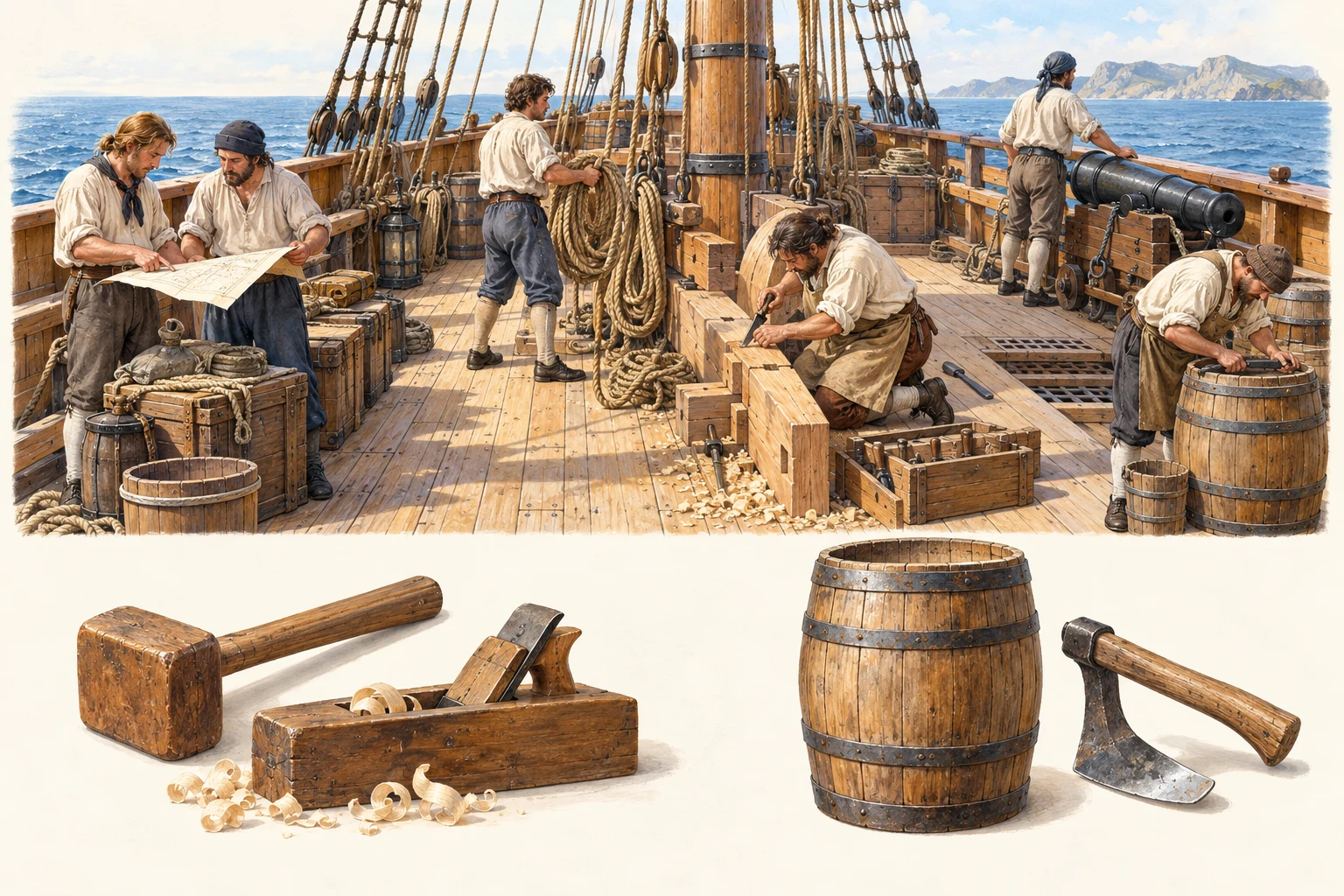 See the details.Pirate ranks and crew duties.Explore the illustrated guide