
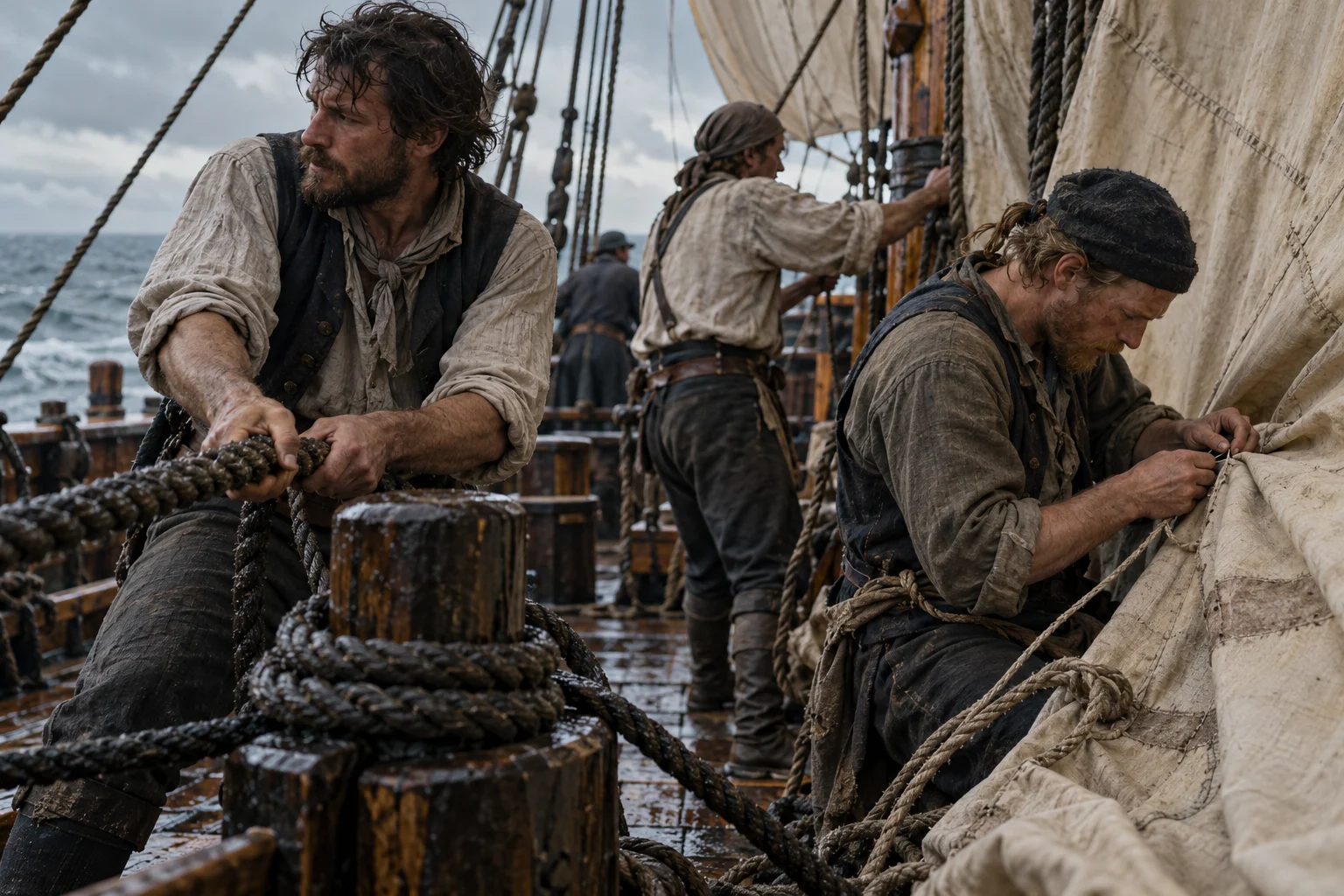
The first contact followed uncertainty
Rogers’s ships saw a fire and sent armed boats ashore, unsure whether the island held opponents. The returning boat brought a man in goatskins who identified himself as Selkirk. Dampier knew his earlier vessel and commended him, and Rogers engaged him as a mate. [1]
The rescue therefore involved recognition and an immediate working role, not simply a passenger carried home.
He had not arrived with nothing
The published account lists clothing, bedding, tools, a gun, books, instruments and other supplies Selkirk had kept. It attributes his decision to remain to a dispute with the captain and concern about a leaking ship, then says he was not taken back when he changed his mind. [1]
These possessions and the earlier visits of ships are important. The island story did not begin outside the wider material world of seafaring.
The account describes adaptation and distress
Rogers records Selkirk’s recollections of early melancholy, shelters, clothing repairs, cats, rats and catching goats. Some details were what the rescued man told the company; others, such as his ability to supply goats, were observed during the stop. [1]
The difference matters without reducing the human experience to a verification exercise. The narrative combines isolation, skill, accident and the recovery of companionship.
His knowledge immediately helped others
Selkirk identified resources and supplied goats while the crews repaired sails, filled water and tended their sick. Rogers describes the company’s temporary settlement of tents and work areas. The man who had survived alone became part of a much larger labor system ashore. [1]
Local knowledge made a practical contribution even when the arriving ships carried their own officers, tools and provisions.
Keep the historical sailor separate from a fictional castaway
Selkirk’s recorded experience is not an autobiography of every later island character. A novel’s invented people and events need their own literary history rather than being quietly added to his life.
Read the island’s earlier buccaneer stop, Rogers and the work of the arriving shore camp. The journal makes Selkirk a person with a former job and a new role, not just a symbol of solitary survival.
Questions, answered.
Was Selkirk found with no prior equipment or supplies?
The account lists a substantial set of possessions and tools he had retained.
Did he remain only a rescued passenger?
Rogers says he immediately engaged him as a mate, and the journal describes his help with provisions.
Sources & reading notes
Source checks distinguish an artifact, a reported account and a modern interpretation. They do not constitute independent historian review.
- A Cruising Voyage Round the World (1712; 1928 reprint)Woodes Rogers; 1928 edition with introduction and notes by G. E. Manwaring; Project Gutenberg · Participant voyage narrative in a later public-domain edition
2 February 1709 and the ensuing Selkirk account;3–12 February entries on provisioning and recovery. Distinguish Selkirk’s reported recollections from Rogers’s observations and from later fiction. Distinguish Rogers’s journal from Manwaring’s 1928 introduction and notes. Rogers writes as a commander accounting for his decisions and profits. Reported medical explanations and national or racial judgments are not adopted as modern science or neutral fact.
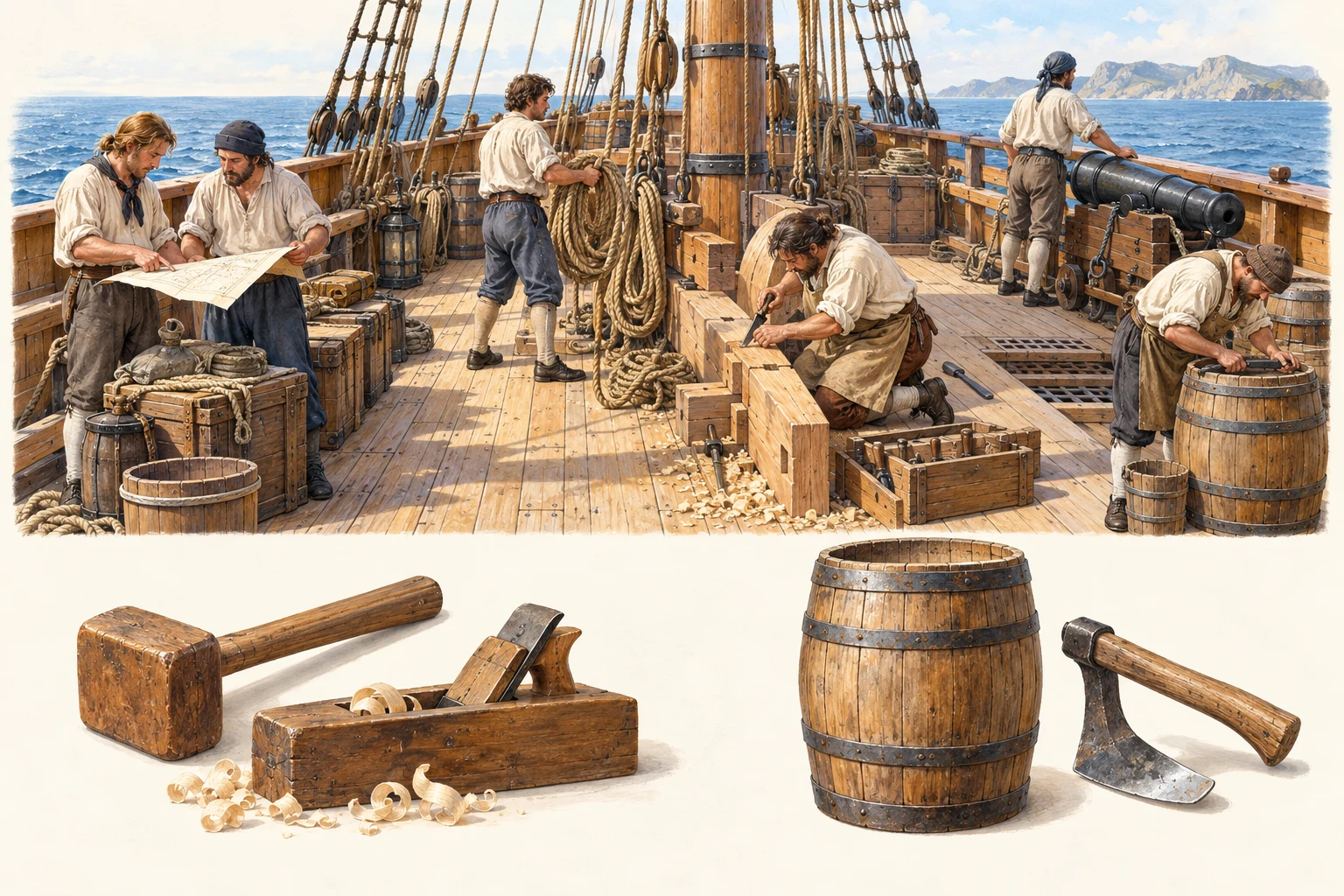 See the details.Pirate ranks and crew duties.Explore the illustrated guide