
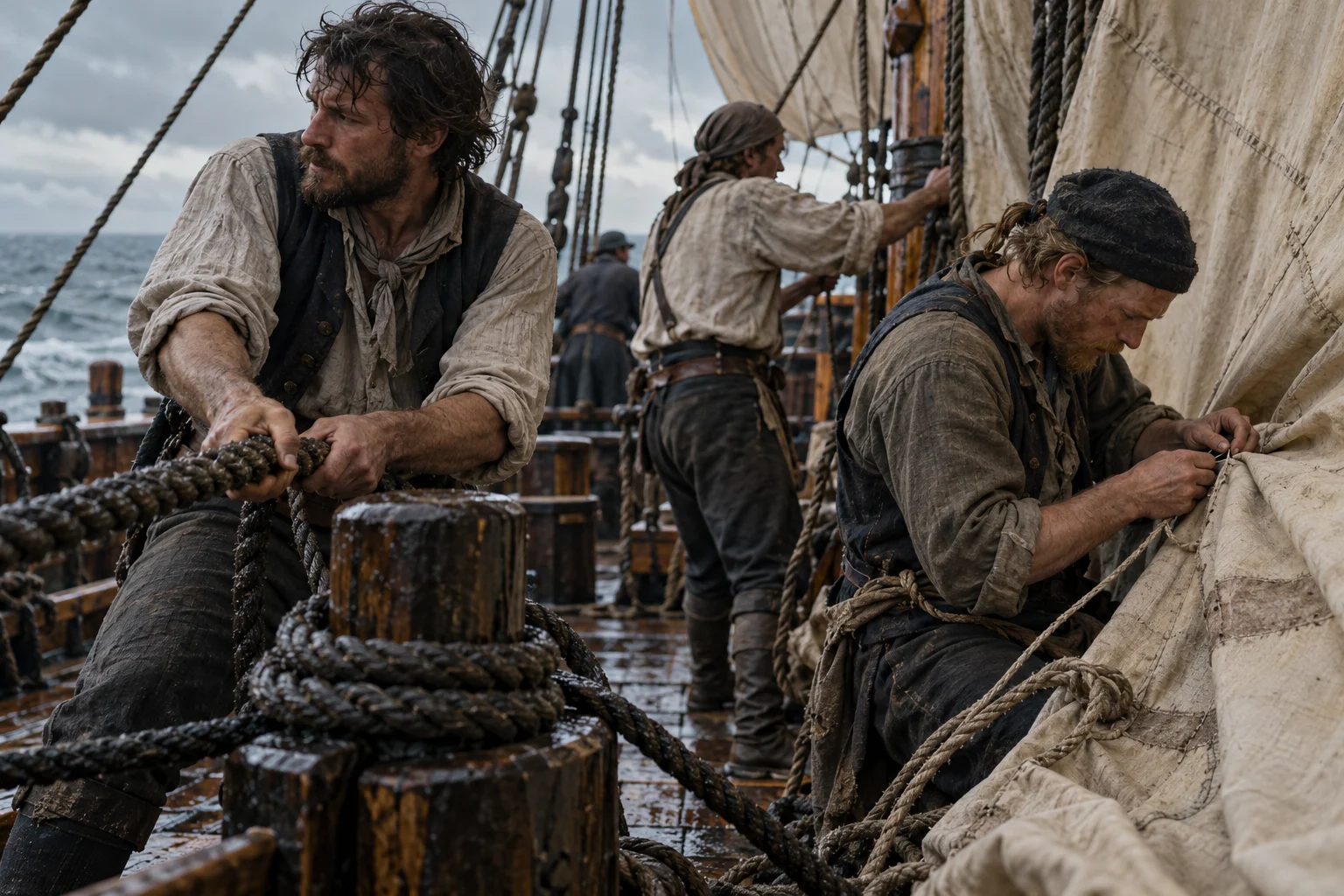
A commander answered to more than his own ambition
Rogers’s journal records agreements made by committees of officers from the associated vessels. They chose rendezvous, discussed supplies and sometimes reached decisions he disliked. The voyage was organized for employers and expected returns, with authority distributed through a working arrangement. [1]
That is a useful point of comparison with pirate companies. Collective deliberation was not a practice unique to people sailing without commissions.
The Pacific offered opportunity and exhaustion
The voyage’s account joins the rescue of Selkirk, repairs and care of sick men to the attack on Guayaquil and the pursuit of Manila shipping. The company’s ability to continue depended on food, water, casks, skilled labor and decisions about how long to wait. [1]
A capture could improve the venture’s prospects while increasing the burden of guarding prisoners and maintaining another vessel.
He wrote through an injured command
In the December 1709 encounter, Rogers reported being shot through the cheek and losing part of his upper jaw and teeth. He wrote instructions because speaking was painful and caused bleeding. The account places the commander’s body inside the operation, alongside damage to the ship. [1]
The detail is his report of an injury, not a modern medical reconstruction or a reason to romanticize the losses on the other vessel.
Nassau required an administration
In 1718 Rogers reported taking possession of the fort, forming a council and appointing officers. His October dispatch also described sickness, expensive labor and weak fortifications. The governor’s job included building the institutions through which his authority could operate. [2]
He used some men who had accepted pardon while trying to suppress others who continued raiding. Past experience became a resource and a continuing source of suspicion.
He had to persuade the people funding and supporting him
Rogers repeatedly asked for military assistance and complained about the movements of naval ships. His dispatches explain his difficulties and defend his choices to officials in Britain. They are a record of administration and a case for support. [2]
Read the voyage committees, the December capture and the transition at Nassau. The privateer and governor were connected stages in one career, not evidence that every armed maritime venture had the same legal status.
Questions, answered.
Did Rogers make every voyage decision alone?
His journal records committees and majority decisions, including decisions he opposed.
Did arriving as governor automatically end all piracy around the Bahamas?
No. His dispatches describe continued threats, searches, trials and requests for support.
Sources & reading notes
Source checks distinguish an artifact, a reported account and a modern interpretation. They do not constitute independent historian review.
- A Cruising Voyage Round the World (1712; 1928 reprint)Woodes Rogers; 1928 edition with introduction and notes by G. E. Manwaring; Project Gutenberg · Participant voyage narrative in a later public-domain edition
Dated 1708 committee decisions;February 1709 Selkirk and shore stop;April–May Guayaquil;December 1709 prize and wound. The later introduction is not treated as Rogers’s own narrative. Distinguish Rogers’s journal from Manwaring’s 1928 introduction and notes. Rogers writes as a commander accounting for his decisions and profits. Reported medical explanations and national or racial judgments are not adopted as modern science or neutral fact.
- Calendar of State Papers Colonial, America and West Indies,1717–1718 (1930)Edited by Cecil Headlam; HMSO1930; 1964 facsimile reprint · Calendar of early-eighteenth-century state papers; public-domain historical text
Entries 737 and 807, dispatches of 31 October and 24 December 1718. The calendar is not original-manuscript inspection. The inspected copy is a later reprint and imperfect OCR of the calendar, not every original manuscript. A governor’s dispatch is an interested report. Distinguish reported arrival, landing, writing and receipt dates; period disease theories are not modern diagnoses.
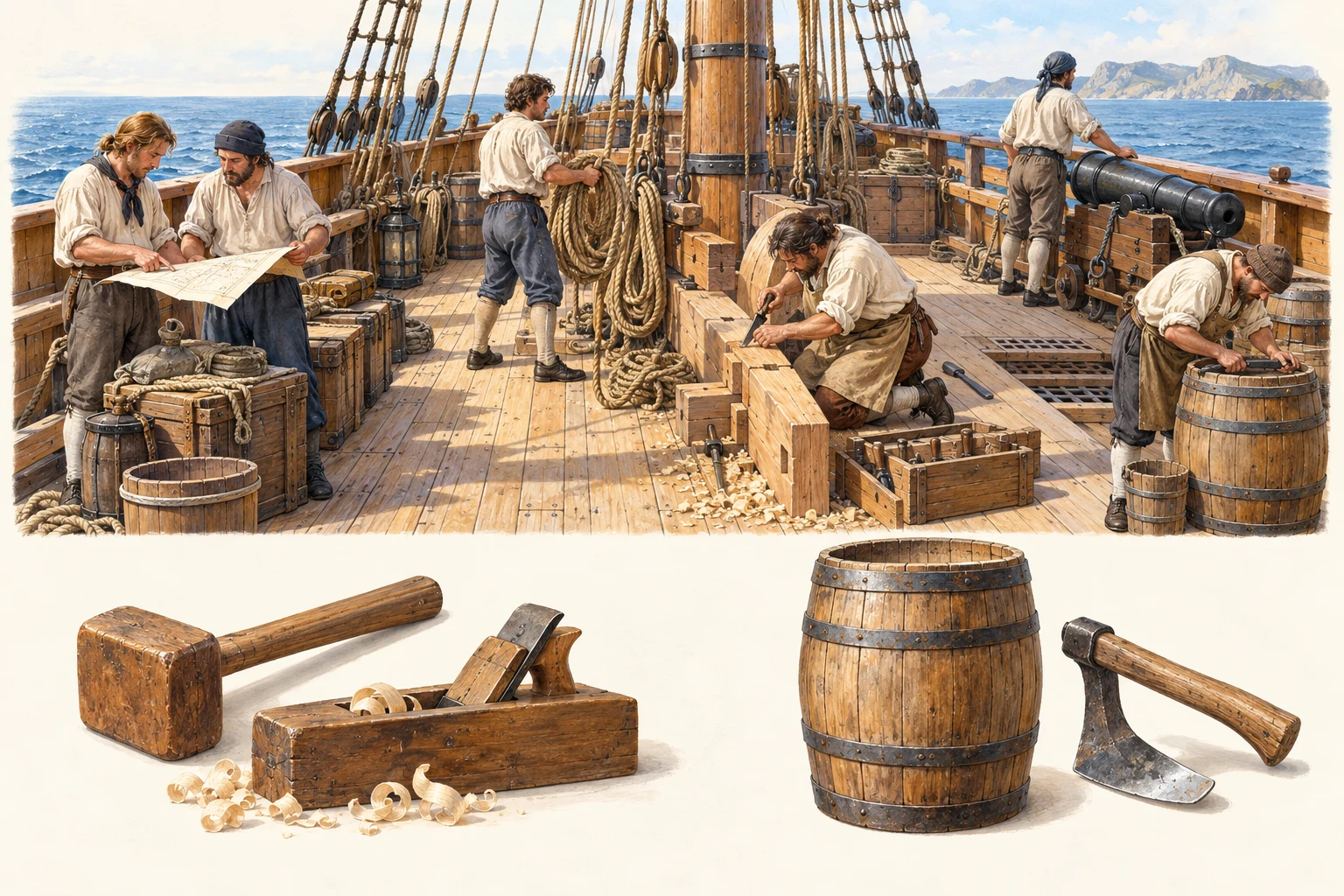 See the details.Pirate ranks and crew duties.Explore the illustrated guide