
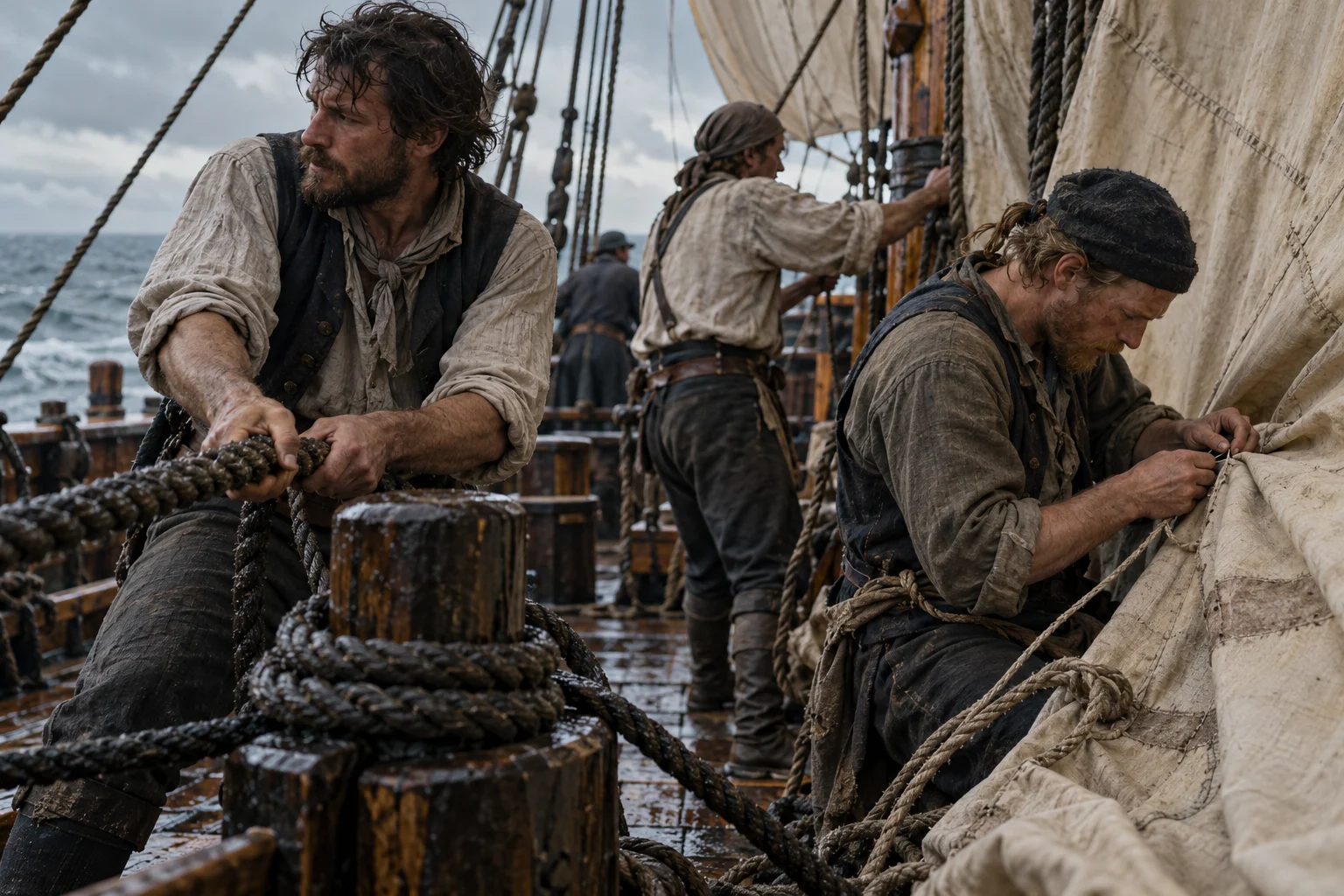
An unusual starting point
In the General History, Bonnet begins as a man of property in Barbados who equips a sloop rather than first seizing one. The author gives the vessel the name Revenge, with ten guns and seventy men. These are the printed account’s figures for this episode, not standard specifications for a pirate sloop. [1]
The contrast with a mutinous sailor is striking. Bonnet could purchase equipment and employ a company. He could not purchase the practical authority that comes from navigating, judging weather, handling a vessel and maintaining a crew’s confidence.
The shipowner is displaced
After joining Blackbeard, Bonnet lost effective command of his own vessel. The account places another commander, Richards, aboard the sloop while Bonnet remained with Teach. Its portrayal of his embarrassment is literary, but the arrangement itself illustrates a useful distinction: legal ownership, tactical command and the company’s acceptance were different sources of power. [1]
Calling him merely a foolish amateur makes the story smaller than it is. Other sailors made decisions, formed alliances and helped keep the vessel operating. A captain’s biography should not turn those people into scenery.
A pardon was not the end
The account says Bonnet obtained a pardon and discussed a commission against Spanish shipping, then resumed taking vessels. It describes modest practical plunder as well as valuable cargo: provisions, liquor, clothing and even calfskins for gun covers. Raiding supplied the vessel’s operation, not just a chest of coins. [1]
He used the name Captain Thomas, and the vessel was later called Royal James. Those changes should not be counted as separate people or assumed to establish an entirely new ship. Following a career requires tracing aliases and renamings through the evidence.
Repair work becomes a trap
At Cape Fear, a leaky vessel required a long repair. The narrative describes another small craft being broken up for material. News of the company’s presence reached South Carolina, and William Rhett led an expedition after it. In the ensuing fight, grounding and the changing tide affected both sides. Bonnet eventually surrendered. [1]
This is a vivid example of maintenance becoming a strategic problem. A vessel under repair cannot simply choose another horizon. A protected inlet can become a place where an opponent knows where to look.
Read the nickname cautiously
“Gentleman pirate” identifies Bonnet’s unusual social position; it does not make robbery genteel. The narrative’s explanation of his departure through domestic unhappiness is also not a reliable diagnosis of motive. The firmer story is maritime: money bought a vessel, an alliance weakened his command, repairs fixed his location and an armed expedition ended his freedom. [1]
Read next about the work that kept a vessel going and the commander whose company overshadowed his own.
Questions, answered.
Did Bonnet buy his own ship?
The early account says he fitted out Revenge at his own expense. That is one reason his entry into piracy is distinctive.
Were Revenge and Royal James two ships?
The account describes the pirate sloop being renamed Royal James. A change of name alone does not establish a replacement vessel.
Sources & reading notes
Source checks distinguish an artifact, a reported account and a modern interpretation. They do not constitute independent historian review.
- A General History of the Pyrates (1724)Published under the name Captain Charles Johnson · Early printed account; public-domain text
Chapter IV, “Major Stede Bonnet”: outfitting Revenge, loss of effective command, pardon, later captures, Cape Fear repairs and Rhett’s expedition. The author’s claims about Bonnet’s mental state and marriage are not adopted as established causes. Authorship is disputed. A near-contemporary compilation, not a surviving signed pirate code or a neutral transcript. Cite its claims as reported claims.
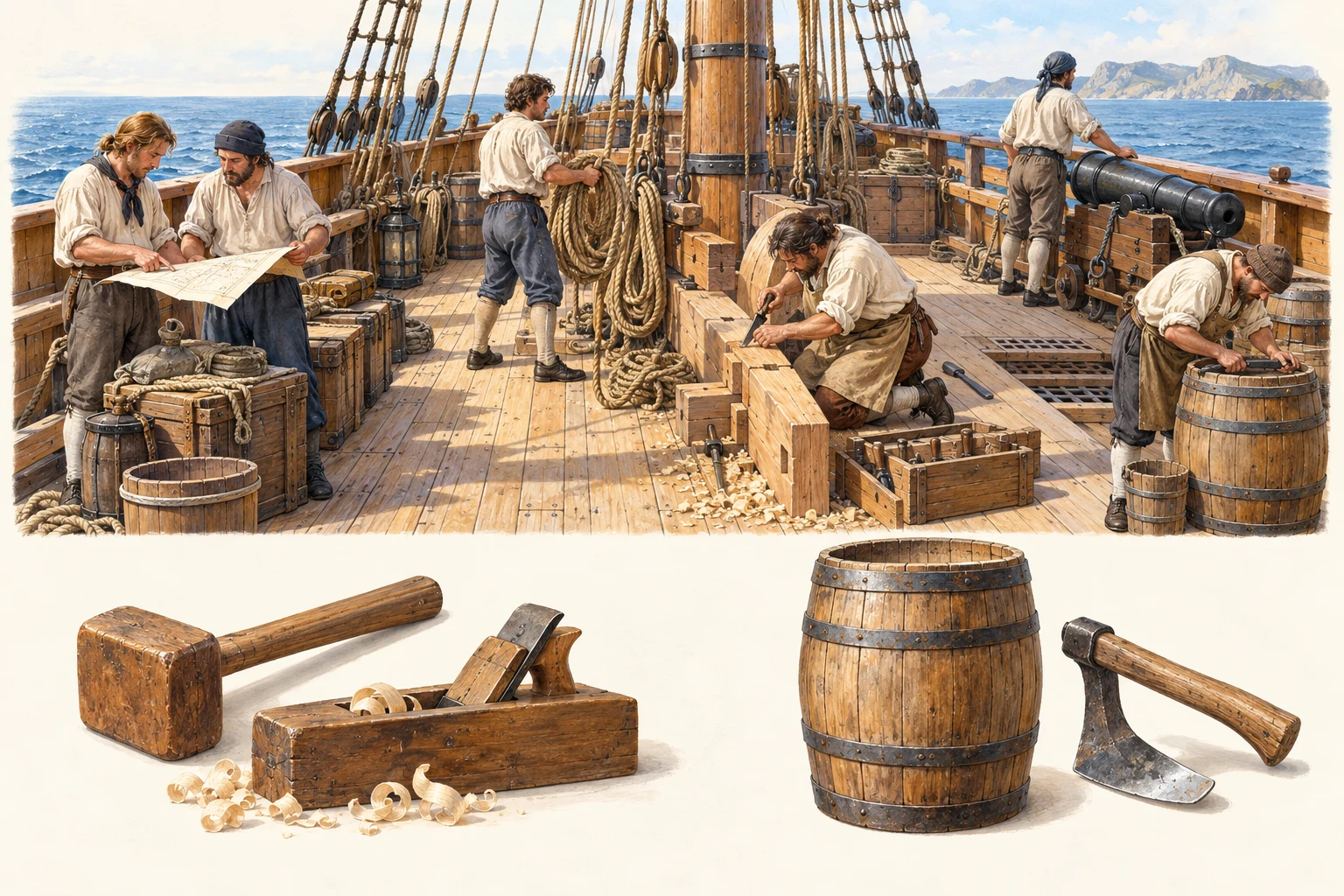 See the details.Pirate ranks and crew duties.Explore the illustrated guide