
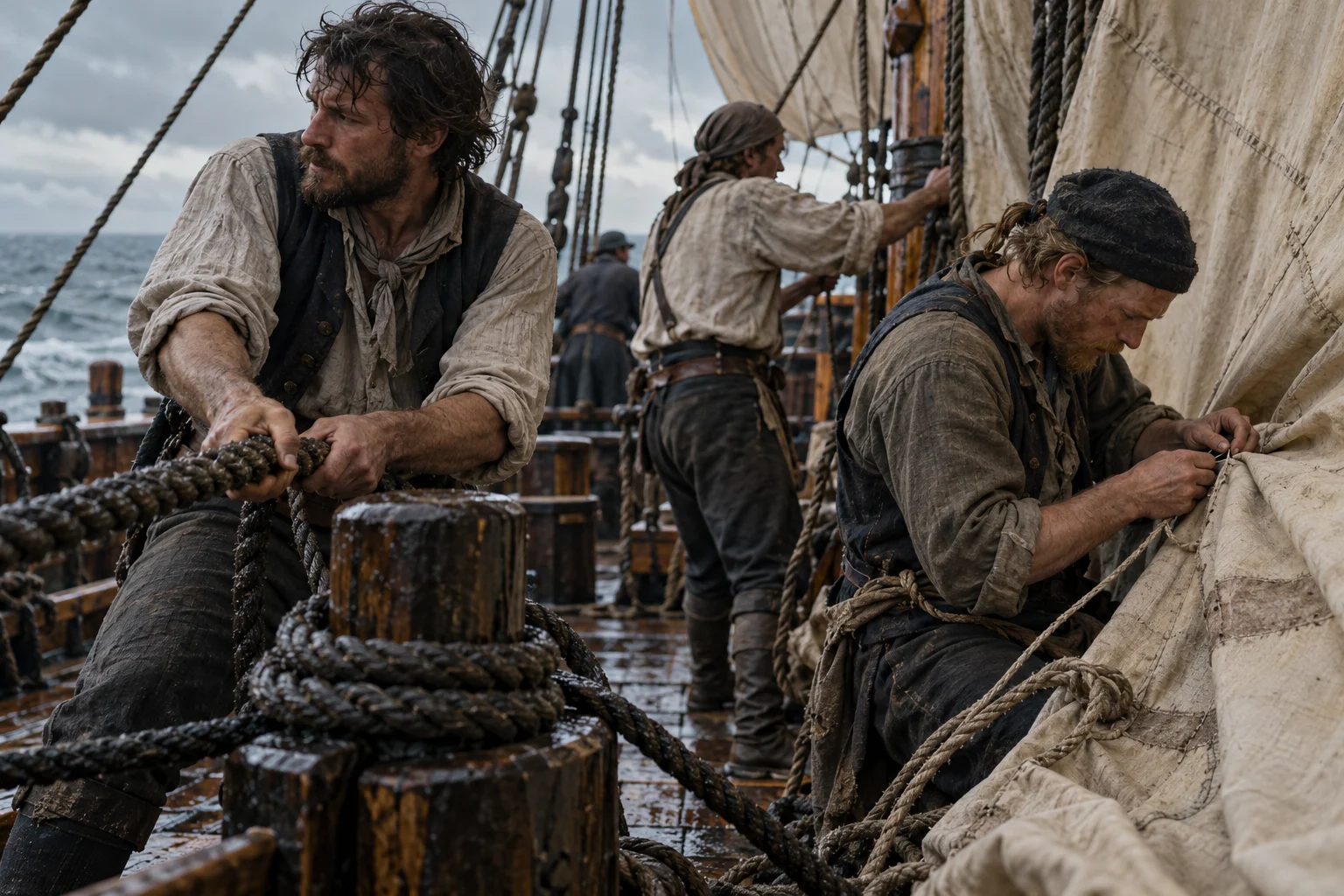
A trading plan changed at Jamaica
Dampier’s introduction says he left England in 1679 intending to trade with logwood cutters in Campeachy. At Port Royal he sold goods and considered other business. He then joined a short trading voyage that encountered Coxon, Sawkins, Sharp and other privateers at Negril. [1]
His explanation is a chain of changes rather than a childhood destiny to become a famous observer. Trade, employment and the decisions of other sailors redirected the route.
The company took him into the Pacific
He summarizes the 1680 crossing, the fighting near Panama and the cruise southward. The book deliberately treats this phase briefly because accounts by Ringrose and others already existed and because Dampier expected to describe some places again later. [1]
That authorial choice matters. The uneven space given to events in a book is not a measurement of how much time the traveler spent there or how important the events were to everyone involved.
Leaving Sharp was another risky undertaking
In April 1681, Dampier went with the party returning toward the Caribbean. His account describes small craft, another captured vessel, bad weather and the difficult land crossing. Enslaved people carried supplies. The departing party did not become an innocent group of unencumbered explorers simply by leaving the main ship. [1]
A waterproofed bamboo container protected his journal and writings during river crossings. This small material detail helps explain how a later book could grow from observations made under harsh conditions.
He addressed the reader ashore
In the preface, Dampier explains that he reduced some sea terminology to help land readers while keeping enough to make the account intelligible. He also acknowledges variable place and natural-history names. His book was shaped for an audience, not published as untouched raw notes. [1]
The emphasis on plants, animals, weather and coasts makes it broader than a captain’s capture list. It also carries the traveler’s colonial assumptions and judgments, which require critical reading.
Keep observation and participation together
Close observation does not cancel involvement in raiding; involvement in raiding does not mean every observation is worthless. Both are necessary to understand the text and the world that produced it.
Begin with the outward crossing, the injured surgeon on the return and the participant whose account Dampier expected readers to know. The connected route is more informative than a clean division between a pirate life and a scientific life.
Questions, answered.
Did Dampier write only about pirate battles?
No. His preface describes a mixture of places and actions, and the book includes extensive observations of environments and navigation.
Are all parts in the collected transcription from 1697?
No. The catalogue describes a multi-volume set. Individual parts and their publication dates need to be distinguished.
Sources & reading notes
Source checks distinguish an artifact, a reported account and a modern interpretation. They do not constitute independent historian review.
- A New Voyage Round the World (1697), with collected voyage textsOpen the keyboarded source transcriptionWilliam Dampier; James Knapton; EEBO–TCP transcription · Voyage writing and later collected parts; CC0 keyboarded transcription
Preface, Introduction and Chapters I–II; later chapter summaries identify the book’s geographical scope. This article does not claim independent verification of every later voyage episode. Dampier writes as an involved traveler, not an impartial observer. His racial, colonial and medical judgments are not present-day facts. The catalogue describes a multi-volume set; individual parts and dates must be distinguished. Volume 3 is absent from this transcription.
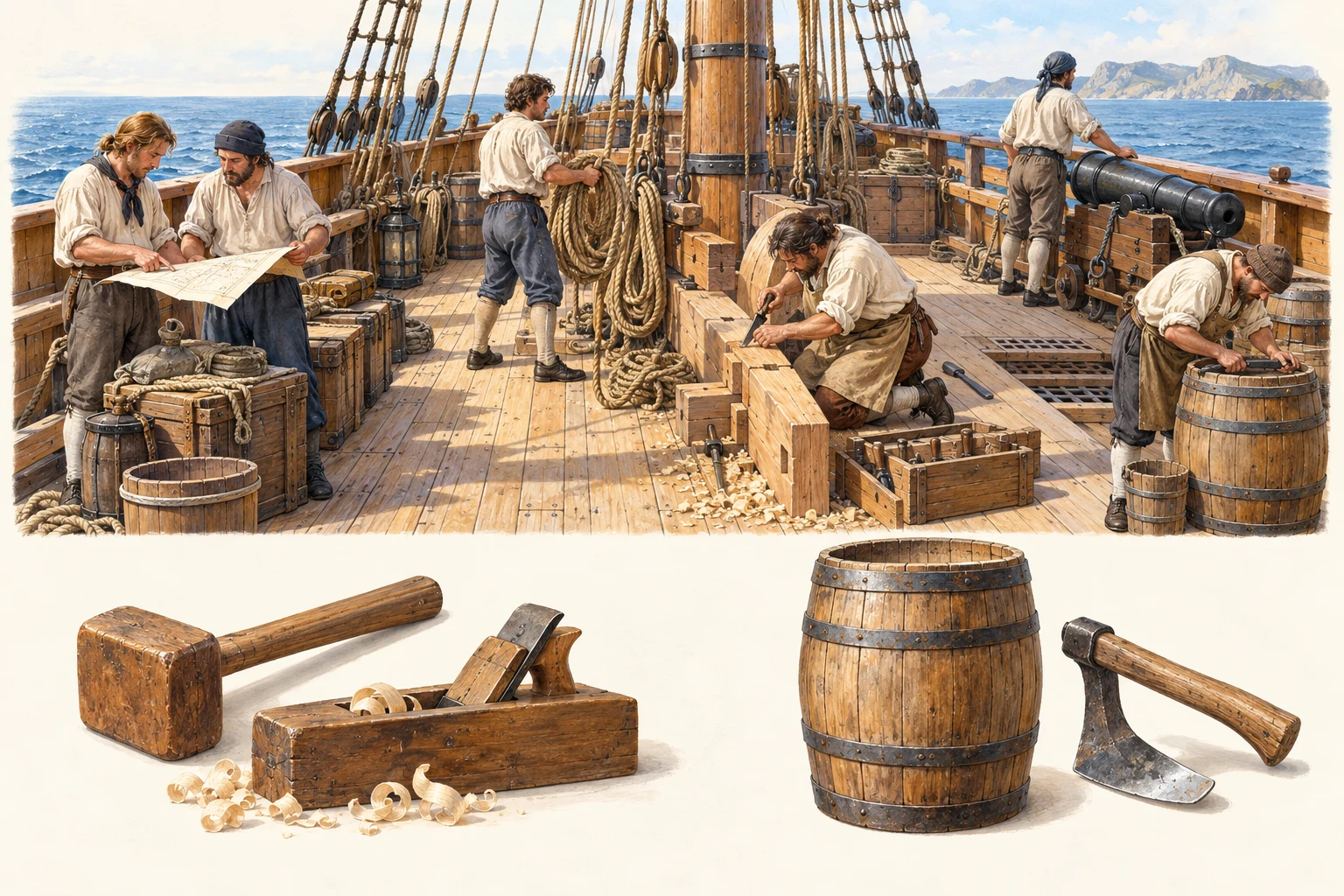 See the details.Pirate ranks and crew duties.Explore the illustrated guide