
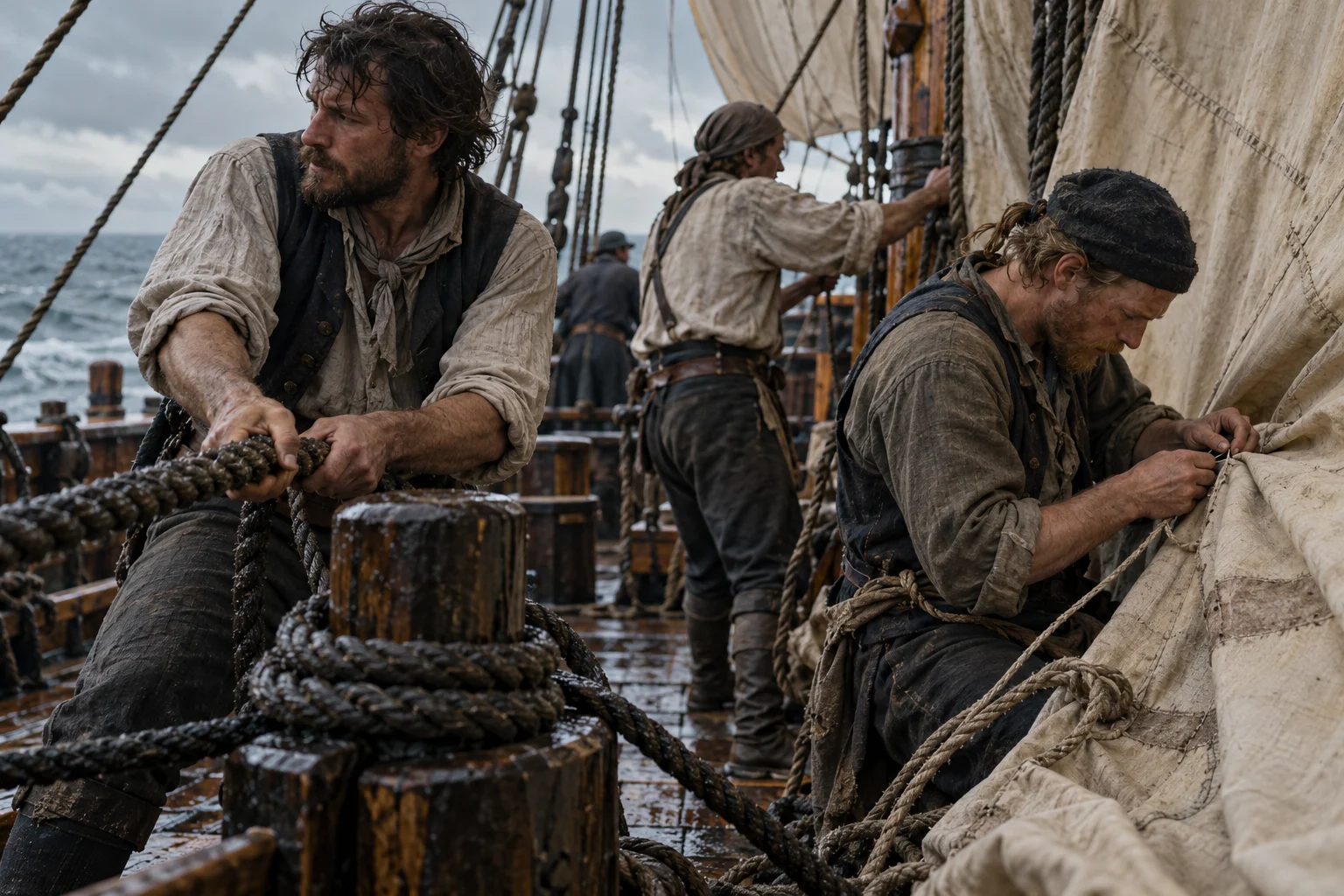
A merchant venture lost its ship
The 1696 trial print identifies Charles the Second as the ship taken from Captain Gibson near the Spanish port called the Groyn. Witnesses describe men arriving by boat, a mate threatened and confined, and Every assuming command. [1]
That account supplies a more useful starting point than the later image of an established pirate king. An organized commercial venture supplied the vessel that the conspirators appropriated.
The route joined robbery and supply
Middleton’s testimony follows captures around the Atlantic islands and West African coast before the passage toward Madagascar and the Indian Ocean. It includes coercion against people coming to trade, the seizure of gold and the disposal of captives as slaves. [1]
Water, salt, cattle and rice also appear in the route. The company needed ordinary provisions to reach the later prize for which it became famous.
The Mughal capture became an international problem
The print’s first proceeding concerned the vessel called Gunsway, belonging to the Mughal ruler and his subjects. The prosecution stressed the danger to English trade and relations abroad. Its language is an interested argument, but it shows why a distant robbery mattered to officials in London. [1]
The people and commerce attacked were not British simply because the perpetrators sailed under English colors.
The state publicly denied his authority
The July proclamation declared that Every had no royal commission to command the ship or company. A later proclamation identified the alias Bridgman and repeated information about the company dispersing through Ireland and Britain. Rewards and inducements aimed to turn knowledge of his companions into capture. [2][3]
These documents are evidence of the pursuit and the authorities’ information. They do not prove that every reported movement or alias was successfully traced.
The companions faced the court without him
The trial print names Every as not yet taken. It records an acquittal on the first charge, renewed proceedings on other acts and later guilty verdicts. The history of those trials is not the history of Every being tried in person. [1]
Read the proceedings, the ship’s identities and the public search. The final fate remains unresolved here; a later romance is not supplied as the missing record.
Questions, answered.
Was Every one of the prisoners tried in London in 1696?
The print names him as not yet taken; the prisoners were captured companions.
Do the proclamations prove exactly where he died?
No. They publish accusations, intelligence and orders for capture, not a verified final biography.
Sources & reading notes
Source checks distinguish an artifact, a reported account and a modern interpretation. They do not constitute independent historian review.
- The Tryals of Joseph Dawson and others (1696)Open the keyboarded source transcriptionContemporary English or Scottish printed record; EEBO–TCP keyboarded transcription · Public-domain 1696 text; CC0 transcription
Opening Gunsway case, the Charles the Second indictment, Gravet and Druit’s testimony, Dan and Middleton’s voyage accounts, and the later verdicts. A proclamation states authorities’ information and demands; a trial print records allegations, witnesses and judgments. Neither makes every accusation an independently established fact. Named suspects are not automatically convicted defendants. TCP gaps and spelling variations remain.
- Lords Justices’ proclamation against Henry Every,17 July 1696Open the keyboarded source transcriptionContemporary English or Scottish printed record; EEBO–TCP keyboarded transcription · Public-domain 1696 text; CC0 transcription
The 17 July 1696 proclamation identifying Phancy and Charles and denying royal authority. A proclamation states authorities’ information and demands; a trial print records allegations, witnesses and judgments. Neither makes every accusation an independently established fact. Named suspects are not automatically convicted defendants. TCP gaps and spelling variations remain.
- Lords Justices’ further proclamation against Henry Every,1696Open the keyboarded source transcriptionContemporary English or Scottish printed record; EEBO–TCP keyboarded transcription · Public-domain 1696 text; CC0 transcription
The later proclamation’s alias, dispersed company, alleged return and coins. Its intelligence is not independent proof of Every’s final location. A proclamation states authorities’ information and demands; a trial print records allegations, witnesses and judgments. Neither makes every accusation an independently established fact. Named suspects are not automatically convicted defendants. TCP gaps and spelling variations remain.
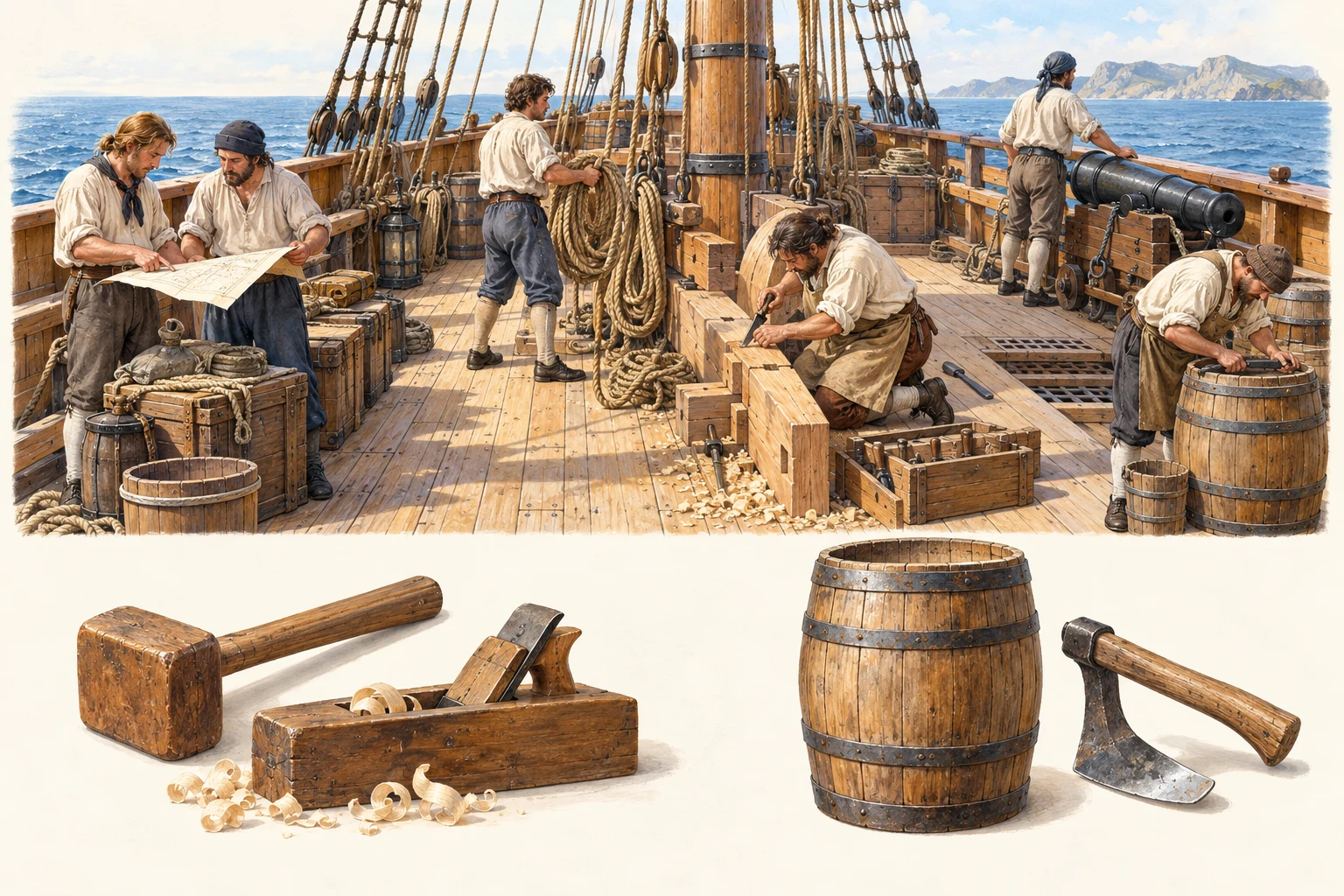 See the details.Pirate ranks and crew duties.Explore the illustrated guide