

The source introduces a remarkable life
The General History openly recognizes that the lives of Read and Bonny sound like a romance. It then asks readers to accept its authority by invoking people who attended the Jamaican proceedings. That is an argument made by the author; it does not make every earlier biographical detail a fact established at trial. [1]
Read’s reported childhood involves being raised as a boy. The narrative then moves through domestic service, sea service, military life in Flanders, marriage and a return to male clothing after widowhood. These episodes explain the book’s compelling plot and later influence.
A useful skill could mean forced service
In the account, Read entered the pirate world through a captured vessel, later accepted a pardon and then returned to a company that turned pirate. She is said to have claimed that compulsion, rather than enthusiasm, brought her into the life. The narrative places that claim beside testimony describing her readiness to take risks and fight. [1]
Those statements are not automatically compatible or incompatible. Someone could be taken against their will and later perform an active role. A court could also treat willingness as a central question. The point is to preserve the tension rather than flatten the story into a modern slogan.
Read and Bonny were not interchangeable
Their later fame joins them, but the book gives them different pasts and different endings. Read’s military and romantic episodes occupy a large part of her biography. Bonny’s account emphasizes a family history and departure from a husband. Their shared membership in Rackham’s company should not make the two women a single stock character. [1]
The reported fighting during the capture is also an episode, not evidence that women were routinely accepted in every pirate company. Other printed articles include exclusions, making the variation between companies important.
The prison ending
Like Bonny, Read is reported to have pleaded pregnancy after conviction. The narrative says she then died of a violent fever in prison. It does not support a later career under a new identity. Precise dates or a confident medical diagnosis require evidence beyond this description. [1]
This is a less romantic conclusion than a hidden fortune or a return to freedom. It also brings the story back to the conditions of captivity, prosecution and illness rather than treating the courtroom as an adventurous final scene.
What this life helps us ask
Read’s biography opens questions about clothing, labor, coercion and the stories told about exceptional women. It is most useful when those questions remain connected to a named source. Follow the company’s final voyage, compare Bonny’s unfinished ending and examine the rules attributed to other crews.
Questions, answered.
Did Mary Read serve as a soldier?
The early printed biography describes service in Flanders. This page attributes that episode to the account rather than claiming new independent verification.
Did she survive the Jamaican prison?
The source used here says she died there of fever. It supplies no later pirate career.
Sources & reading notes
Source checks distinguish an artifact, a reported account and a modern interpretation. They do not constitute independent historian review.
- A General History of the Pyrates (1724)Published under the name Captain Charles Johnson · Early printed account; public-domain text
“The Life of Mary Read,” between Rackham’s chapter and the Life of Anne Bonny; especially the statements about compulsion, testimony, pregnancy and death in prison. The childhood, military and romantic episodes are not independently corroborated here. Authorship is disputed. A near-contemporary compilation, not a surviving signed pirate code or a neutral transcript. Cite its claims as reported claims.
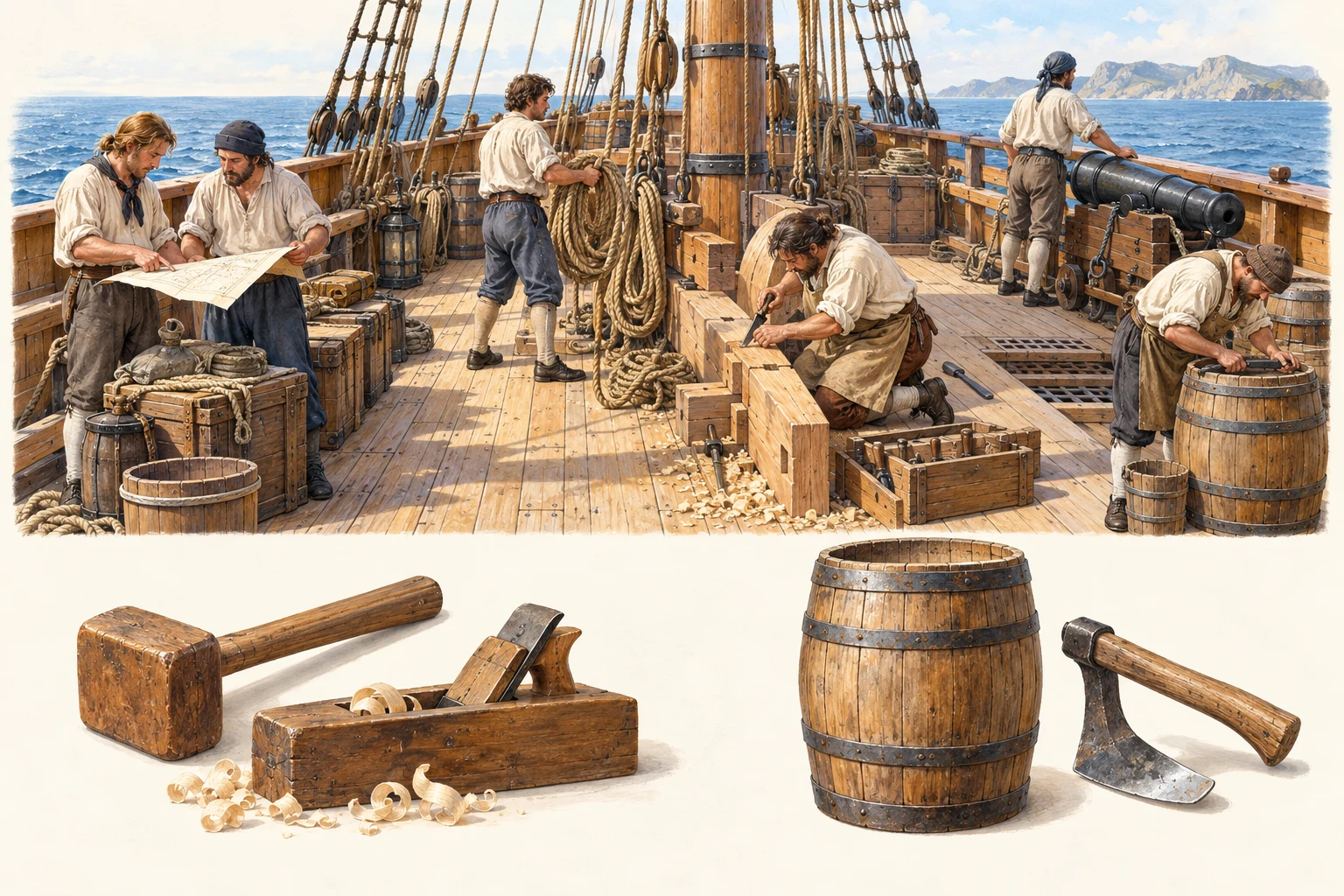 See the details.Pirate ranks and crew duties.Explore the illustrated guide