
A familiar name, an uneven record
Anne Bonny is often presented with a complete dramatic biography: family scandal, rebellion, love, combat and an escape into a comfortable later life. The early narrative is not equally informative about every one of those stages. It gives a long family story, connects her to Carolina and Providence, and places her with Rackham. Those passages are the author’s account, not a collection of documents reproduced for each event. [1]
That does not make her an invented person. It means the degree of confidence should follow the evidence for the particular claim, rather than the familiarity of the overall story.
Work and violence aboard
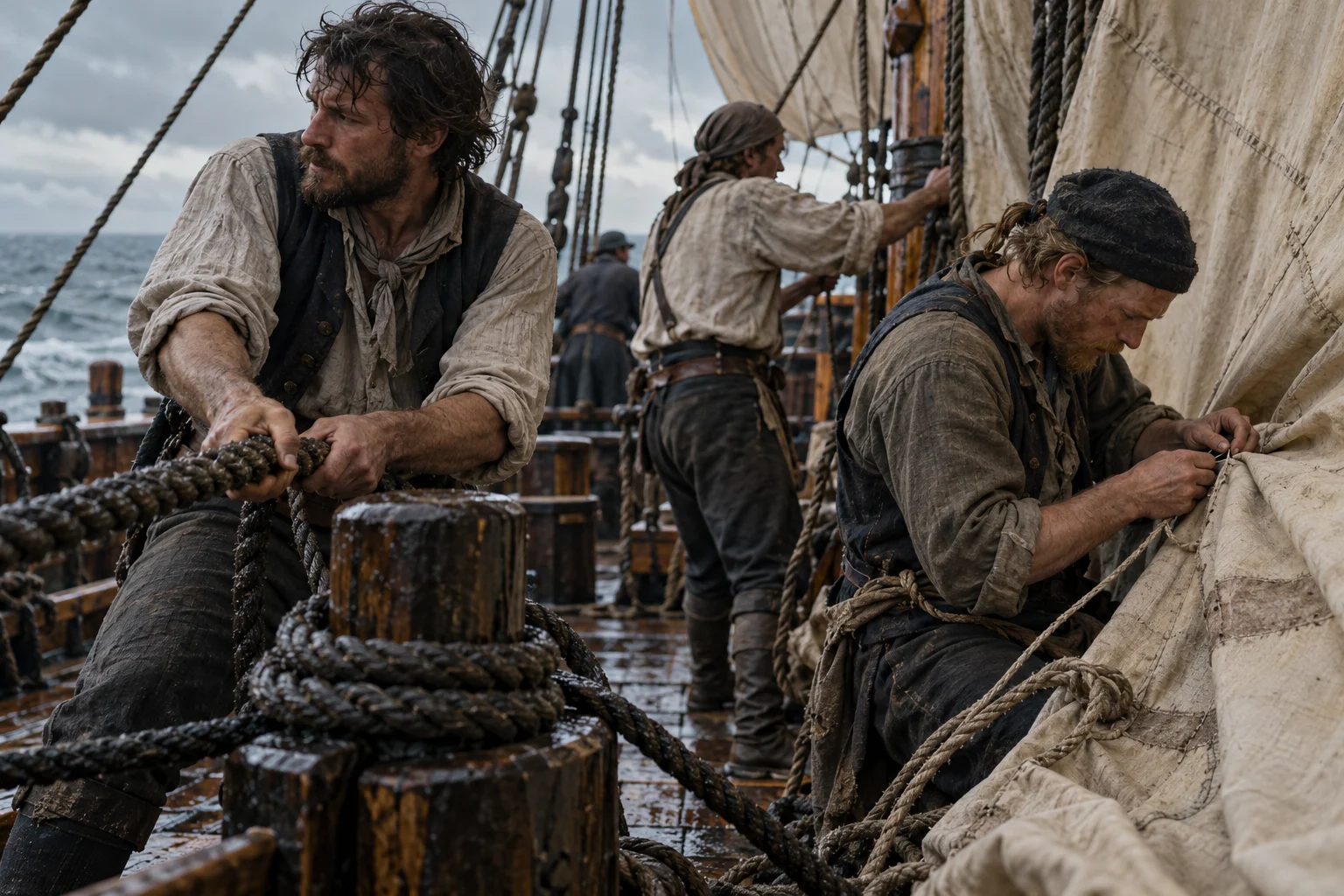
The General History describes Bonny accompanying Rackham in men’s clothes and participating energetically in the company’s actions. Its account links her with Mary Read during the final resistance, when other men reportedly went below. [1]
The story has often been used to reverse the conventional picture of passive women and brave male sailors. Yet participation in piracy also meant taking part in coercion. Bonny’s place in maritime history should not require turning her into either a harmless romantic heroine or a unique monster.
Pregnancy changed the legal timing
The book reports that the two women were convicted, then pleaded pregnancy when asked why sentence should not follow. The court ordered further examination. A pregnancy plea could stay an execution; it was not the same as an acquittal or an announcement that the prosecution had been mistaken. [1]
Keep the sequence clear: membership in the captured company, prosecution, conviction, a plea concerning pregnancy and a delay in punishment. Compressing these into “she was pardoned because she was pregnant” changes the legal meaning.
The ending the source does not supply
The final paragraph says that Bonny was reprieved from time to time and that the author could not tell what had become of her, only that she had not been executed. That is an unusually useful boundary. It prevents this account from proving a particular later marriage, place of residence, death date or burial. [1]
Missing evidence creates room for further research, not permission to choose the most satisfying conclusion. A modern claim about Bonny’s later life should identify the record connecting the later person to the woman prosecuted in Jamaica.
Read her beside the company
Bonny’s story becomes more understandable when connected to Rackham’s command and capture, Read’s differently shaped biography and shipboard work. Those connections show a person acting within a company and a colonial legal system, rather than a free-floating icon.
Questions, answered.
Was Anne Bonny a pirate captain?
The account used here places her in Rackham’s company. It does not establish her as the commander of an independent pirate vessel.
Do we know exactly how she died?
The 1724 narrative explicitly does not know her later fate. A precise modern ending needs a separate documentary case.
Sources & reading notes
Source checks distinguish an artifact, a reported account and a modern interpretation. They do not constitute independent historian review.
- A General History of the Pyrates (1724)Published under the name Captain Charles Johnson · Early printed account; public-domain text
“The Life of Anne Bonny,” following Chapter VII; also the paragraph introducing the pregnancy pleas of the two women. The source ends by saying it cannot tell what became of Bonny. Her childhood and private conversations remain claims of this account. Authorship is disputed. A near-contemporary compilation, not a surviving signed pirate code or a neutral transcript. Cite its claims as reported claims.
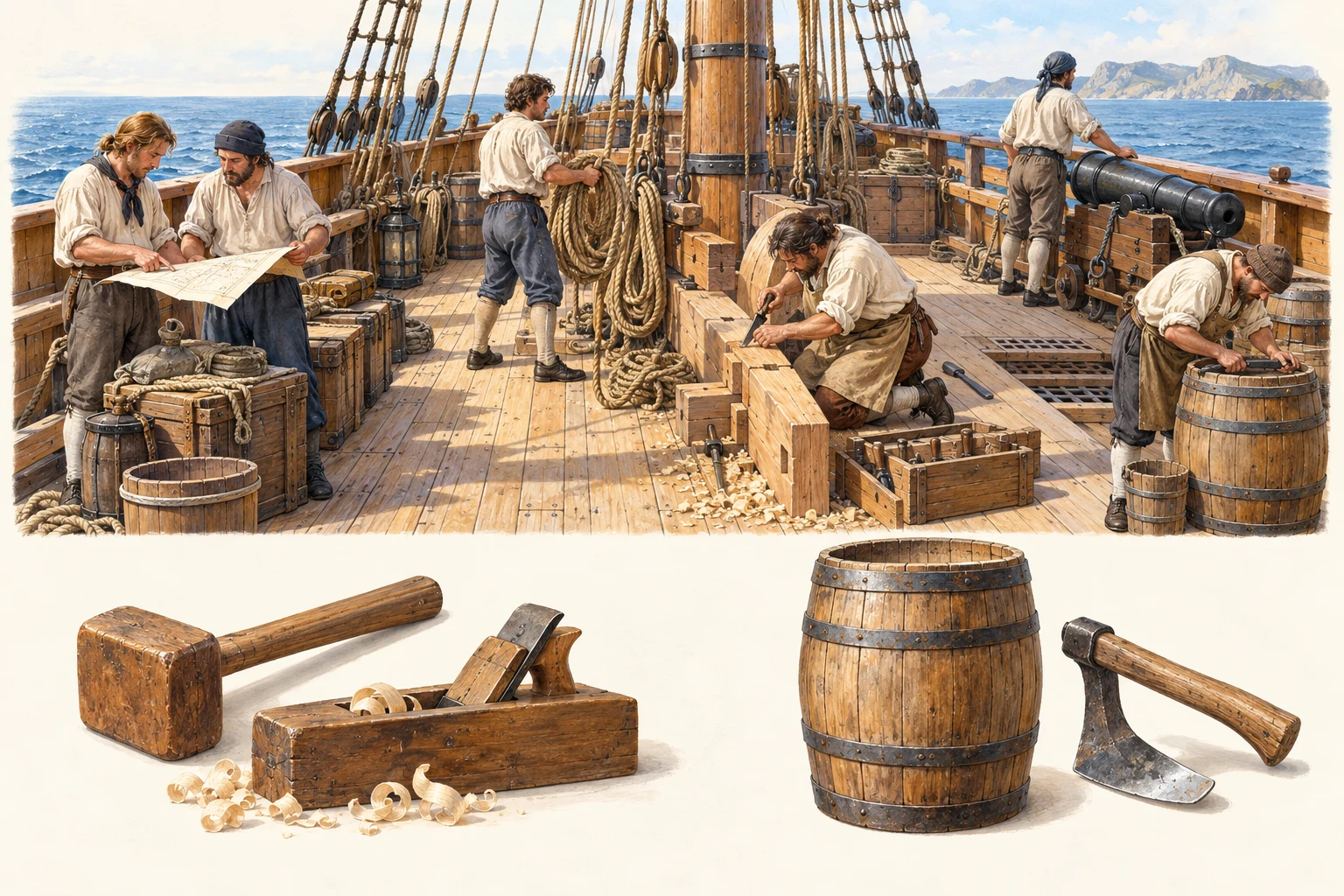 See the details.Pirate ranks and crew duties.Explore the illustrated guide