
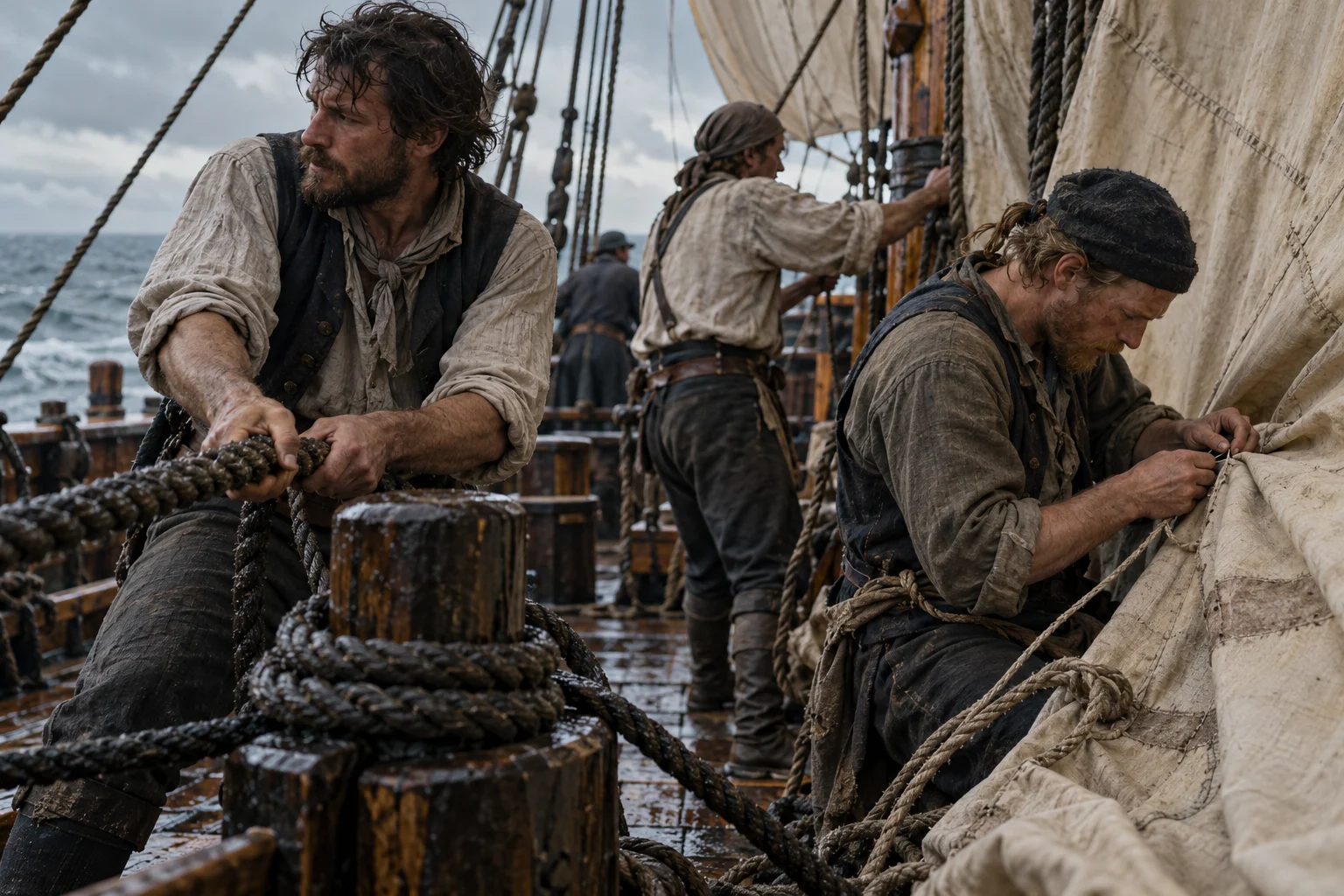
A larger captured vessel changed the force
The account begins with Martel commanding a sloop, then taking John and Martha near Cuba. The company intended to remove a deck and adapt the captured vessel. Men were divided between it and the existing sloop as the cruise continued. [1]
Several later prizes supplied provisions and other cargo. The company grew through capture, rather than sailing from one port as a fully equipped pirate squadron.
Enslaved captives were part of the taking
The narrative includes the seizure of enslaved people from Greyhound Galley alongside gold dust and ivory. A history focused only on the pirates’ freedom would erase people moved under force within the same operation. [1]
The account later reports enslaved people killed when a vessel was burned during the escape attempt. The moral scale of the episode cannot be measured solely by whether Martel himself got away.
The company prepared to remain
At Santa Crux, the narrative places the vessels inside a restricted anchorage. Batteries were established ashore, and a sloop guarded the channel while the principal ship was unloaded and unrigged for cleaning. Stores and plunder accumulated at the working site. [1]
The protections reflected the company’s needs: shallow access could obstruct a larger opponent while the vessels were in a vulnerable condition.
News reached a naval commander
Hume’s Scarborough learned of the company’s location and approached. The pilot’s reluctance to enter did not prevent bombardment or a blockade outside. The account describes the channel-guarding sloop being sunk and the principal vessel later grounding during an attempted escape. [1]
A difficult entrance protected the company in one respect and constrained it in another. The same water that limited an opponent also limited departure.
The source does not supply a neat final scene
Some escaped in a small sloop; others went into the woods. The compiler says he never learned what became of Martel’s remaining party. Speculation about starvation is not converted here into a verified death. [1]
Read the vulnerability of careening, the role of small craft and the people excluded from the image of pirate freedom. The episode’s value lies in how geography, intelligence and maintenance met.
Questions, answered.
Does the account confirm Martel’s death?
No. It explicitly leaves the later fate of his remaining party unknown.
Did a shallow anchorage make the company untouchable?
No. The narrative describes bombardment, blockade and a failed attempt to get out.
Sources & reading notes
Source checks distinguish an artifact, a reported account and a modern interpretation. They do not constitute independent historian review.
- A General History of the Pyrates (1724)Published under the name Captain Charles Johnson · Early printed account; public-domain text
Chapter II, Martel’s cruise, John and Martha, Dolphin, Greyhound Galley, the Santa Crux stop and Hume’s Scarborough operation. Place names, force totals and casualty reports are those of the printed account; the unknown fate is retained. Authorship is disputed. A near-contemporary compilation, not a surviving signed pirate code or a neutral transcript. Cite its claims as reported claims.
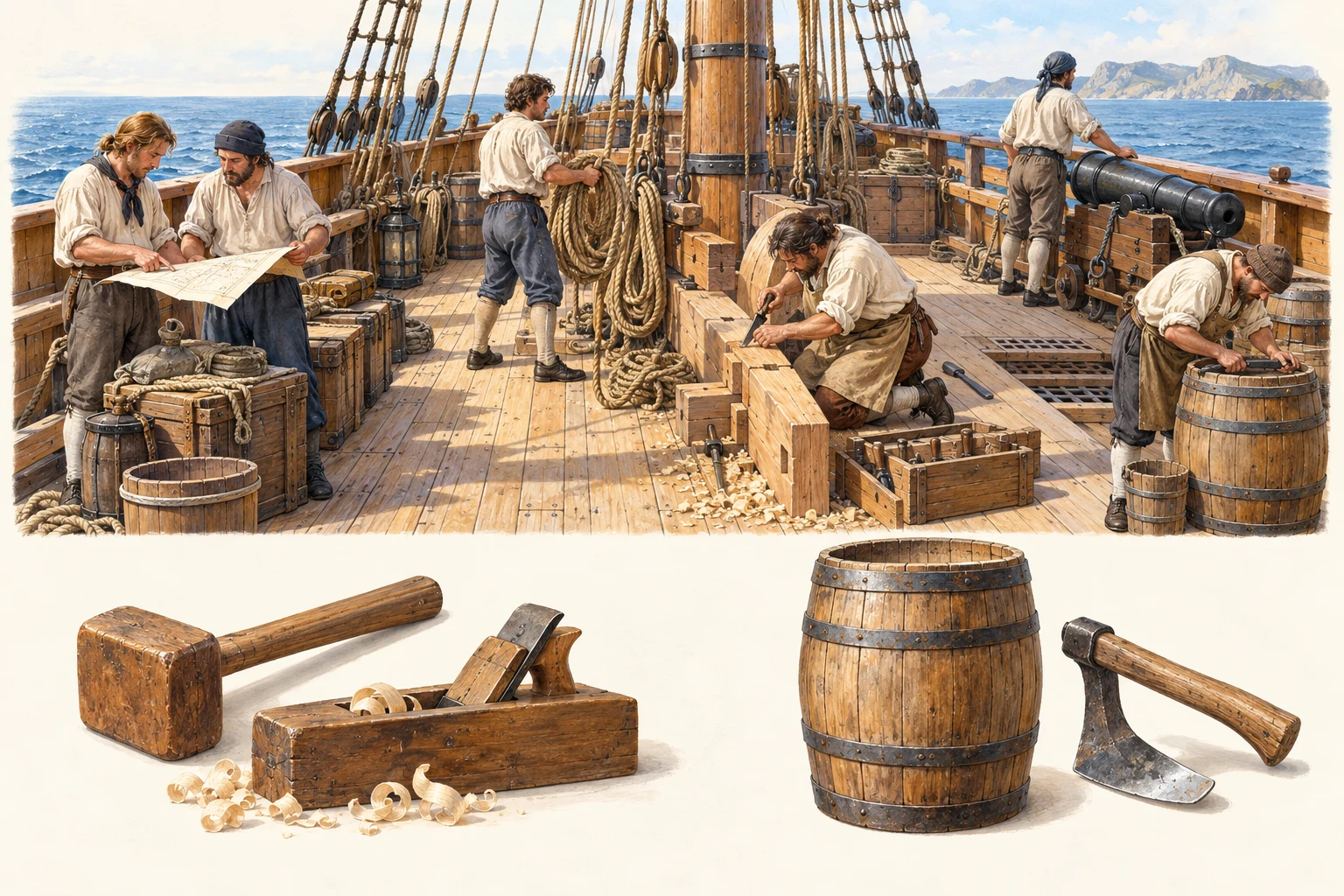 See the details.Pirate ranks and crew duties.Explore the illustrated guide