
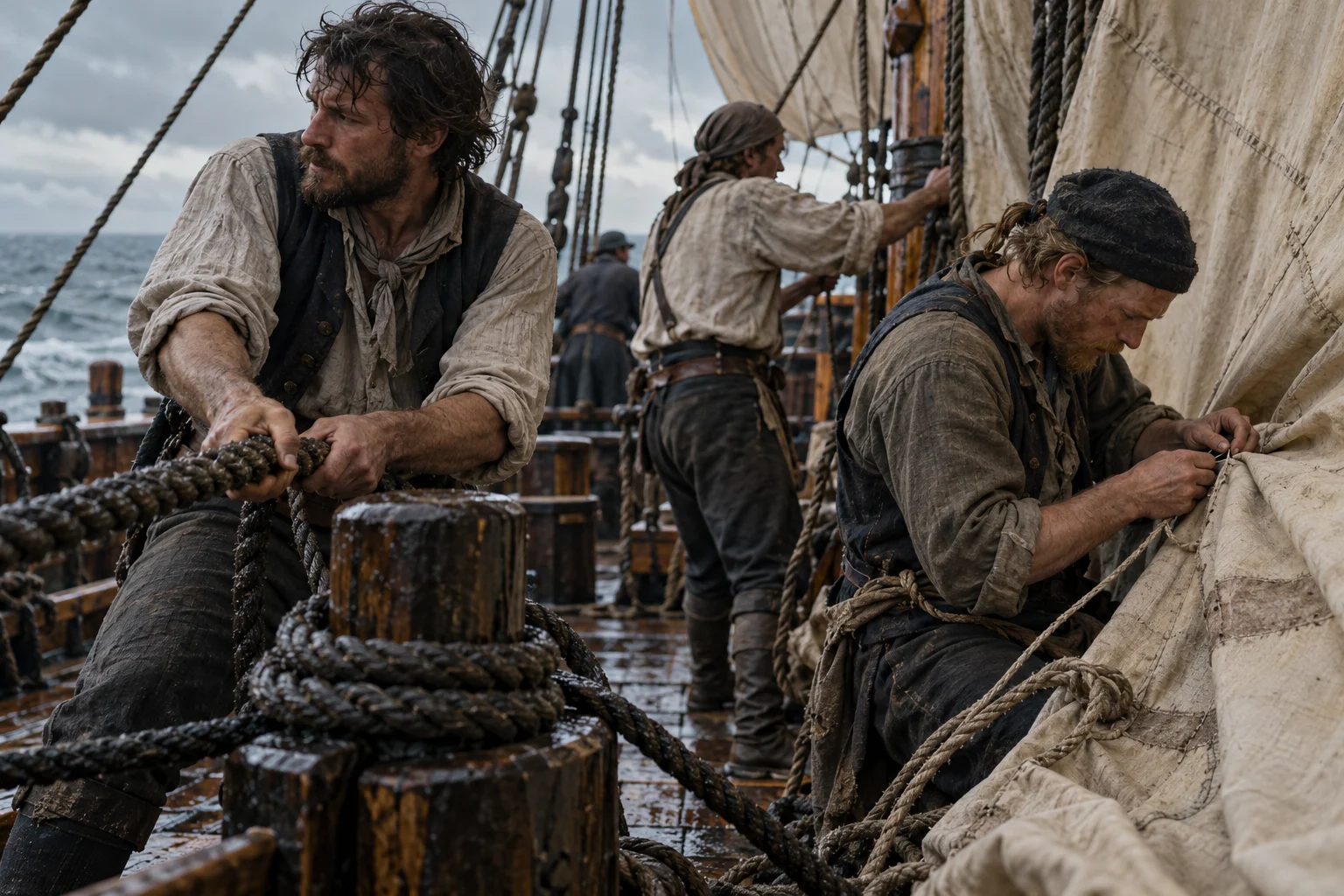
A canoe was enough to begin the robberies
The narrative places Evans leaving Port Royal with a few companions in a canoe. They first robbed houses ashore, then took a small sloop and named it Scowerer. Their operational capacity changed sharply with the acquisition of a sailing vessel. [1]
The author explains the departure through scarce employment and low wages. That is a proposed background, not proof that maritime hardship made piracy inevitable.
Captures supplied people as well as returns
The company took a Spanish sloop and later the merchant ship Dove. From the latter it removed a mate and other men. Further captures increased the goods available to divide, but also the work of managing prizes and captives. [1]
The episode makes the distinction between a valuable cargo and a useful crew visible. The company needed both people and equipment to turn one success into a continuing voyage.
One prize was better for a maintenance task
Evans intended to use Lucretia and Catherine to help heave down the sloop. After taking a Dutch sloop, the company judged that lower-sided vessel better for the job and released the larger prize. [1]
The choice was based on the physical arrangement needed for repair, not simply on which hull looked more impressive. It is an unusually clear example of a captured vessel being valued for a specific piece of work.
An internal quarrel became fatal
At the Caymans, the narrative describes a dispute between Evans and his boatswain, an uncompleted challenge to duel, a beating and the boatswain shooting Evans. Other men then killed the boatswain. The dialogue and exact sequence are preserved as the account’s telling. [1]
The violence ended the existing command without solving the question of who could direct the vessel afterward.
The navigator declined the promotion
The retained merchant mate was, the author says, the only remaining person who understood navigation. He refused the company’s offer of command. The men agreed to break up, leaving him with the vessel; he and a boy brought it into Port Royal. [1]
The ending is a sharp reversal of the standard captain-centered story. Navigation skill outlasted the pirate command and made the ship’s return possible. Read the work behind that skill and the boatswain’s broader duties.
Questions, answered.
Was Evans’s company destroyed by a naval ship?
The cited chapter describes an internal killing and subsequent dissolution.
Did the company automatically choose another pirate captain?
No. Its offer to the remaining navigator was refused, and the company broke up.
Sources & reading notes
Source checks distinguish an artifact, a reported account and a modern interpretation. They do not constitute independent historian review.
- A General History of the Pyrates (1724)Published under the name Captain Charles Johnson · Early printed account; public-domain text
Chapter XIV in full: canoe departure, Scowerer, Dove, Lucretia and Catherine, the choice of a vessel for heaving down, Evans’s death and dissolution. Wages, motives, dialogue and reported sums are the compiler’s claims. Authorship is disputed. A near-contemporary compilation, not a surviving signed pirate code or a neutral transcript. Cite its claims as reported claims.
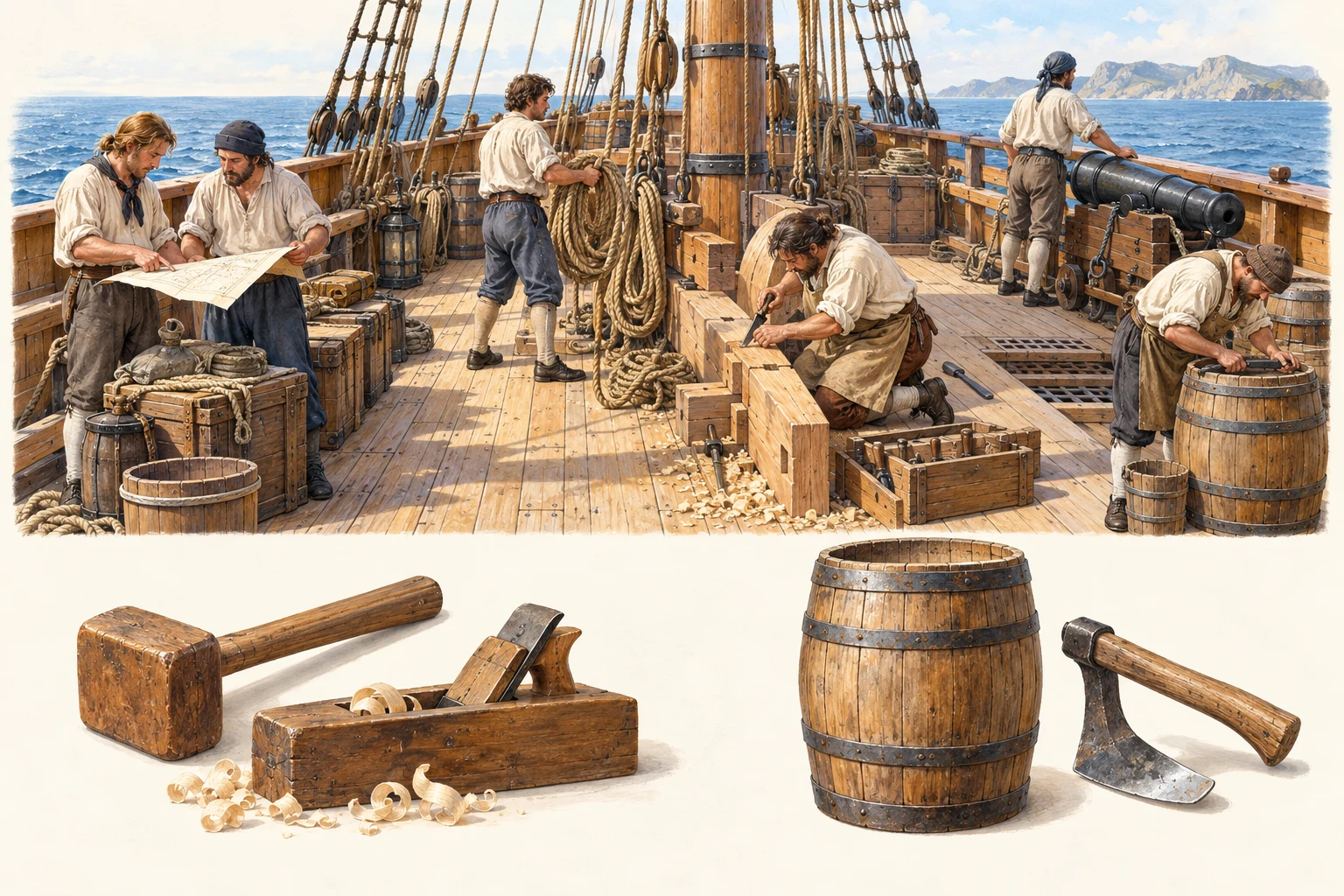 See the details.Pirate ranks and crew duties.Explore the illustrated guide