
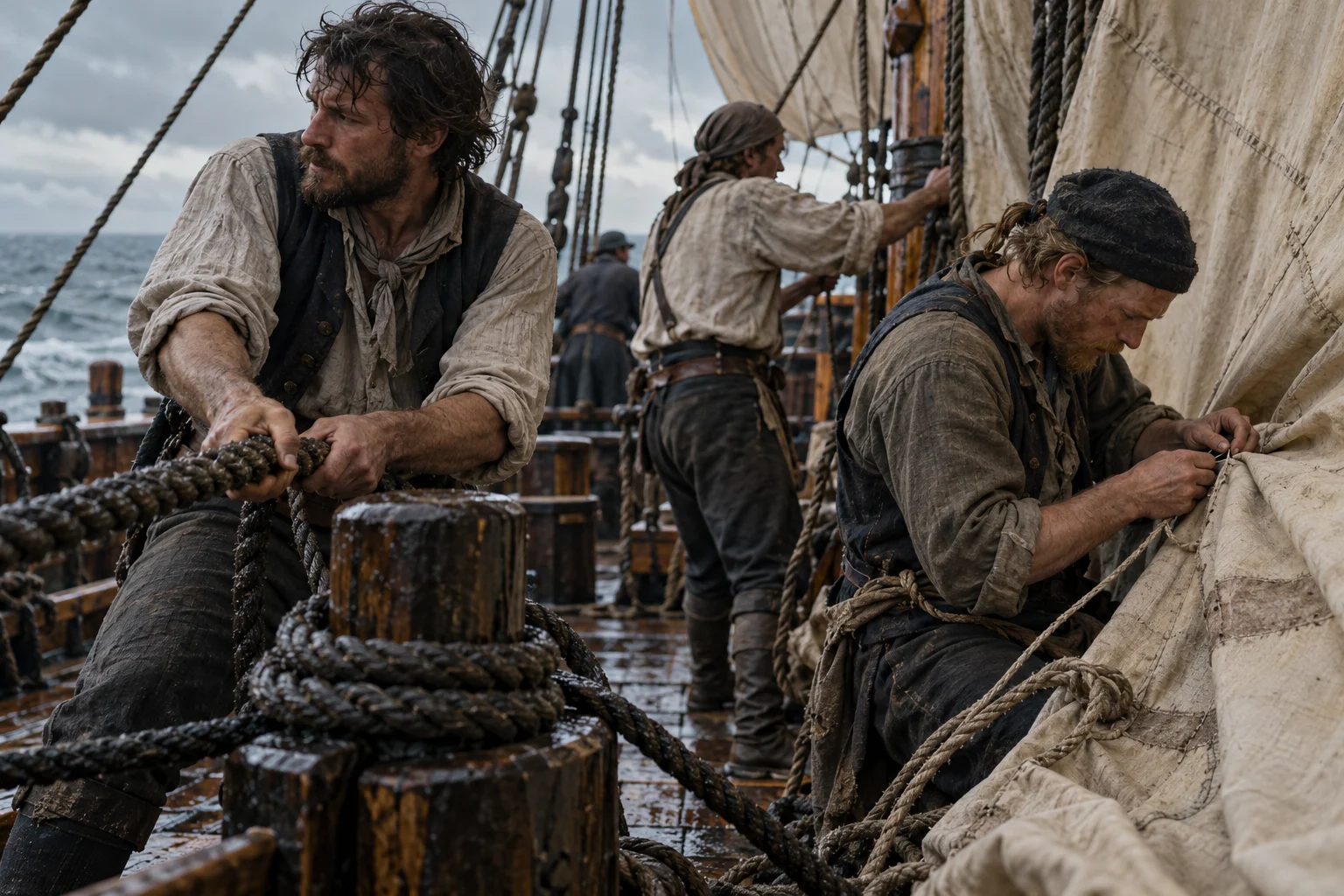
A disputed punishment preceded separation
The compiler says Spriggs had been Low’s quartermaster and left after disagreement over punishing a man who had killed another. He took the captured vessel Delight with a small party. The text identifies its earlier life as Squirrel, a former naval vessel. [1]
The stated disagreement is not evidence that the new company consistently protected captives. The same chapter goes on to describe severe abuse.
A captain and colors were made together
The men chose Spriggs captain and prepared a black flag. The account supplies a specific skeleton, heart and hourglass design for this company’s colors. This is a report about a particular company, not proof that every pirate used that flag. [1]
The ceremony joined a new commander to a collective identity. It did not establish that the vessel had always carried that name or that every person subsequently aboard had agreed to join.
Useful skill could be coerced
The narrative describes merchant sailors forced aboard and pressured to sign articles. It gives special attention to Burridge, a mate valued as a navigator, who was appointed master after signing. Other captives refused or tried to leave and were punished. [1]
The company’s need for expertise is clear even where the reported scenes are dramatic. The power to take a ship did not ensure enough willing, skilled people to sail it.
Hawkins’s ordeal continued beyond capture
The compiler reports that Captain Hawkins encountered the company twice, with the second meeting followed by destruction of his vessel. He and others were eventually put ashore on Rattan. Their survival depended on food, water, a canoe connection and a later passing vessel. [1]
Exact dialogue and individual acts of cruelty remain attributed to the narrative. The broader sequence makes release a misleadingly simple word: being put ashore could transfer danger rather than end it.
The record stops while the company is moving
The chapter follows threats against particular opponents and further captures, then explicitly reaches the last account available to its author. It does not supply a securely established death scene for Spriggs. [1]
Continue with Low’s company, forced service and the different uses of captivity. A responsible ending preserves where the source stops.
Questions, answered.
Does the 1724 chapter establish exactly how Spriggs died?
No. It ends with reports of activity available to the compiler, not a verified final fate.
Did signing articles always mean joining willingly?
No. The same narrative describes force and punishment around recruitment.
Sources & reading notes
Source checks distinguish an artifact, a reported account and a modern interpretation. They do not constitute independent historian review.
- A General History of the Pyrates (1724)Published under the name Captain Charles Johnson · Early printed account; public-domain text
Chapter XVI, Spriggs’s departure, Delight’s earlier identity, election and flag, the Hawkins episodes, marooning and later cruise reports. The compiler admits uncertainty about some earlier connections and does not provide a verified end to the career. Authorship is disputed. A near-contemporary compilation, not a surviving signed pirate code or a neutral transcript. Cite its claims as reported claims.
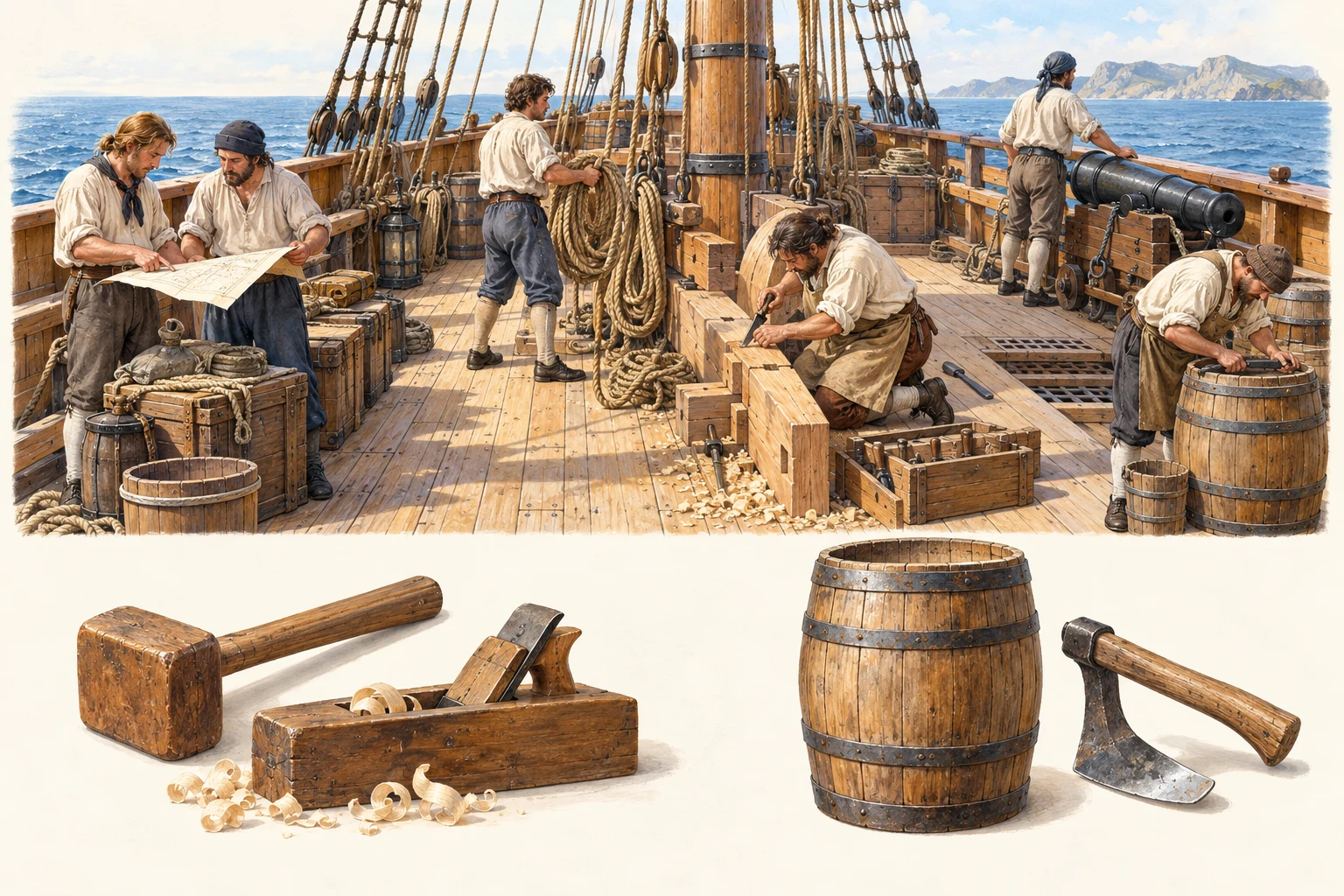 See the details.Pirate ranks and crew duties.Explore the illustrated guide