

The earlier identity belonged to a commercial venture
The trial describes Charles the Second under Captain Gibson before it was carried away. It identifies an English-owned vessel engaged for a different undertaking from the subsequent pirate cruise. [1]
A captured ship’s earlier purpose matters. The hull, stores and sailors did not appear only when a later history began calling it a pirate vessel.
Command changed through force
Gravet, the second mate, testified that a carpenter seized him and a pistol was held against him. He was confined while the ship was moved, then told he could go ashore if he would not join. The account thus identifies people who refused as well as people who remained. [1]
The company’s formation was a sequence of actions with different participants. Being aboard at the start did not prove consent to the new command.
The proclamations connect the names
The July proclamation calls Every’s vessel Phancy and identifies its earlier name as Charles. The later proclamation uses Phansie alias Charles. These are contemporary links between name forms, not an inference made solely from a modern image caption. [2][3]
The common modern spelling Fancy is used for navigation through this library, while source notes preserve the forms encountered in the documents.
A count belongs to a description
The trial indictment and proclamations give armament descriptions for their own purposes. The proclamation reports forty-six guns and about 130 men; the seizure indictment uses a different gun figure. Those numbers should not be silently combined into one exact specification for the whole voyage. [1][2]
Changes in equipment, reporting, timing and the nature of the document all need examination before a precise reconstruction is claimed.
The reported ending is not a recovered wreck identity
The later proclamation says authorities had received information that the vessel was left at Providence as companions returned and dispersed. That is a reported movement, not a modern archaeological identification. [3]
Compare the different Fancy in Macrae’s 1720 account, Roberts’s recurring ship name and Every’s career. Names help trace vessels only when the surrounding evidence connects them.
Questions, answered.
Do Phancy and Phansie require separate ship pages?
No. The proclamations explicitly connect those name forms with Charles in Every’s case.
Is this automatically the damaged Fancy given to Macrae in 1720?
No. A shared name does not establish that the vessels were the same.
Sources & reading notes
Source checks distinguish an artifact, a reported account and a modern interpretation. They do not constitute independent historian review.
- The Tryals of Joseph Dawson and others (1696)Open the keyboarded source transcriptionContemporary English or Scottish printed record; EEBO–TCP keyboarded transcription · Public-domain 1696 text; CC0 transcription
The Charles the Second indictment and testimony about the seizure and voyage; witness Gravet’s account of his confinement. A proclamation states authorities’ information and demands; a trial print records allegations, witnesses and judgments. Neither makes every accusation an independently established fact. Named suspects are not automatically convicted defendants. TCP gaps and spelling variations remain.
- Lords Justices’ proclamation against Henry Every,17 July 1696Open the keyboarded source transcriptionContemporary English or Scottish printed record; EEBO–TCP keyboarded transcription · Public-domain 1696 text; CC0 transcription
17 July 1696, ship Phancy, earlier Charles, reported 46 guns and 130 men. A proclamation states authorities’ information and demands; a trial print records allegations, witnesses and judgments. Neither makes every accusation an independently established fact. Named suspects are not automatically convicted defendants. TCP gaps and spelling variations remain.
- Lords Justices’ further proclamation against Henry Every,1696Open the keyboarded source transcriptionContemporary English or Scottish printed record; EEBO–TCP keyboarded transcription · Public-domain 1696 text; CC0 transcription
The later proclamation repeats Phansie alias Charles and the information about its being left at Providence. Reported counts are not measured permanent specifications. A proclamation states authorities’ information and demands; a trial print records allegations, witnesses and judgments. Neither makes every accusation an independently established fact. Named suspects are not automatically convicted defendants. TCP gaps and spelling variations remain.
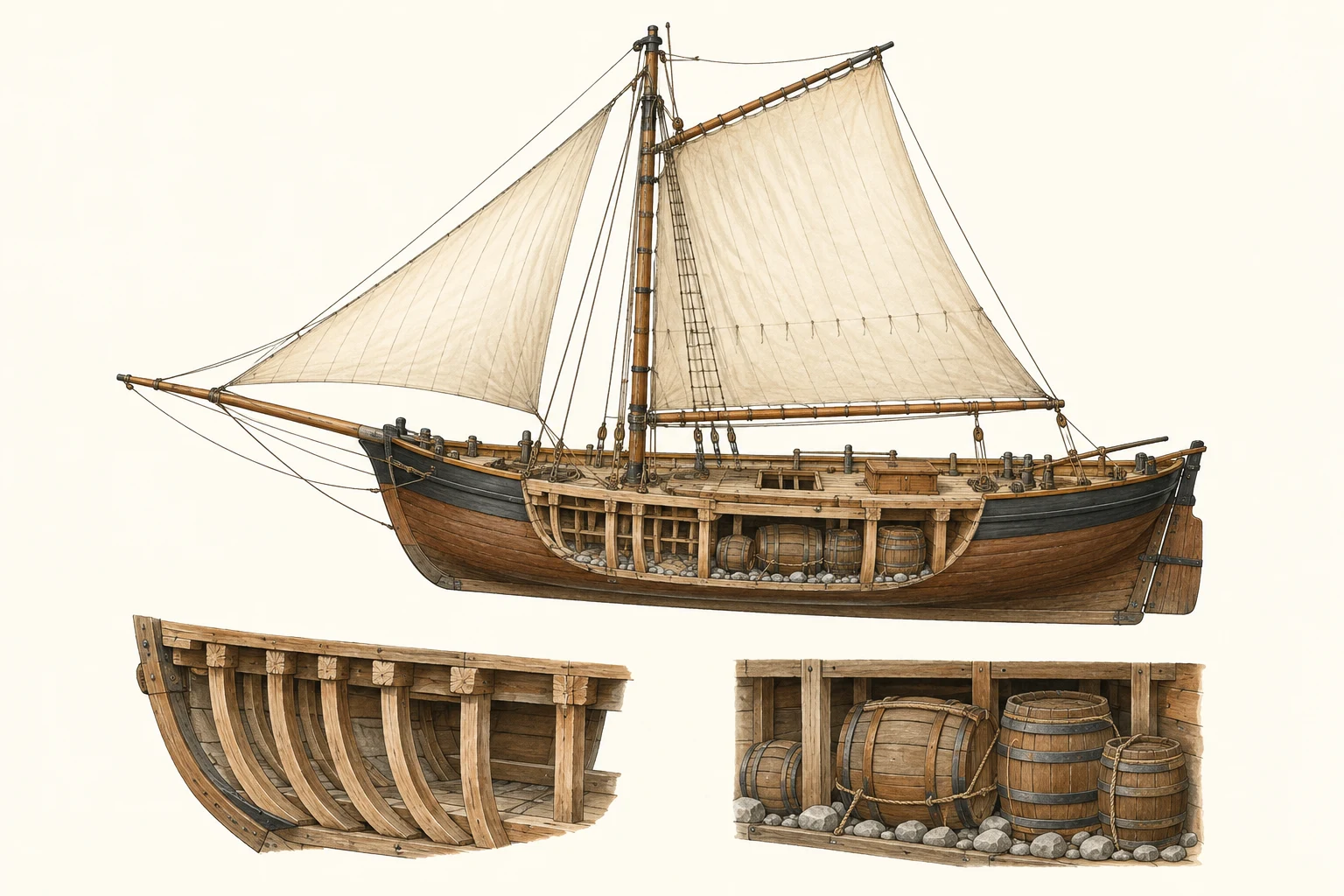 See the details.Inside a pirate-era ship.Explore the illustrated guide