
A break from Lowther
The narrative first places Low in logwood work before joining Lowther’s company. It then describes a separation in 1722, when Low took a captured brigantine with a group who chose him captain. Equipment and stores were divided along with the people. [1]
This is a practical beginning for the independent command. The author’s earlier portrait of a child supposedly destined for crime belongs to a moralizing biography, not an established explanation of every later act.
Captures supplied a changing force
The company took provisions, equipment and men as well as valuable cargo. The account describes Low transferring to a captured schooner, called Fancy at that stage, while Charles Harris commanded the brigantine. It later follows further vessel changes. [1]
The familiar label “Low’s ship” can therefore obscure both a changing hull and a second commander. A specification belongs to a particular episode.
Weather tested both vessels
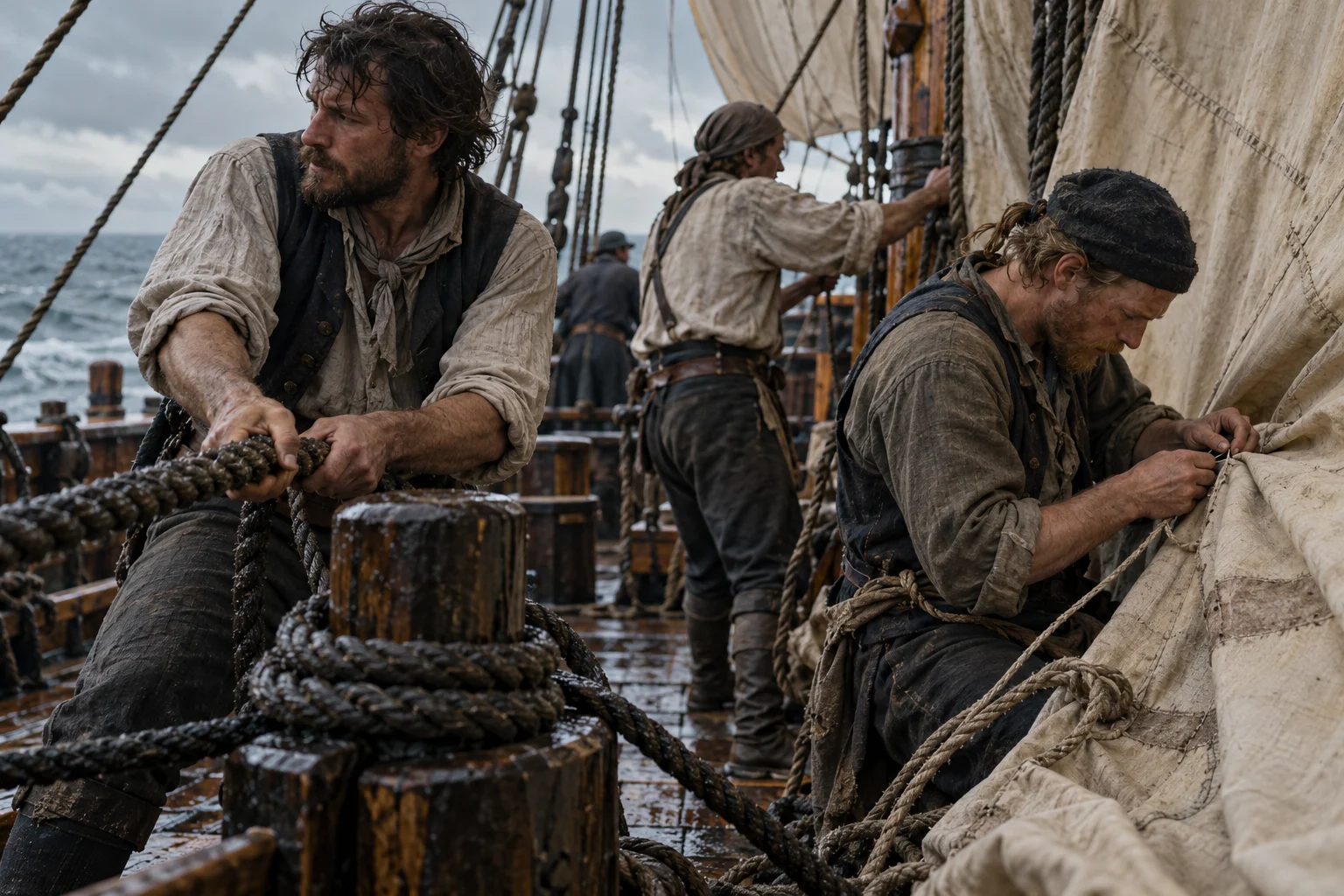
A severe storm separated the consorts and damaged their equipment. The narrative describes continuous pumping, bailing and jettisoning heavy goods aboard the brigantine. The schooner suffered differently, including sail and spar damage. They later found each other again. [1]
The danger came from the vessels’ physical condition, not from an opponent intimidated by a flag. A company’s reputation could not make a leaking hull watertight.
The hunted vessel turned to fight
In the account of the Greyhound encounter, the pirates initially chased what became their armed opponent. A running fight followed, with oars used when the wind weakened. Harris’s vessel was disabled, and Low escaped while his consort surrendered. [1]
The author condemns Low’s departure and argues that greater support might have changed the result. That counterfactual is the writer’s opinion; the recorded division between the two companies is the more concrete outcome.
A reputation should not replace the history
The chapter is crowded with reported cruelty and dialogue. Those claims explain Low’s fearsome literary image, but repeating increasingly graphic scenes is not a substitute for examining the organization that carried them out.
Read Lowther, the earlier principal ship and the work of keeping water out. The company’s dependence on equipment and its failure to remain united are part of the story alongside its violence.
Questions, answered.
Did Low sail alone in a single unchanging ship?
No. The narrative describes a consort under Harris and several changes of vessel.
Does the early account prove Low was destined for piracy as a child?
No. That is the compiler’s moralizing characterization, not a demonstrated causal explanation.
Sources & reading notes
Source checks distinguish an artifact, a reported account and a modern interpretation. They do not constitute independent historian review.
- A General History of the Pyrates (1724)Published under the name Captain Charles Johnson · Early printed account; public-domain text
Chapter XIII, Low’s separation from Lowther, early captures, the storm, vessel changes, the Greyhound encounter and Harris’s capture. The chapter’s childhood anecdotes, private motives and elaborate cruelty scenes are not independently verified here. Authorship is disputed. A near-contemporary compilation, not a surviving signed pirate code or a neutral transcript. Cite its claims as reported claims.
 See the details.Pirate ranks and crew duties.Explore the illustrated guide