
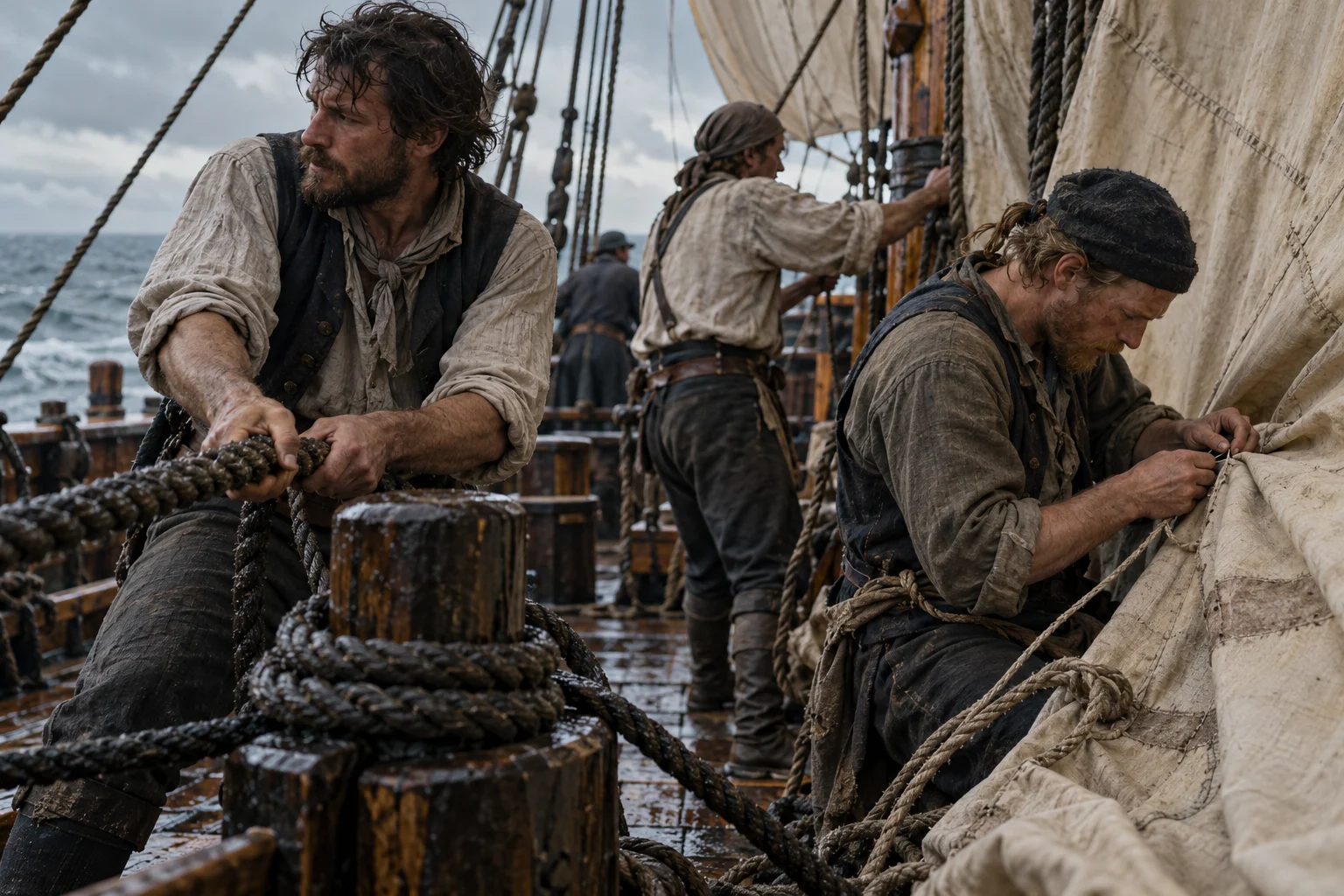
The Atlantic was the operating ground
Roberts’s story begins in the General History aboard a vessel engaged in the slave trade. Captured by Howell Davis’s company, he was then chosen to replace Davis after the captain was killed at Príncipe. The narrative emphasizes his rapid rise from newcomer to commander. [1]
The setting matters. This was an Atlantic network, not a career confined to the Caribbean. The account follows the company toward Brazil, back into the western Atlantic and again to West Africa. Shipping routes, water, repairs and the timing of trade linked those movements.
Rules after a rupture
The book introduces Roberts’s articles after a destructive separation involving Walter Kennedy. Written rules appear as a response to mistrust: the company needed a way to govern itself and divide what it took. The printed clauses address voting, provisions, gambling, weapons, quarrels, compensation for injuries and shares of plunder. [1]
The author also says the signed original had been thrown overboard. What survives here is a printed version attributed to information from pirates. That distinction is central. A list on a modern poster is not a recovered original, and these clauses should not be described as the law of all pirates.
Power could change with the situation
The account distinguishes the captain’s authority in a chase or battle from everyday life aboard. It gives the quartermaster substantial influence over routine discipline and distribution. A captain could command violence without controlling every aspect of the company’s common resources. [1]
That arrangement was not frictionless. A violent dispute involving Roberts and a man called Jones contributed to resentment, and Thomas Anstis later left with the brigantine Good Fortune. A code could organize a company; it could not make every member accept the same interpretation of authority.
A flagship was a changing object
One captured vessel, Onslow, was altered for the company’s use and renamed Royal Fortune. The narrative describes removing bulkheads and fitting guns. The ship was not a static symbol: the crew adapted a prize to its next purpose. [1]
The name Royal Fortune appears through Roberts’s changing command. Treating every mention as the same hull creates a false biography of the vessel. Conversely, counting every renaming as an extra ship inflates the story. Follow the capture, alteration and transfer, not just the familiar name.
Read the rules alongside the victims
Internal voting and injury payments can make the company look unusually attractive beside harsh merchant employment. They do not erase the coercion practiced against people outside it, including those caught in slave-trading traffic. A company’s arrangements for its own members are not a measure of universal freedom. [1]
The naval pursuit led by Chaloner Ogle aboard Swallow brought Roberts’s command to an end. Read his career through the articles, the division of plunder and the company that chose to leave, rather than through a ranking of successful captains.
Questions, answered.
Was Roberts’s pirate code universal?
No. The book attributes the rules to his company and says the signed original was discarded. Other companies have different reported articles.
Was Royal Fortune always the same ship?
No single hull should be assumed from the name alone. The narrative follows replacements and the renaming of captured vessels.
Sources & reading notes
Source checks distinguish an artifact, a reported account and a modern interpretation. They do not constitute independent historian review.
- A General History of the Pyrates (1724)Published under the name Captain Charles Johnson · Early printed account; public-domain text
Chapter IX, especially the opening succession, the articles and lost-original statement, the Anstis split, the conversion of Onslow and the Swallow campaign. The chapter’s opening dates contain chronological problems; this entry does not reproduce them as a verified sequence. Authorship is disputed. A near-contemporary compilation, not a surviving signed pirate code or a neutral transcript. Cite its claims as reported claims.
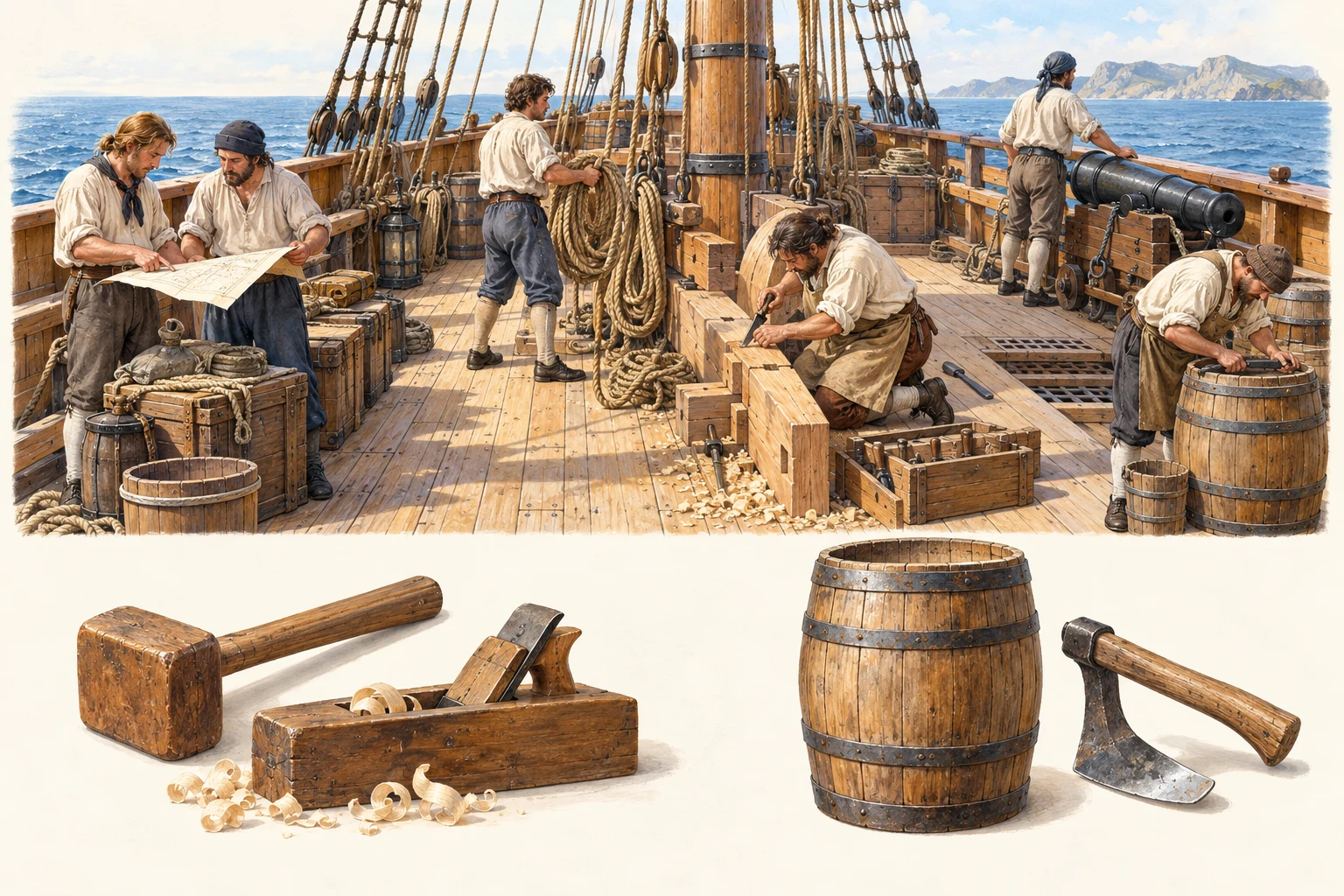 See the details.Pirate ranks and crew duties.Explore the illustrated guide