

Begin by naming the group
A company can occupy several vessels. A force assembling for an expedition can leave a guard behind. A landing party can be much smaller than the people who began the voyage. Ringrose’s account of the Panama fight repeatedly distinguishes craft arriving together from those behind. [1]
Before comparing two totals, ask whether they count the same group at the same stage.
A departure changes the denominator
Coxon’s party left the Pacific force after the Panama encounter. The later separation in 1681 created another company returning toward the Caribbean. A number from the first crossing cannot be used unchanged for every subsequent attack. [1]
These changes are not minor corrections to a captain’s biography. They alter the labor, arms, boats and resources available to the people who remain.
The categories can expose unequal standing
Dampier’s account of the 1681 separation lists armed travelers and enslaved people separately. A total restricted to the first category would erase people who carried supplies and did other work, while an undifferentiated sum would conceal their different condition. [2]
A useful table preserves both the overall presence and the source’s categories, then explains why those categories matter.
Trial lists answer a later question
The people tried after a capture are not necessarily everyone who served during the voyage. Some had been killed, escaped, left earlier or were treated in a different category. The proceedings after Roberts’s defeat also discuss captives and forced men rather than one homogeneous body. [3]
A surviving defendant list is powerful evidence of those named people. It is not automatically a full crew list for every earlier date.
Reported precision still needs attribution
A narrative can give a very exact figure for enemy strength or casualties without explaining how it was counted. Macrae’s letter, for example, distinguishes losses among his own men from what he was told about the pirates. Those are different routes to a number. [3]
Record the source, date, included categories and whether the figure is observed, reported or estimated. Where those fields are missing, “about” and “according to” can be more accurate than a false total. Follow the divided return and forced service to see what a simple headcount can hide.
Questions, answered.
Is a trial list the same as the entire crew throughout a voyage?
No. It records a later group of defendants and may omit those killed, escaped, departed or treated separately.
Should two different source totals always be added?
Only if they count distinct, compatible groups at the same relevant stage. Otherwise adding them can double-count people or combine different moments.
Sources & reading notes
Source checks distinguish an artifact, a reported account and a modern interpretation. They do not constitute independent historian review.
- Bucaniers of America, the second volume (1685)Open the keyboarded source transcriptionBasil Ringrose; printed for William Crooke; EEBO–TCP transcription · Participant voyage narrative, published 1685; CC0 keyboarded transcription
Chapters VII–VIII, the smaller party in the Panama sea fight, later prizes and Coxon’s departure; Chapter XVIII, separation in 1681. The published journal is a mediated participant account. Its nationalist praise, judgments about peoples and claims about motives are not adopted as neutral fact. The XML marks damaged and missing text; page images are not the CC0 transcription.
- A New Voyage Round the World (1697), with collected voyage textsOpen the keyboarded source transcriptionWilliam Dampier; James Knapton; EEBO–TCP transcription · Voyage writing and later collected parts; CC0 keyboarded transcription
Chapter I, the party leaving Sharp, with separate categories for armed men and enslaved people. Dampier writes as an involved traveler, not an impartial observer. His racial, colonial and medical judgments are not present-day facts. The catalogue describes a multi-volume set; individual parts and dates must be distinguished. Volume 3 is absent from this transcription.
- A General History of the Pyrates (1724)Published under the name Captain Charles Johnson · Early printed account; public-domain text
Chapter V’s Macrae letter and Chapter IX’s accounts of associated vessels and subsequent proceedings. Authorship is disputed. A near-contemporary compilation, not a surviving signed pirate code or a neutral transcript. Cite its claims as reported claims.
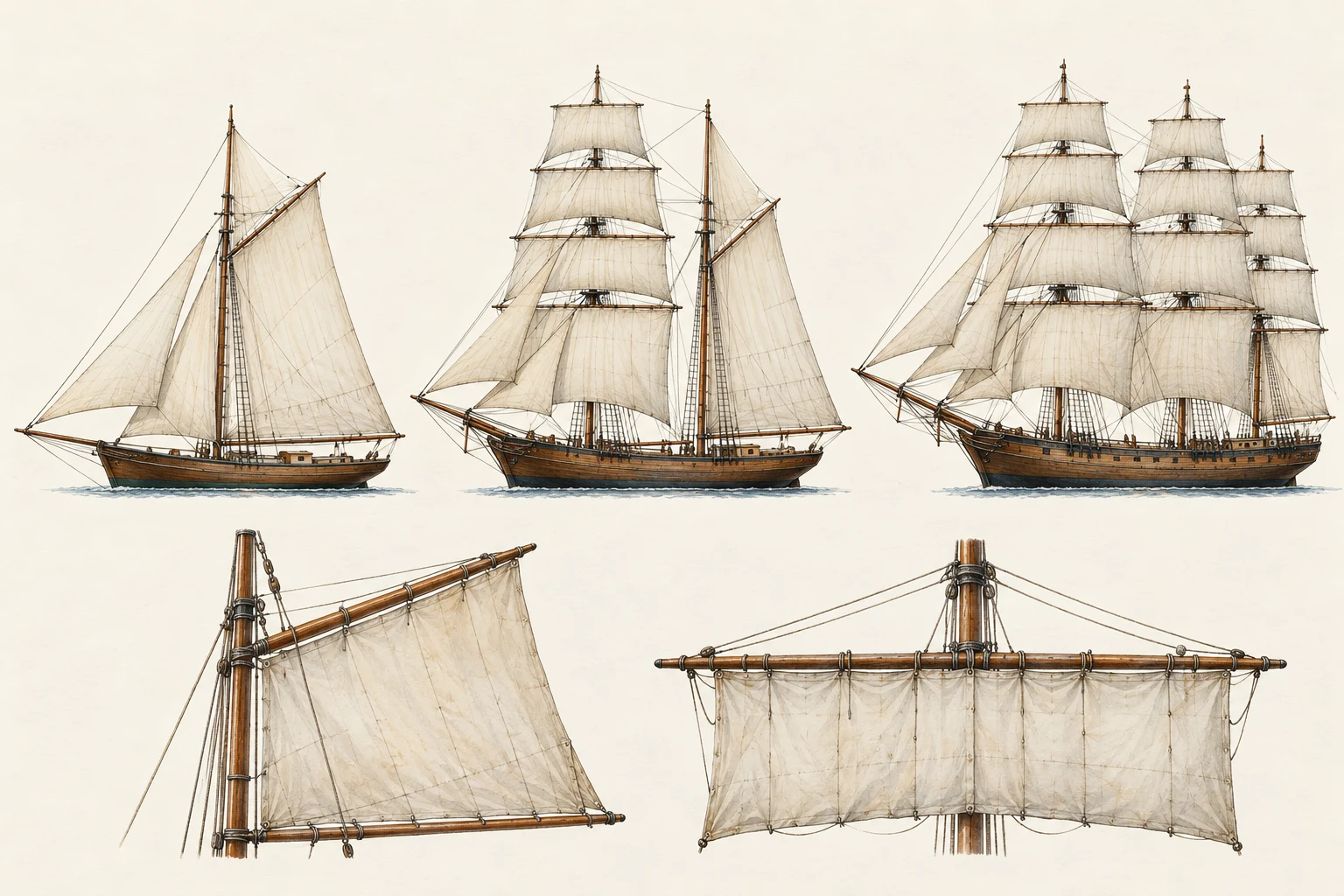 See the details.Pirate ship types, explained.Explore the illustrated guide