
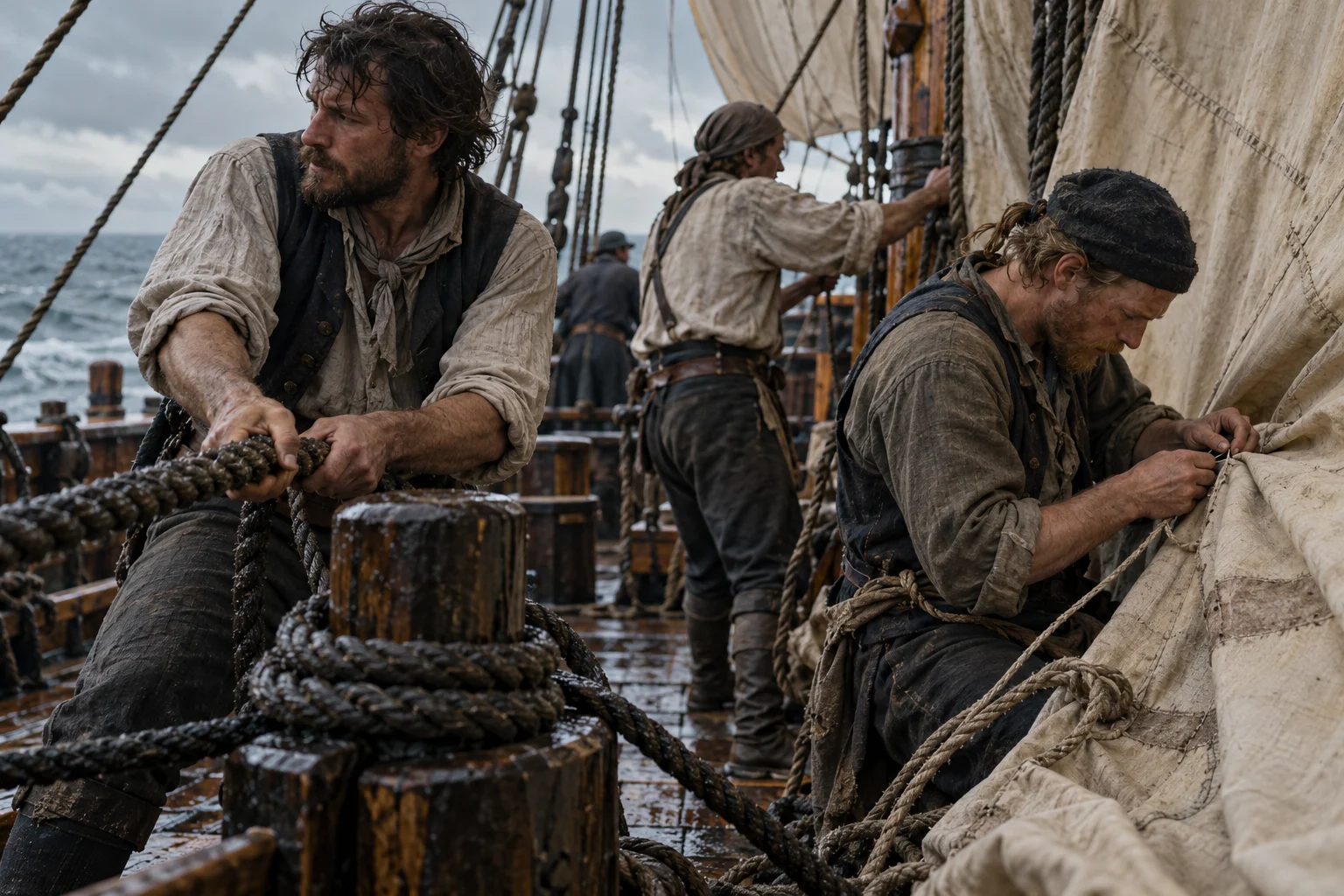
The starting vessel was a commercial venture
Haring begins this episode with a ship sailing from England in 1681, named Mary and Martha, also called St. Nicholas. He then records van Hoorn putting merchants ashore at Cádiz and taking Spanish guns. [1]
The aliases should not create two ships in a fleet list without further evidence. The important change here is in the use of a vessel and the treatment of the people whose commercial interests it had been carrying.
The Atlantic crossing involved enslaved people
The voyage continued through the Canaries and the African coast. Haring describes seizures and the transport of enslaved people to Santo Domingo, where van Hoorn sought to sell them in 1682. [1]
This part of the voyage belongs at the center of its commercial history. Treating it as an empty passage between a European departure and a colorful Caribbean adventure erases the people exposed to sale and violence.
Hispaniola supplied another company
From Santo Domingo, van Hoorn moved to Petit-Goâve, recruited men and joined de Graff in the Gulf of Honduras. Haring also records an ostensible assignment to pursue the pirate La Trompeuse, followed instead by the move toward Central America. [1]
A stated purpose in an official paper and the course actually sailed could differ. The existence of paperwork alone is not a complete account of a voyage.
The Veracruz coalition did not remain harmonious
Van Hoorn participated in the 1683 surprise attack and was allotted an unusually large number of shares for himself and his vessels in Haring’s account. He then quarreled with de Graff and suffered a wound. [1]
The reported dispute makes the division of profits part of the campaign, rather than a tidy final calculation after the action. Captains brought different resources and expected different rewards.
A short final interval has generated a large legend
Haring reports van Hoorn dying of complications after the wound and Grammont bringing his ship back to Petit-Goâve. That sequence does not justify inventing his private thoughts, a deathbed speech or a detailed modern diagnosis. [1]
Follow Veracruz, de Graff and piracy’s relationship with slavery. The surviving outline is already more consequential than a story of a reckless captain’s temper.
Questions, answered.
Were Mary and Martha and St. Nicholas necessarily separate vessels?
Haring presents them as names for the same ship in this episode.
Was the voyage simply a direct sailing from England to Veracruz?
No. The account includes European, African and Hispaniolan stages with different activities and victims.
Sources & reading notes
Source checks distinguish an artifact, a reported account and a modern interpretation. They do not constitute independent historian review.
- The Buccaneers in the West Indies in the XVII Century (1910)Clarence Henry Haring; Project Gutenberg transcription · Early twentieth-century historical study; public domain in the USA
Chapter VII, pp.241–243,247–248, notes 445–449 and 457. The ship aliases and reported sequence follow this synthesis; the account is not a surviving complete logbook. An older secondary study drawing on colonial records and earlier narratives. Its imperial framing, racial generalizations and claims about national character are not adopted as fact. Not a substitute for current scholarship.
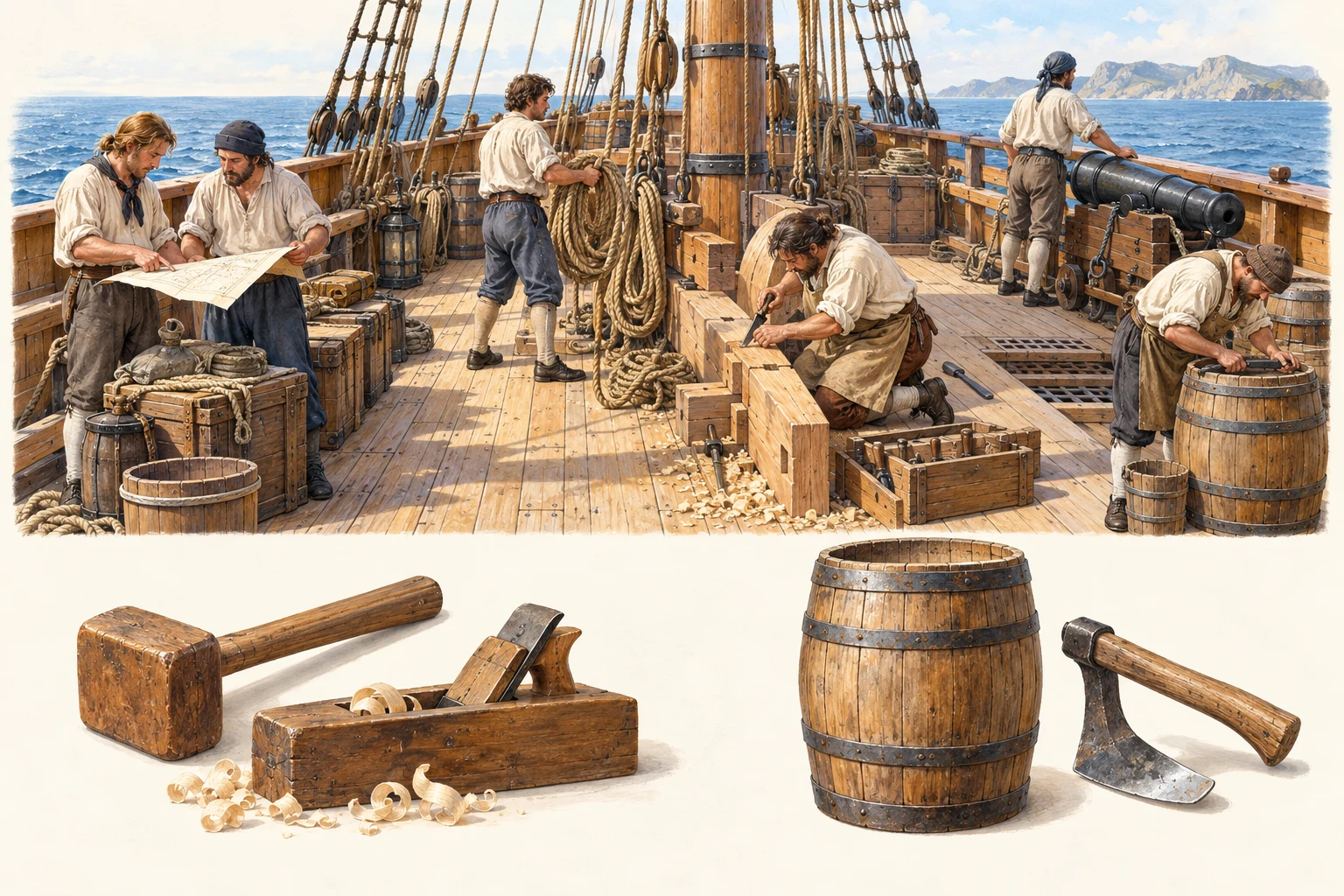 See the details.Pirate ranks and crew duties.Explore the illustrated guide